Sep 11, 2025
Bank of America: No Problem With Americans’ Wallets!
Ryunsu Sung
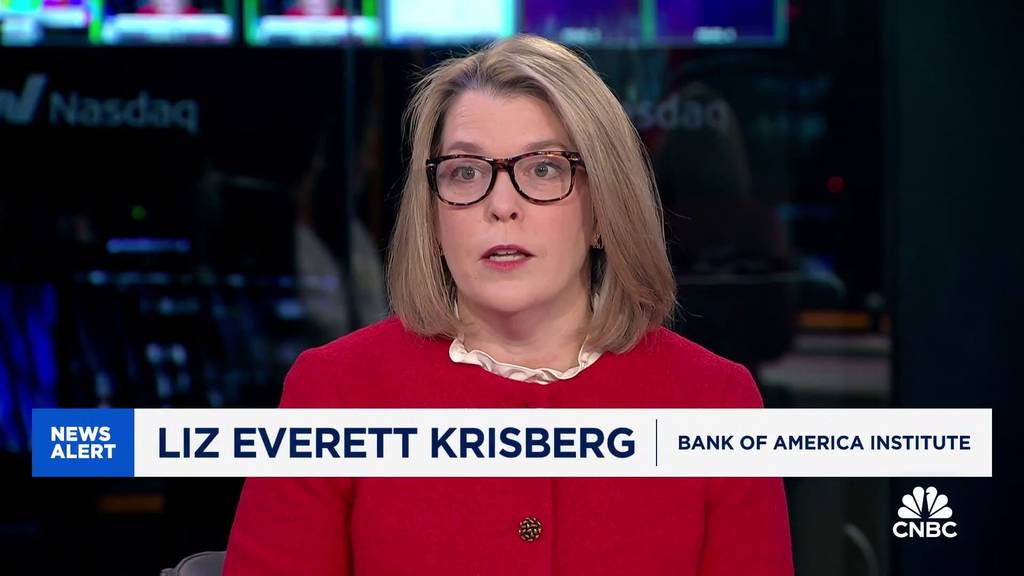
In an interview with Barron's, Liz Everett Krisberg, who heads the Bank of America Institute, said that based on an analysis of the bank’s transaction data, "U.S. consumers are showing a great deal of resilience", while also concluding that "depending on your perspective, it’s not something we can be overly jubilant about". In other words, Americans have far more solid financial capacity than their responses to consumer confidence surveys would suggest, but it is still too early to be overly optimistic.
Krisberg first emphasized that bank balances for the lower- and middle-income segments have risen by about 50% compared with 2019, and are still roughly 25% higher even after adjusting for inflation. She explains this by pointing to the fact that, after the pandemic, wage growth for low-wage workers has far outpaced inflation. She also noted that "over the past 20 years, the Consumer Confidence Index, regarded as an important gauge of the U.S. economy, has failed to explain Americans’ actual spending behavior", adding that consumer spending has held steady despite persistent recession fears in recent years.
According to Bank of America’s card spending data, even high-income Americans have recently begun to shift from a focus on premium goods toward value-for-money purchases, a trend that can also be seen in the recent earnings surprises posted by discount retailers that mainly sell low-priced products. In contrast, spending on experiential categories such as travel and live concerts has either held up or continued to grow.
In the most recent model portfolio update, I explained that "credit supply is still flowing without major issues, and while the unemployment rate (4.2%) in the labor market—which underpins households’ spending power—remains healthy, it is gradually becoming harder for new job seekers to find work". Last week’s unemployment reading ticked up slightly to 4.3%, and preliminary data released yesterday by the U.S. Bureau of Labor Statistics revised the previously estimated increase in payrolls through March of this year from 1.8 million to 900,000, suggesting that in reality the U.S. labor market has been cooling rapidly since the start of the year.
This is consistent with the data from Bank of America that Krisberg disclosed. In her Barron's interview, she commented on the labor market, saying that "the number of job switchers has fallen sharply, the pay bump from changing jobs has been minimal, and for new entrants with no prior work experience, breaking into the labor market has become extremely difficult". However, small businesses’ spending on recruiting services has been holding up, so it would be an overstatement to interpret the situation as labor demand collapsing or being on the verge of collapse.
As signs emerge that the U.S. economy, including the labor market, is entering a broader downturn, the dominant interpretation is that investors are slowly bidding major indexes such as the S&P 500 to new highs on expectations that Federal Reserve Chair Jerome Powell—who has faced repeated public pressure from President Trump to cut interest rates—will begin lowering rates starting in September.
Jamie Dimon, head of JPMorgan Chase, the largest U.S. bank, commented on the Labor Department’s release in an interview with CNBC, saying, "I think the (U.S.) economy is weakening," while also maintaining a cautious stance by adding, "It’s hard to predict whether this will lead directly to a recession."
David Solomon, CEO of another major bank, Goldman Sachs, said in a Bloomberg interview, echoing Dimon, that "the economy is clearly softening, and we need to watch the labor market data very carefully." Last week he also stressed that investor sentiment is running very hot, stating that "given current risk appetite among investors, it’s hard to argue that today’s policy rate is particularly restrictive for the U.S. economy".
U.S. companies’ second-quarter earnings this year have come in better than Wall Street analysts expected, fully recovering from the early-April "Liberation Day" sell-off triggered by President Trump. However, tariff risks and uncertainty still linger, and with signs of a broad economic slowdown emerging, I believe we should remain vigilant about the possibility that this trend will persist or even accelerate.
Newsletter
Be the first to get news about original content, newsletters, and special events.
Continue reading

Note By Ryunsu
The Intelligence Layer of Financial Infrastructure
Ryunsu Sung

Aware Original
Why Bitcoin Keeps Falling: The Downward Spiral of the Gamma Trap
Ryunsu Sung

Aware Original
The Overwhelming Autonomous Driving Leader Proven by Numbers: Waymo’s Full-Scale Takeoff
Ryunsu Sung

Aware Original
The Precarious State of ‘American Exceptionalism’ and a Shaken Dollar Hegemony
Ryunsu Sung