Dec 10, 2024
Reflections on the Korean Startup Ecosystem
Ryunsu Sung
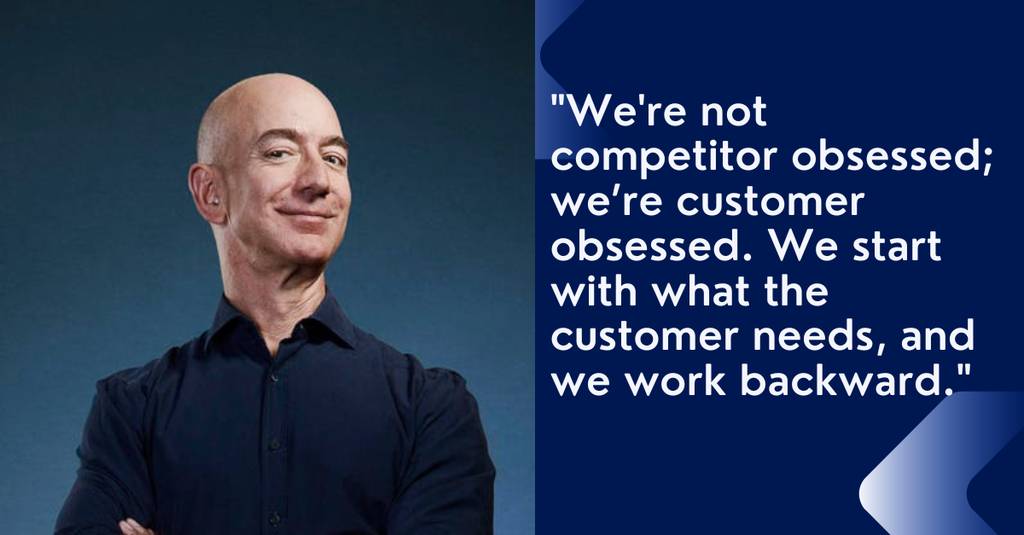
In a capitalist society, a company’s value is determined by discounting the sum of its future cash flows to the present. There are cases, like early Amazon, where a company posts operating losses while still generating positive free cash flow by exploiting the timing gap between cash inflows and outflows. But as a company grows, its revenue growth rate can no longer outpace the GDP growth rate of the country where it operates. That is why, when valuing a company’s terminal value, we set the terminal growth rate equal to GDP growth. For a company to be sustainable, the most important and primary task is to build a structure that generates repeatable revenue and profits that scale in proportion to that revenue.
So what is the state of our startup ecosystem in Korea?
To start a business, you need a capital contribution, whether in kind or in cash, and the players that play the biggest role here are venture capital firms (VCs). VCs receive capital for a set period from LPs such as pension funds and high-net-worth individuals, and invest that money into startups. In theory, they provide the capital that supports startups’ growth during the fund’s life, then exit by selling their shares to other investors in later funding rounds (Series A, B, C, etc.), or by recouping their investment through events such as M&A or IPOs. Because Korean conglomerates are conservative about M&A and, given the high share of manufacturing, prefer investments in tangible assets, it is no exaggeration to say that IPOs effectively determine whether VCs can achieve a final exit.
One of the main LPs for Korean VCs is the Korean government, and because capital from the Korea Fund of Funds comes with labels attached (platform, materials/parts/equipment, metaverse, etc.), the sectors that see concentrated investment change every year. Since VCs must return capital within a relatively short fund life (typically seven years), they mainly invest in companies in hot themes that are likely to attract the next round of funding or have a high probability of going public. Founders, in turn, choose business ideas that fit whatever theme is trending that year, rather than in areas where they and their teams actually have a comparative advantage, just to secure funding in the near term. Among them, large startups that survive to Series C and beyond must now prepare for IPOs, and thus face intense pressure from VCs to generate revenue by any means necessary. Day1 Company, which brands itself as Korea’s number one adult education company and is about to begin IPO bookbuilding, is bundling AirPods Pro—completely unrelated to education—or dangling hard-to-get Nvidia GPUs as bait products. This is just one prominent example. In most Korean startups, sales efforts are focused on areas outside what they claim is their core business, and not a few companies that sold products below cost to acquire users during the overinvestment boom of 2021–2022 later ran into liquidity crises or went under after failing to secure additional funding.
Startups that manage to go public this way have spent the entire period from founding to listing focused on boosting their top line rather than building a sustainable structure. As a result, their revenues are highly sensitive to economic cycles, and they have no idea how to control costs. Even setting aside the uniquely owner-friendly governance issues on the Korean stock market—where controlling shareholders often hold only a small equity stake—one has to ask how many of the startups listed in recent years actually possess a true economic moat. Take Padu, which went public last year via a technology-special listing. Even though its outstanding technology was recognized in the listing process, that technological edge has not translated into visible revenue. Worse, as its revenue has grown, its operating losses have ballooned in tandem, revealing a distorted structure. While these earlier-listed startups have been losing the market’s trust, investment in startups—touted as the country’s next growth engine—has continued to decline. And because this year’s theme is generative AI, AI experts and AI startups are springing up at an unprecedented pace.
Founders who, after many twists and turns, finally secure funding at some point begin burning through capital on startup “play”—founder networking events, meetups, PR, and promoting their organizational culture—all of which have nothing to do with the core of their business. The reason is simple: that is precisely how they managed to raise money in the first place. Once the funds hit the account, they move their offices to high-rise buildings with nice views in Gangnam or Jongno to attract “top talent,” and hire at salaries above market. VCs and already-listed senior founders have long insisted, almost as a mantra, that a “high density of talent” is the magic key that will somehow solve the core business problem, generate revenue, and carry the company all the way to an IPO.
I believe it is time for all participants in Korea’s industrial ecosystem to face reality. The only reason the Korean startup ecosystem has made it this far is that there has been so much dumb money in the market. Over time, markets are becoming more efficient, and the capital of individual investors—who made up a large share of that dumb money—is moving to the U.S. market. Founders who have successfully gone public or exited must stop paying lip service to “paying it forward” and instead demonstrate real responsibility to restore the market’s trust. The government and domestic VCs, as ecosystem builders, must fix the distorted and inefficient startup financing structure and create an environment where founders can focus on fundamentals. Finally, founders must stop blaming their circumstances, cultivate a business-minded, financially literate, and customer-centric mindset, and concentrate on the essence of their business. Only fundamental, deep-cutting change from every participant will allow us to coexist and survive.
Newsletter
Be the first to get news about original content, newsletters, and special events.
Continue reading
Note By Ryunsu
Industrial policy must be grounded in facts and expertise, not armchair opinions
Ryunsu Sung

Aware Original
The Overwhelming Autonomous Driving Leader Proven by Numbers: Waymo’s Full-Scale Takeoff
Ryunsu Sung
Aware Original
The Shadow of Private Credit Over U.S. Insurers
Ryunsu Sung

Note By Ryunsu
The ‘AI Bubble Warning Bubble’ Has Grown Bigger Than the Bubble Itself
Ryunsu Sung