Jan 24, 2025
The Social Returns of Renewable Energy and a Look at Small Modular Reactors (SMRs)
Ryunsu Sung
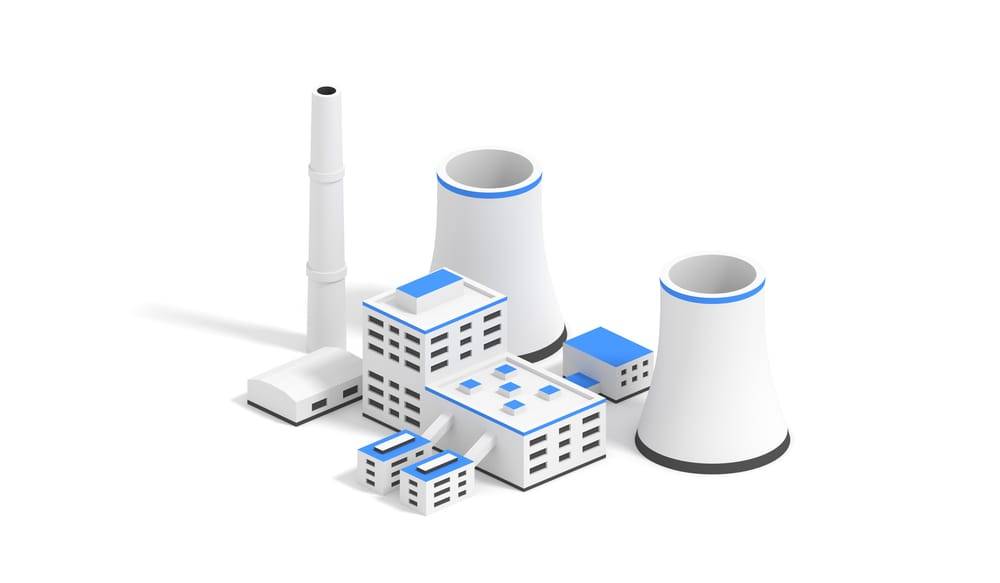
Leading cloud computing providers such as Google, AWS, and Microsoft have, since last year, been signing contracts in the United States to restart idled nuclear power plants and receive electricity from them. Google has also become the first in the industry to sign a power supply agreement with Kairos Power, a small modular reactor (SMR) company.
The company plans to receive electricity from multiple SMRs that Kairos will build by 2035, and Kairos is targeting commercial deployment of SMRs by 2030.
Nuscale Power (ticker: SMR), one of the most prominent SMR startups, has seen its share price surge more than tenfold over the past year on the back of high expectations for this new generation of power technology.
So why have SMRs suddenly emerged as the next-generation power source?
Power generation basics
The goal of the power grid is to deliver high-quality electricity reliably to households, offices, factories, and other end users. Because of the nature of AC (Alternating Current) power systems, electricity must be supplied in real time to match demand; if supply falls short or significantly exceeds demand, blackouts can occur.
Base load
So-called base load refers, literally, to the minimum level of electricity demand that the grid must meet at all times.
Looking at the graph above, you can see that over the course of a day, electricity demand can broadly be divided into three levels: base load, intermediate load, and peak load. This variability arises because most human activity takes place during daylight hours.
Power sources such as nuclear plants, which once started must run continuously for months, are well suited to serving base load. Intermediate load is better matched with sources whose output varies over time, such as solar power plants, while peak load is best met by ESS (Energy Storage Systems) or thermal power plants whose output can be ramped up and down.
Nuclear power is not cheap
The claim that nuclear power is cheap because fuel costs are negligible is misleading. In advanced economies, the cost of building nuclear plants has skyrocketed due to stringent safety regulations and permitting delays. For example, nuclear power plants built in the United States are designed on the assumption that they must remain safe even in the event of an airplane crash.
This is Lazard’s Levelized Cost of Energy model, published annually by the U.S. boutique investment bank. The levelized cost of energy is an average measure of total costs—including capital expenditures, operating expenses, and fuel costs—which allows us to estimate the realistic cost of generation per megawatt-hour (MWh) for a given power source.
As the model shows, the per-MWh generation cost of Solar PV – Utility (large-scale solar power plants), and even Solar PV + Storage – Utility (large-scale solar plus storage), is lower than that of nuclear power plants.
In short, contrary to the perception that renewable energy is expensive, as of 2024 in the United States, onshore wind was the cheapest source of power generation, followed by large-scale solar power plants.
Social return on investment
As the economic damage caused by climate change accelerates, investment in low-carbon technologies and infrastructure is becoming not just an environmental choice but an essential economic one. If global warming is not curbed, the average temperature by the end of the 21st century is expected to rise by up to 4.4 degrees Celsius compared with pre-industrial levels, and the resulting economic loss is estimated to reach 5–20% of global GDP. Based on the 2020 global GDP of 84.58 trillion dollars, this implies an enormous annual economic loss of between 4.23 trillion and 16.91 trillion dollars.
In this context, investment in low-carbon technologies is viewed as an opportunity to generate a high long-term Social Return on Investment (SROI). According to the International Energy Agency (IEA), the investment required to reduce carbon emissions by 2050 amounts to about 53 trillion dollars, but when factoring in the avoided damage costs from climate change, an annual ROI of 8–32% can be expected. For example, analysis by the World Bank suggests that if greenhouse gas reduction policies are not implemented, rising sea levels will submerge about 4 million km² of habitable land by 2050, forcing 5% of the world’s current population living in those areas to relocate.
In particular, the International Labour Organization (ILO) projects that by 2030, global warming will reduce labor productivity by 2.2%, leading to economic losses of 2.4 trillion dollars. Accordingly, expanding investment in low-carbon technologies such as renewable energy, carbon capture and storage (CCS), and energy storage systems (ESS) will play a key role in reducing future economic uncertainty.
From an economic standpoint, high upfront capital costs are a major barrier to the adoption of low-carbon technologies. However, over the long term, the return on investment is highly positive. For instance, the report “Stern Review: The Economics of Climate Change” finds that if sustained investment in low-carbon technologies is maintained at around 1% of global GDP, it can significantly reduce the potential loss costs associated with climate change.
According to the author’s return-on-investment projection model based on 2021 data, even in the worst-case scenario, a 100-trillion-dollar investment in low-carbon technologies would yield a return of 118%, while in the best-case scenario, the return could be as high as 935%.
In addition, the negative impact of carbon dioxide emissions on the economy is multifaceted and long-lasting. If current emission levels persist, the cumulative effect will further increase the economic burden on future generations, whereas early investment in low-carbon technologies can alleviate that burden. Furthermore, low-carbon investments generate various additional benefits such as lower energy costs, reduced healthcare expenses, and lower climate-disaster recovery costs, making them an efficient long-term investment strategy relative to social costs.
You can find more detailed discussion in the short paper below.
Social ROI of Renewables
Social ROI of Renewables.pdf • 338 KB
Economics of SMRs
Theoretical advantages
It is not easy to assess the economics of SMRs when there are still no fully operating SMR power plants. Compared with conventional nuclear power plants, the advantages typically cited for SMRs can be summarized as follows:
Lower upfront costs: While conventional nuclear plants require construction costs in the tens of trillions of won, SMRs are smaller in scale and therefore relatively cheaper. Their modular design allows additional units to be added as needed, reducing the capital burden.
- Enhanced safety: By applying passive safety systems such as natural cooling, safe operation is possible without external power. Low-pressure, small-scale designs mean that the risk of accidents such as explosions is lower than in conventional nuclear plants.
- Flexible scalability: Capacity can be expanded step by step in line with rising power demand, which is less burdensome than conventional plants that require large-scale investment from the outset. SMRs are considered a suitable solution for industrial complexes, remote areas, and islands.
- Faster construction: With factory pre-fabrication and on-site assembly, construction time can be significantly shortened. While large nuclear plants can take more than 10 years to complete, SMRs can be brought online within a few years.
Key prerequisites
However, the U.S. Department of Energy notes that the economic viability of SMRs depends on the assumption that the modules and components used in small reactors can be mass-produced:
The case for SMR economic competitiveness is rooted in the concept that mass manufacture of modular parts and components will reduce the cost per kilowatt of electricity on par with current generating sources.
Cost challenges
According to data compiled by the U.S.-based Institute for Energy Economics and Financial Analysis (IEEFA), projected SMR construction costs have continued to rise year after year from their initially proposed levels. In China and Russia, which have already completed and are operating SMRs, actual construction costs have reached three to four times the original estimates. For Argentina’s CAREM 5 SMR, currently under construction, total costs are expected to reach seven times the initial projection.
IEEFA also estimates that, even after factoring in subsidies from the Inflation Reduction Act (IRA) spearheaded by President Biden, the levelized cost of electricity from SMRs will be far higher than that of renewables plus energy storage. And starting in 2025, with President Trump’s election and Republicans taking control of Congress, it is virtually a foregone conclusion that the IRA will be scrapped.
According to Bloomberg, the US “Stargate” project, a roughly 700 trillion won AI infrastructure build-out, will also rely primarily on solar power and battery-based energy storage as its main power sources. The project partners are private companies, and their insistence on solar is straightforward: it is the cheapest option.
In conclusion, the reason big tech companies are currently embracing nuclear power, including SMRs, is not because they are optimistic about the long-term economics of SMRs, but because they simply do not have enough power right now to supply AI data centers.
Newsletter
Be the first to get news about original content, newsletters, and special events.
Continue reading

Note By Ryunsu
The Intelligence Layer of Financial Infrastructure
Ryunsu Sung

Aware Original
Why Bitcoin Keeps Falling: The Downward Spiral of the Gamma Trap
Ryunsu Sung

Aware Original
The Overwhelming Autonomous Driving Leader Proven by Numbers: Waymo’s Full-Scale Takeoff
Ryunsu Sung

Aware Original
The Precarious State of ‘American Exceptionalism’ and a Shaken Dollar Hegemony
Ryunsu Sung