Mar 16, 2024
Why Sam Altman Says You Should Believe in Yourself Almost to an Extreme
Ryunsu Sung
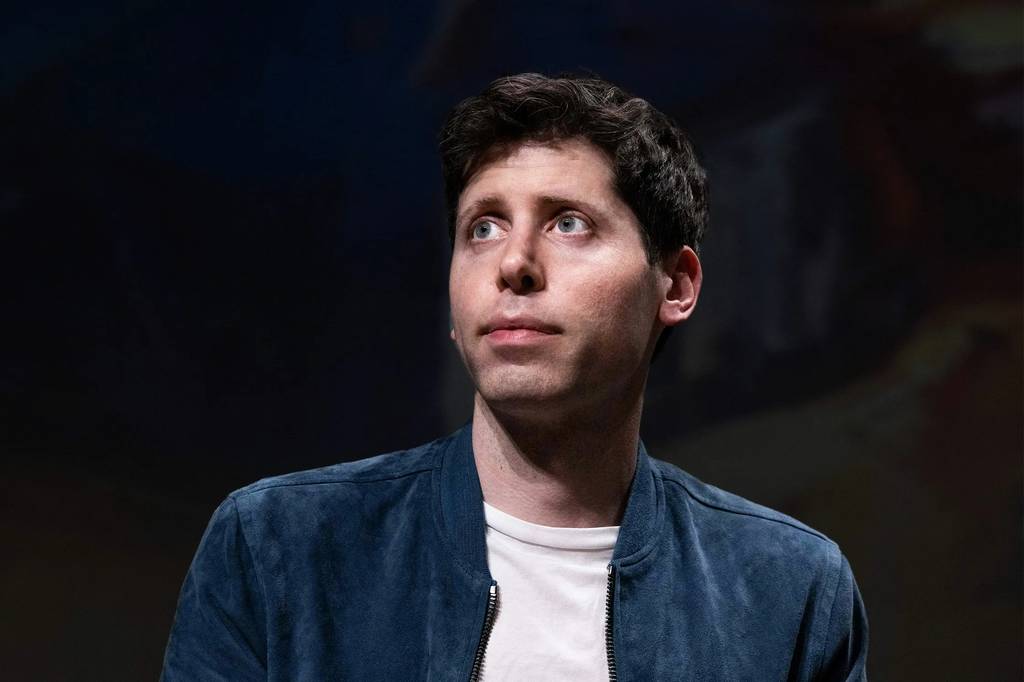
“A big secret is that you can bend the world to your will a surprising percentage of the time—most people don’t even try, and just accept that things are the way that they are.”
— Sam Altman
One of the hottest topics these days is AI, and if you had to pick the most famous person in the AI industry, Sam Altman, the founder and CEO of OpenAI, would likely come to mind. I’m translating his 2019 blog post “How To Be Successful” and adding my own thoughts along the way.
The quotation above is one of the lines from the main text, and I pulled it out because it resonated with me the most. In it, he says, “One big secret is that you can change the world to your liking in a surprisingly large number of cases. Most people don’t even try and just accept that the world is simply the way it is.”
I’ve spent a lot of time thinking about what it takes to make an enormous amount of money or to create something truly important, while observing thousands of founders. Most people initially want the former, but eventually come to want the latter.
Here are 13 thoughts on how to achieve this kind of exceptional success. Everything here becomes easier if you’ve already reached some level of success—through privilege or effort—and are now trying to turn that into something extraordinary. [1] But most of what follows applies to anyone.
1. Compound yourself
Compounding is magic. You can find it everywhere. Exponential curves are the key to generating wealth.
A small company whose value grows 50% every year becomes a giant in a short period of time. There are very few businesses in the world with truly strong network effects and extreme scalability. But thanks to technology, more and more companies can get there. It’s worth putting a lot of effort into finding and building them.
If you want to become an exponential curve yourself, you should aim for your life to follow the right trajectory—one that keeps bending upward. Most careers progress in a fairly linear way, so it’s important to move toward a career where compounding can happen.
To have a career where someone with two years of experience can be as effective as someone with twenty, you need to learn very quickly. As your career advances, each unit of work should produce more and more output. You can gain that kind of leverage in many ways—through capital, technology, brand, network effects, people management, and more.
Whatever you define as your metric of success—money, status, impact on the world—you should be aiming to add another zero to it. I’m willing to take as much time as I need to find my next project. But if it succeeds, I want it to be the kind of project that makes my previous career look like a footnote in a paper.
Most people stay stuck chasing small, linear opportunities. You have to be willing to pass those up in order to focus on step-change opportunities.
Whether for a company or an individual career, I believe the greatest competitive advantage in business is having a broad view of how different systems in the world will fit together, and thinking on a long time horizon. One striking feature of compounding growth is that the very distant future matters the most. In a world where almost no one truly thinks long term, the market rewards those who do, and rewards them handsomely.
Believe in exponential trends, be patient, and see what incredible results they produce.
2. An almost irrational belief in yourself
Self-belief is incredibly powerful. The most successful people I know believe in themselves to a degree that borders on delusional.
Cultivate this belief early. As you accumulate more data points that your judgment is sound and that you can deliver results consistently, trust yourself even more.
If you don’t believe in yourself, it’s hard to develop a differentiated view of the future. But that’s exactly where most of the value gets created.
I remember years ago when Elon Musk took me on a tour of the SpaceX factory. He walked me through how every part of the rocket was made, but what really stuck with me was the look of absolute conviction on his face when he talked about sending a giant rocket to Mars. I thought, "That’s what real conviction looks like."
Managing your own morale, and that of the team you’re on, is one of the hardest parts of almost any ambitious effort. Without belief in yourself, it’s nearly impossible. Unfortunately, the bigger your ambition, the harder the world will try to knock you down.
Most successful people have, at least once, been truly right about the future when most people thought they were wrong. If that weren’t the case, they would have faced far more competition.
Belief in yourself has to be balanced with self-awareness. I used to hate any kind of criticism and actively avoided it. Now I always listen to criticism under the assumption that it might be true. The search for truth is hard and often painful, but it’s what lets you distinguish between self-belief and self-delusion.
That balance also keeps you from coming across as someone who just throws their weight around.
3. Learn to think independently
Because it’s so hard to teach original thinking, it’s also very hard to teach entrepreneurship. Schools were not set up to teach this; if anything, they usually teach the opposite. So you have to develop it yourself.
Trying to reason from first principles and generate new ideas is fun, and finding people to share those ideas with is one of the best ways to get better at first-principles thinking. The next step is to figure out how to test those ideas in the real world as easily and quickly as possible.
The mindset of entrepreneurs is, "I’ll be wrong many times, and then I’ll be really right once." To be lucky, you have to give yourself lots of shots on goal.
One of the most powerful lessons is that even in situations that seem to have no solution, you can figure out what to do. The more you do this, the more you’ll believe it. Grit comes from learning that you can get back up after you’ve been knocked down.
4. Get good at “sales”
Believing in yourself is not enough. You also have to be able to persuade other people to believe in you.
Every great career involves sales to some degree. You have to persuade customers, potential employees, the press, investors, and others of your plans. To do that, you need an inspiring vision, strong communication skills, some level of charisma, and evidence that you can execute.
Being good at communication—especially written communication—is worth investing in. The best advice for clear communication is to first clarify your own thinking, and then use plain, concise language.
The best way to be good at sales is to genuinely believe in what you’re selling. It feels great to sell something you truly believe in, and it feels awful to try to sell snake oil.
Like improving any other skill, anyone can get better at sales through deliberate practice. But for some reason—probably because it feels uncomfortable—many people treat sales as something they simply can’t learn.
Another important sales tip is to show up in person whenever something really matters. When I was just starting out, I was always willing to get on a plane. It was unnecessary most of the time, but three times it became a turning point in my career.
5. Make it easier to embrace risk
Most people overestimate risk and underestimate reward. Because you can’t always be right, it’s important to take risks, try many things, learn more, and adapt quickly.
It’s often easier to take risks early in your career, when you have less to lose and a lot to potentially gain. Once you reach a point where you can comfortably meet the basic obligations of life, you should work to make it easier for yourself to take risks. Look for small bets where, if you’re wrong, you lose 1x, but if you’re right, you can make 100x. Then start placing bigger bets in that direction.
But don’t spend too long getting ready. At YC, we often see issues with founders who have worked at Google or Facebook for a long time. Once you get used to a comfortable life, a predictable job, and a reputation that you’ll succeed at whatever you do, it becomes very hard to walk away from that (people have an amazing ability to adjust their lifestyle to match next year’s salary level). Even if you quit, you’ll be strongly tempted to go back. Prioritizing short-term gain and convenience over long-term fulfillment is human nature, and it’s the path of least resistance.
But when you’re not clinging to your job, you can follow your instincts and invest time in things that could be genuinely exciting. The more frugally and flexibly you live, and the longer you can keep that up, the easier this becomes—though it’s certainly not without discomfort.
6. Focus
Focus multiplies the power of your work.
Almost everyone I’ve met could get better results by spending more time thinking about what to focus on. Doing the right work matters far more than working long hours. Most people waste most of their time on things that don’t really matter.
Once you’ve figured out what you need to do, don’t stop until you’ve quickly knocked out a small set of top priorities. I have yet to meet a slow-moving person who turned out to be successful.
7. Work hard
If you work smart or work hard, you can get to the 90th percentile in your field, which is still a major achievement. But to reach the 99th percentile, you need both. Once you’re in the top 1%, you’ll be competing with other talented people who also have great ideas and work very hard.
Extreme people get extreme results. Doing a huge amount of work requires major sacrifices in your life, and deciding not to go that far is a perfectly rational choice. But there are many advantages. In most cases, momentum becomes more and more powerful, and success begets success.
And deep immersion is genuinely fun. One of life’s greatest joys is finding your purpose, doing it exceptionally well, and realizing that you can have an impact on something bigger than yourself. A YC founder recently told me how surprised he was by how much happier and more fulfilled he felt after leaving a big company and working in a way that maximized his impact. Working hard is something that deserves to be celebrated.
It’s not clear why, in certain parts of the United States, working hard has come to be seen as a bad thing, but outside the US it’s obvious that the energy and drive entrepreneurs show are setting a new benchmark.
You have to find a way to work hard without burning out. People find their own strategies for this, but one that almost always works is spending a lot of time with people you like and doing work you enjoy.
I think people who believe you can be highly successful in your career without working much of the time are doing harm. In reality, work stamina seems to be one of the strongest predictors of long-term success.
One more thought on working hard: it’s best to work especially hard early in your career. Effort compounds, so the earlier you start, the longer you get to enjoy the benefits. It’s also easier to work hard when you have fewer other responsibilities, which is often—but not always—the case when you’re young.
8. Be bold
I actually think hard startups are easier than easy ones. People want to be part of something exciting, and they want to feel that their work matters.
If you’re making real progress on an important problem, people who want to help you will keep showing up. Don’t be afraid to aim higher and do the thing you truly want to do.
If everyone else is starting meme companies and you want to start a gene-editing company, don’t hesitate—go do it.
Follow your curiosity. What seems interesting to you often turns out to be interesting to other people as well.
9. Be deliberate
One big secret is that in a surprisingly large number of cases, you can actually change the world to match your will. Most people don’t even try; they just accept that the world is the way it is.
Human beings have an extraordinary ability to make things happen. A mix of self-doubt, giving up too early, and not trying hard enough keeps most people from getting anywhere near their potential.
Ask for what you want. Most of the time you won’t get it, and rejection will hurt. But when this approach works, it’s astonishingly effective.
Most people who can sincerely say, “I’m going to keep going until this works, and no matter what difficulties come up, I will find a way through,” end up succeeding. They keep at it with persistence until luck shows up.
I’d like to use Airbnb as an example. There’s too much backstory to tell it all here—maxing out dozens of credit cards, eating dollar-store cereal every meal, fighting entrenched interests—but they managed to survive long enough for luck to break their way.
To have willpower, you have to be optimistic, and optimism is a personality trait you can improve with practice. I’ve never seen a truly pessimistic person become successful.
10. Become a scary competitor
Most people believe that companies that are hard to compete with are more valuable. This is an important and obvious truth.
But the same applies to individuals. If someone else can do what you do at a lower cost, eventually that’s what will happen.
The best way to become hard to compete with is to build leverage. You can do this, for example, through personal relationships, by building a powerful personal brand, or by becoming highly skilled at the intersection of multiple fields. There are many other strategies as well, but you need to find your own.
Most people behave the way most of the people around them behave. Because it’s hard to win if you’re doing exactly what everyone else is doing, this kind of mimicry is usually a mistake.
11. Build your network
You need a team to tackle hard problems. Building a network of talented people who will sometimes work closely with you and sometimes loosely is an essential part of building a great career. The limited size of a network made up of truly capable people often becomes the bottleneck on what you can achieve.
An effective way to build a network is to help as many people as you can. Over a long period of helping people, I’ve found my best career opportunities and three out of four of my investment opportunities. I’m still surprised by how often something good happens to me because of something I did ten years ago to help a founder.
One of the best ways to build a network is to earn a reputation for genuinely caring about the people you work with. If you’re overly generous in sharing upside, it comes back to you tenfold. Also, learn how to assess what people are good at and put them in the right roles. (This is the most important thing I’ve learned about management, and I haven’t even read that many books on it.) You want a reputation for pushing people hard enough that they achieve more than they thought they could, but not so hard that they burn out.
Everyone is better at some things than other people. Define yourself by your strengths, not your weaknesses. Acknowledge your weaknesses and find ways to work around them, but don’t let them stop you from doing what you want to do. “I can’t do X because I’m not good at Y” is something I hear from founders surprisingly often, and it almost always reflects a lack of creativity. The best way to compensate for your weaknesses is not to hire people who are good at the same things you are, but to hire teammates who are complementary.
A particularly important part of networking is getting good at spotting undiscovered talent. Quickly recognizing intelligence, drive, and creativity becomes much easier with practice. The easiest way to learn is to meet a lot of people and keep track of who leaves a strong impression on you and who doesn’t. Focus mostly on how fast they’re improving, and don’t put too much weight on experience or what they’ve achieved so far.
Whenever I meet someone new, I try to ask myself, “Is this person naturally gifted?” It’s a very good heuristic for finding people who are likely to produce exceptional results.
A special case is finding a prominent person early in your career who is willing to bet on you. The best way to make that happen, of course, is to work hard to help them. (And don’t forget that someday you need to pay it forward the way they did for you!)
Finally, don’t forget to spend your time with positive people who support your ambitions.
12. Wealth is created through ownership
The biggest economic misconception I had as a kid was that people became rich by earning a high salary. There are a few exceptions like celebrities, but in the history of the Forbes list, almost no one has become rich purely on wages.
You become truly wealthy by owning assets whose value rises rapidly.
Those assets can be a business, real estate, natural resources, intellectual property, or something similar. But in any case, you have to own a stake in something instead of selling your time. Time only scales linearly.
The best way to create something that rapidly increases in value is to build something people want at scale.
13. Focus on intrinsic motivation
Most people are driven mainly by external motivations—they work to impress others. That’s bad for many reasons, but two are especially important.
First, you end up working on conventional ideas and conventional career tracks. You care far more than you realize about whether you’re doing what other people think is right. As a result, you may never do anything truly interesting, and even if you do, someone else will likely have done it already.
Second, you usually misjudge risk. You become intensely focused on keeping up with others in the short term and not falling behind in the status competition.
Smart people in particular seem exposed to the dangers of acting from these external motivations. Being aware of this helps, but you still have to be extremely careful not to copy other people.
The most successful people I know are driven primarily by strong intrinsic motivation. They work to impress themselves and out of a conviction that they have something they must accomplish in the world. Once you’ve made enough money to buy everything you want and have achieved so much social status that getting more is no longer fun, this is the only force that can keep pushing you to higher levels of performance.
That’s why questions about someone’s motivation are so important. It’s also the first thing I try to understand about a person. It’s hard to define the right motivation as a set of rules, but you know it when you see it.
Jessica Livingston and Paul Graham are my examples. For years, YC was widely mocked, and when it first started, almost no one thought it would become a big success. But they believed that if it did succeed, it would be a huge benefit to the world, they genuinely liked helping people, and they were convinced the new model was better than the old one.
Ultimately, you can define success as doing outstanding work in an area that matters to you. The earlier you start moving in that direction, the farther you can go. It’s hard to be wildly successful at something you’re not obsessed with.
[1] This is a reply I wrote as a comment on HN:
One of the biggest reasons I’m excited about basic income is that by letting more people take risks, it can unlock more of human potential.
If you weren’t born lucky, you have to work hard for quite a while before you can take big swings. If you were born in extreme poverty, it’s really hard :(
It’s clearly a huge shame and a waste that opportunity is distributed so unevenly. But I’ve seen enough people who started out in very difficult circumstances go on to extraordinary success that I know it’s possible.
I’m personally very aware that I would not be where I am today if I hadn’t been born lucky.
I’m grateful to Brian Armstrong, Greg Brockman, Dalton Caldwell, Diane von Furstenberg, Maddie Hall, Drew Houston, Vinod Khosla, Jessica Livingston, Jon Levy, Luke Miles (six drafts!), Michael Moritz, Ali Rowghani, Michael Seibel, Peter Thiel, Tracy Young, Shivon Zilis, and especially Lachy Groom for writing, for reviewing the early drafts of this essay.
Newsletter
Be the first to get news about original content, newsletters, and special events.
Continue reading

Note By Ryunsu
The Intelligence Layer of Financial Infrastructure
Ryunsu Sung

Aware Original
Why Bitcoin Keeps Falling: The Downward Spiral of the Gamma Trap
Ryunsu Sung

Aware Original
The Overwhelming Autonomous Driving Leader Proven by Numbers: Waymo’s Full-Scale Takeoff
Ryunsu Sung

Aware Original
The Precarious State of ‘American Exceptionalism’ and a Shaken Dollar Hegemony
Ryunsu Sung