Jul 01, 2024
The Dirty Truth of the Semiconductor Industry
Ryunsu Sung
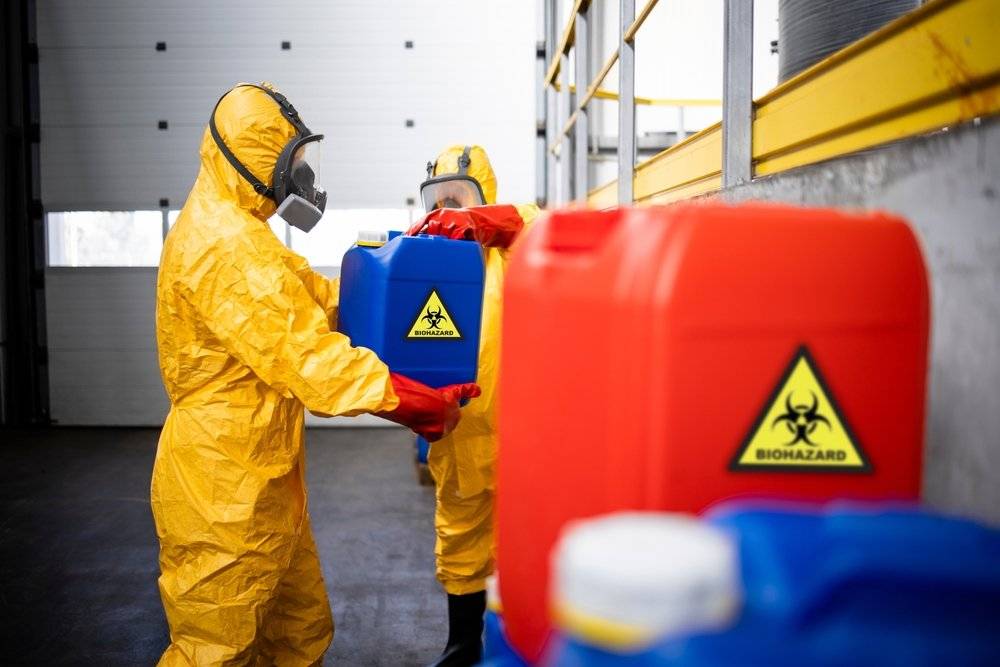
From a June 5, 2017 Bloomberg article, “American Chipmakers Had a Toxic Problem. Then They Outsourced It”:
The results of epidemiological studies are often inconclusive, and corporate “research funding” can blur scientific facts (for example, the long-running disputes between tobacco companies and cancer researchers). Clear-cut conclusions are rare, but one such case emerged in 1984 in the epidemiology department at the University of Massachusetts Amherst, where Professor Harris Pastides was then on the faculty.
James Stewart, a graduate student who was working as a health and safety manager at Digital Equipment while pursuing his degree, informed Pastides that there had been several miscarriages in Hudson, Massachusetts, where the company’s plant was located. At the time, women of childbearing age made up about 68% of the production workforce in the U.S. tech industry, and Stewart knew something that few outsiders did: the process of making computer chips involves the use of hundreds of different chemicals. Women on the production line worked in so‑called clean rooms and wore protective suits, but those suits were designed to protect the chips, not the workers. The women were exposed to chemicals including reproductive toxins, mutagens, and carcinogens, and in some cases came into direct contact with them. In occupational health, reproductive risks are among the most serious concerns, because a worker’s fetus may suffer congenital defects or childhood diseases, and because reproductive problems in the worker herself can be an early warning sign of diseases that appear long after exposure, particularly cancer.
Digital Equipment agreed to fund a study, which was designed and carried out by Pastides, an expert in disease clusters. Data collection was completed by late 1986, and the results were shocking: the miscarriage rate among women working at the plant was twice what would be expected. In November, the company disclosed this finding to employees and to the Semiconductor Industry Association, and later made it public. Pastides and his colleagues were hailed as heroes in some quarters, but they also faced criticism, especially from industry. Companies in the Semiconductor Industry Association (SIA) claimed that Pastides’s methods were seriously flawed and refused to accept the results, but under social pressure they pledged to support further research.
Scientists at the University of California, Davis designed one of the largest worker health studies ever conducted. It involved 14 SIA member companies, 42 plants, and 50,000 employees. IBM, insisting that its own plants were safer than others, commissioned a separate study from Johns Hopkins University.
In epidemiology, follow‑up studies are usually larger and more complex, and as a result they often produce conflicting findings. But in December 1992, something highly unusual happened. All three studies—each funded by industry—produced similar results: among thousands of potentially exposed women, miscarriage rates were roughly doubled. This time, industry moved quickly. The SIA identified a widely used class of toxic chemicals in chip manufacturing as the primary culprit and announced that it would accelerate efforts to phase them out. IBM went further, pledging to eliminate these substances from semiconductor production worldwide by 1995.
Pastides felt a sense of relief. More than that, he regarded the entire episode as one of the greatest success stories in the history of public health, and others shared that view. Despite skepticism from industry, the three studies had driven changes that benefited women. “This is almost a fairy tale in public health,” Pastides says.
Twenty years on, that fairy tale, unfortunately, is still being written. As semiconductor production shifted to lower‑cost countries, it appears that the corrective measures promised by industry were never fully implemented. According to confidential documents reviewed by Bloomberg Businessweek, as recently as 2015 thousands of women and their fetuses may still have been exposed to the same toxic substances. Some are likely still being exposed today. Separate evidence suggests that the same reproductive health problems have persisted for decades.
In 2010, a Korean physician named Myung‑Hee Kim left her assistant professorship at a medical school to head a small research institute in Seoul. For Kim, an epidemiologist, it was an opportunity to devote more time to the public‑health research she had begun five years earlier as a postdoctoral fellow at Harvard.
In her new role, what caught Kim’s attention was a series of cancer cases in Korea’s electronics industry. One case in particular drew public scrutiny: two young women who had worked with the same chemicals on the same Samsung Electronics production line developed the same aggressive form of leukemia. The disease affects only about three out of every 100,000 people each year, yet both women died within eight months. And it is one of the cancers most clearly linked to carcinogenic exposure. Activists uncovered more cases at Samsung and other chipmakers, most of them involving young women. Industry executives denied any connection.
Kim began collecting and analyzing occupational‑health studies on semiconductor workers around the world—research that had drawn little attention in Korea despite the industry’s importance there. She found that by 2010, forty different studies had been published, and almost all of them mentioned exposure to toxic chemicals. “I had no idea this was essentially a chemical industry, not an electronics industry,” she says.
While physics drives the design of semiconductor chips, their manufacture is largely a matter of chemistry. In essence, chips are made by using a combination of chemicals and light to print circuits onto silicon wafers. Gordon Moore, one of Intel’s founders and a key figure in the creation of the modern chip in 1960, was originally a chemist. He worked closely with physicist Jay Last on the lithography process. In an oral‑history interview for the Chemical Heritage Foundation, Last recalled telling Moore, “We were using a lot of really nasty chemicals in semiconductor manufacturing.” He went on, “We knew nothing about these substances, and we were dumping them into the municipal sewer system.”
Years later, Moore recalled that when they dug up the waste pipes beneath an Intel plant, “the underside of the pipe was completely corroded, and that was when we began to realize how seriously we needed to take these problems.” Eventually, regulators designated Santa Clara County—the heart of Silicon Valley—as having more hazardous‑waste sites than any other county in the United States.
As Kim learned from her scientific review, one of the key chemical mixtures used in lithography is known as photoresist, a photosensitive compound that allows circuit patterns to be printed onto chips. In their oral‑history interviews, Moore and Last said that the dangers of the chemicals they used were not known in the 1960s, but research linking the hazards of photoresist ingredients dates back to the 1930s. The toxic components are called ethylene glycol ethers (EGEs). They became major ingredients in the solvent mixtures known as strippers, which are used in the chip‑printing process to clean the wafers.
Kim was able to confirm that the same chemicals had been identified in the study Pastides conducted at Digital Equipment and in the work done with IBM by scientists at Johns Hopkins. The IBM study found that miscarriage rates were tripled among women who worked directly with EGEs. Separate research showed that EGEs easily penetrate rubber gloves and that absorption through the skin—long considered a safe route—can lead to exposure levels 500 to 800 times higher than what had been thought acceptable. The risks were so clear that in 1993 the U.S. Occupational Safety and Health Administration (OSHA) formally proposed an exposure limit so low that, in practice, companies would have to eliminate EGEs altogether in order to comply.
Kim’s review covered all of that research as well as studies conducted later. Historically, reproductive‑health studies have linked semiconductor manufacturing to fatal birth defects in the children of male workers, childhood cancers in the children of female workers, infertility, and long‑term disruptions of menstrual cycles.
Yet in nearly every study published since the 1990s, Kim kept encountering the same kind of statement: that the global semiconductor industry had phased out EGEs in the mid‑1990s, effectively putting an end to reproductive‑health problems. On its face, this made sense. Not only had IBM and other companies publicly announced that they had stopped using EGEs, but the chemicals had been classified under international standards as Category 1 reproductive toxins, and European regulators had placed them on a list of substances of very high concern—among the most hazardous chemicals known to science.
Even so, something continued to nag at Kim. In focus groups, young Korean women working in chip plants told her colleagues that it was common for them to stop menstruating for months at a time, sometimes for a full year. (Some regarded these potentially ominous changes in their reproductive systems as a blessing rather than a warning, because not having periods was more convenient.) As in the United States, most women on Korea’s semiconductor production lines are of childbearing age; more than 120,000 women work in the sector, many hired straight out of high school. Kim and a colleague decided they needed to conduct a new reproductive‑health study. But they faced a challenge that Pastides and other U.S. researchers had not: resistance from industry.
In 2013, they persuaded a member of Korea’s National Assembly to help them obtain data from the National Health Insurance Service. They secured five years’ worth of health‑insurance claims, through 2012, for women of childbearing age working at plants owned by Samsung Electronics, SK Hynix, and LG. Because Samsung and SK Hynix are two of the world’s largest chipmakers, their employees made up the vast majority of the women in the study. The dataset included an average of 38,000 women per year. The researchers then examined the records of those who had sought hospital care for miscarriages.
The results were as shocking to Dr. Kim as they had been to Pastides nearly 30 years earlier. The miscarriage rate was markedly high, and among women in their 30s it was almost on par with that of the U.S. plants. And even these figures were conservative, because many women do not go to the hospital for miscarriages, and production workers were not distinguished from office workers. “This was not what I expected to find,” Dr. Kim said.
In the paper where they published their findings, Dr. Kim and her colleagues reiterated the claims of earlier research: EGE had been phased out in industry. But in their conclusion, they added that they could not state this with certainty. They also noted various other reproductive toxins and environmental hazards in the plants, such as ionizing radiation. And they added the following warning: “Because our data come from three large corporations in Korea, it is possible that workers in smaller Korean companies or in developing countries are even more exposed to these risks.”
After the changes in the United States in the 1990s, chemical companies said they altered the ingredients of photoresists and other products supplied to semiconductor manufacturers, including those in Asia. But test data obtained by Bloomberg Businessweek show that the transition was not always swift—and in some cases did not happen at all.
In 2009, Korean scientists tested 10 random samples taken from drums of photoresist at Samsung Electronics and SK Hynix plants. At the time, concerns were focused on leukemia, so the photoresists were tested only for toxins associated with that disease. One was benzene, known to cause a rare form of leukemia that had killed Samsung employees; the other was 2-methoxyethanol (2-ME), the most toxic of the EGEs. Tests detected 2-ME in six of the 10 photoresist samples. Of the two samples with the highest concentrations, one came from SK Hynix and the other from Samsung.
The Korean scientists did not record the names of the chemical companies that manufactured and sold the drums tested, but they did record the product numbers. When those numbers were cross-checked with patent data, the two photoresists with the highest 2-ME concentrations were found to have been made by the same manufacturer: Shin-Etsu Chemical in Tokyo.
According to Shin-Etsu’s annual report for that fiscal year, the company is “the world’s leading photoresist manufacturer, with about one-third of the market.” This raises the likelihood of 2-ME exposure at semiconductor plants across Asia. Topco Scientific, a company based in Taipei, is the exclusive distributor of Shin-Etsu Chemical’s products in Taiwan and China, and securities filings show that photoresists are a major source of its revenue. An executive at Topco who oversees photoresist sales confirmed that the two specific products with the highest 2-ME concentrations had been sold for years to semiconductor companies in Taiwan and China.
The semiconductor industry was effectively trading the chemical exposure of U.S. workers for the chemical exposure of women workers overseas.
At first, Tetsuya Koishikawa, a spokesperson for Shin-Etsu Chemical, refused to discuss either the chemical composition of the company’s products or reproductive health issues at customers’ plants. In a follow-up email statement, he said Shin-Etsu had never used 2-ME in its photoresists.
In 2015, Korean scientists built on their earlier photoresist tests and expanded them by taking random samples from seven semiconductor manufacturers. This time, no 2-ME was detected in samples from Samsung and SK Hynix, but samples from smaller companies tested positive. (The test data were shared with Bloomberg Businessweek on the condition that the companies’ identities not be disclosed.)
SK Hynix declined to comment. Samsung Electronics said that because its internal record-keeping only goes back to 2011, it can be confident that EGE was completely eliminated by then, but spokesperson Seo Byung-hoon said he believes the phaseout began earlier, in the mid-1990s, when suppliers started changing their chemical mixtures. He said Samsung was aware of the 2009 test results that found 2-ME at its plants, but was unable to confirm or reproduce them internally.
The company also said, “Samsung Electronics has strict policies regarding pregnancy and childbirth rights, and we have programs in place that provide special care for pregnant employees. Pregnant workers are not allowed to handle chemicals, work night shifts, or work overtime.”
The Bloomberg article continues for quite a while after this, but it appears that most of the crucial points have already been covered, so I will stop here. Readers who are curious can click the link in the first line to read the rest.
The core technologies for designing and manufacturing semiconductor chips—an industry celebrated in the media as cutting-edge and full of promise—are held almost entirely by the United States. Even “super-subordinate” semiconductor equipment makers like ASML in the Netherlands, which produces EUV tools, have little choice but to follow when the U.S. announces semiconductor sanctions on China. The main reason the U.S. shifted a substantial portion of semiconductor manufacturing to Asia in the 1980s and 1990s ultimately comes down to “cost.” Cost includes not only the direct wages of workers in semiconductor fabs, but also the various indirect costs that arise from safety regulations designed to protect workers. As these indirect costs accumulate, they erode “productivity,” making corporate management highly sensitive to them.
The more advanced a country is, the higher the value placed on a single human life, and as a result the most dangerous work tends to be “exported” under the banner of globalization to third countries. In this context, Korea ended up being “assigned” the semiconductor industry, a promising sector that underpins the 21st-century economy. It is possible that the management of Samsung Electronics and SK Hynix (then Hyundai Electronics)—many of whom had completed their graduate studies in the United States and were well versed in the technology—were fully aware of the potential health risks faced by the many female production workers and engineers in semiconductor fabs, yet chose to compromise worker safety in part in order to meet the “economic” price targets set by their prime contractors.
Economics can seem appealing in that it expresses people’s preferences transparently in terms of goods and prices, but in markets with information asymmetry (for example, where a company is aware of hazardous substances while workers are not), it does not function efficiently in the short term. Instead, it creates a structure in which the party with superior information can extract greater short-term gains from each transaction.
In today’s Korea, where the value placed on a human life has risen, Samsung Electronics and SK Hynix now provide compensation even to former fab employees who have left the company if they develop or die from diseases recognized as being related to occupational exposure. This can be seen as the gradual unwinding of inefficient transactions that occurred in a market with information asymmetry, with the party that enjoyed “excess profits” from those transactions returning a portion of them to the other side.
However, this is an interpretation at the macro level, and from the perspective of an individual, it is doubtful that so many labor contracts would ever have been signed if each person had clearly understood what it meant to work in a semiconductor fab and all the risks that come with it. In macroeconomics, the value of a life can ultimately be determined somewhere between supply and demand, but for an individual that value approaches infinity.
In a cold market that does not recognize individuals, knowledge is crucial if you want to enter into transactions that are not stacked against you.
Newsletter
Be the first to get news about original content, newsletters, and special events.
Continue reading

Note By Ryunsu
The Intelligence Layer of Financial Infrastructure
Ryunsu Sung

Aware Original
Why Bitcoin Keeps Falling: The Downward Spiral of the Gamma Trap
Ryunsu Sung

Aware Original
The Overwhelming Autonomous Driving Leader Proven by Numbers: Waymo’s Full-Scale Takeoff
Ryunsu Sung

Aware Original
The Precarious State of ‘American Exceptionalism’ and a Shaken Dollar Hegemony
Ryunsu Sung