Nov 07, 2024
Trump’s Re-Election and the Zeitgeist of 90s Rock Band Weezer
Ryunsu Sung
Weezer, a Driving Force in the Alternative Rock Scene
When you think back to the rock scene of the 1990s, bands like Nirvana, Pearl Jam, and Soundgarden were captivating music fans around the world with their grunge sound. Among the bands that emerged in this era was Weezer. Unlike the darker tones that defined the grunge scene, Weezer pursued a distinctive style that blended power-pop melodies with alternative rock.
Weezer’s first album is their 1994 debut, commonly known as the Blue Album. Tracks like “Buddy Holly,” “Undone – The Sweater Song,” and “Say It Ain’t So” became big hits and quickly put Weezer in the spotlight. Alongside its catchy melodies, the album dealt with themes such as everyday struggles, loneliness in relationships, and a touch of self-deprecating humor. That combination really connected with the younger generation listening to rock at the time. For listeners who didn’t quite fit the mainstream and wanted something more candid and a bit lighter, Weezer effectively became an alternative to the dominant sound of the era.
The distinctiveness of Weezer’s music continued beyond their debut. In the late 1990s and early 2000s, when emo and pop punk were in vogue, the style Weezer showcased influenced bands like Blink-182 and Jimmy Eat World. Their catchy melodies and personal, slightly awkward lyrics became a musical foundation for many bands that followed.
In the end, Weezer’s history can be seen as one of offering a sense of connection to people who felt a bit removed from the mainstream. By walking a path slightly different from the dominant culture, and carving out their own space with humor, sincerity, and addictive melodies, Weezer left a clearly significant mark.
Donald Trump’s Re-Election
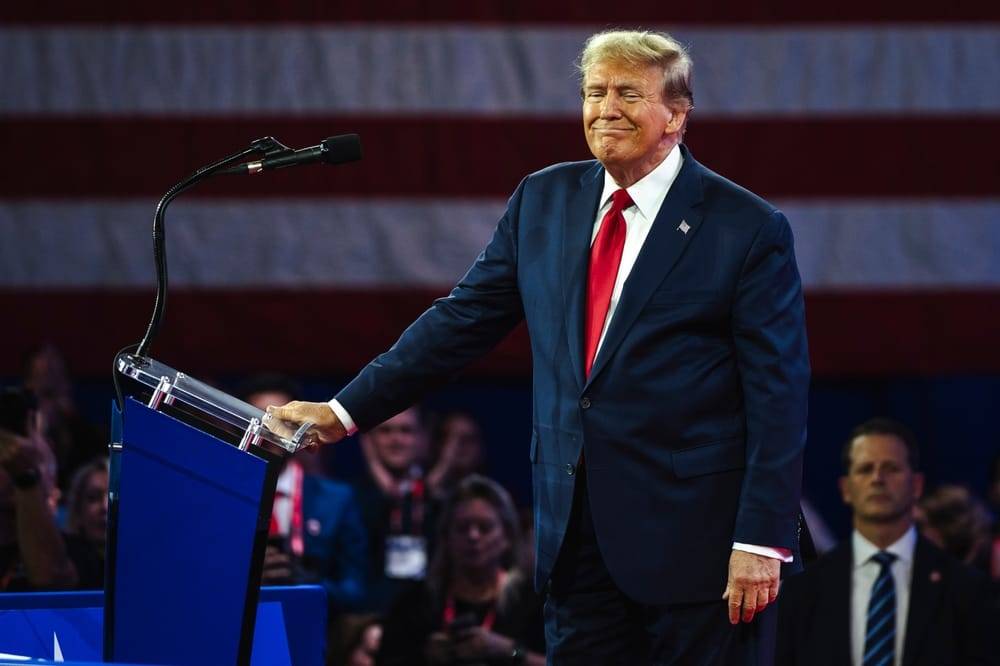
Donald Trump’s re-election can be understood in a similar emotional context to what Weezer fans feel. Even though Trump’s support base and Weezer’s music belong to entirely different domains—politics and music—they share an emphasis on an outsider identity and a backlash against the mainstream.
Fans who love Weezer’s early music often resonate with themes of alienation, individuality, and awkward humor. Weezer’s songs appeal to people who don’t fit neatly into the mainstream. They embrace an underdog mentality and a kind of self-deprecating honesty, and they tend not to follow traditional standards of success. Trump, for his part, has long cast himself as an outsider and a defiant figure resisting the established political order. That image has appealed to people disillusioned with conventional politics and those who feel marginalized by the social structure.
This outsider identity has strong appeal for many American voters. Supporters see Trump as someone who directly voices their frustrations with government and the media. His base includes people who feel left behind by globalization, those who experience a cultural gap with elites, and those unhappy with rapid social change. Just as Weezer fans are drawn to the band’s somewhat rough yet honest charm, Trump’s unfiltered speaking style comes across to his supporters as more authentic than the polished rhetoric of “elite” politicians.
And just as Weezer’s early music evokes nostalgia and a sense of authenticity, Trump’s slogan “Make America Great Again” stirs a similar feeling in the political arena. It taps into a desire to return to a past that is perceived as more closely aligned with certain American ideals. That nostalgia parallels the way Weezer fans long for the classic rock era or for what they see as the more “innocent” pre-internet days.
Part of Weezer’s appeal lies in its ironic self-awareness: an acceptance of imperfection, awkwardness, and a stance that runs counter to the mainstream. Trump’s popularity reflects a similar dynamic. He does not hide his controversial personality or his “anti-politician” posture, and through that he has built a position outside the conventional image of a “respectable politician.” Many of his supporters see this non-mainstream attitude as symbolizing a break from the political elite, and they back Trump in much the same way that Weezer fans embrace the band as an alternative to traditional rock conventions.
Trump’s re-election can be viewed as part of a broader cultural current that values outsiders, authenticity, and unfiltered communication. This aligns closely with the emotions Weezer fans seek in the band’s music, and in both cases it speaks to people who want to feel a sense of belonging to something that lies outside established norms.
Ironically, Rivers Cuomo, Weezer’s lead vocalist and primary songwriter, attended Harvard University—often regarded as the world’s most elite institution—while simultaneously running the band, before dropping out (he later returned in the late 2000s and graduated). President-elect Donald Trump, meanwhile, was born the son of a successful New York real estate developer and graduated from the Wharton School of the University of Pennsylvania, which is considered extremely difficult to get into.
Pinkerton
Pinkerton (1996) is Cuomo’s most personal and most controversial work. Inspired by his experiences at Harvard and by a shelved rock opera project, the album is far rougher, more confessional, and darker in tone than its predecessor. On release it was poorly received and widely seen as a commercial failure, but over time it became a cult classic and is now regarded as one of the greatest emo albums of all time. Pinkerton is a raw, intense record that lays bare Cuomo’s frustrations and anxieties, and his tangled feelings about fame and human relationships.
Among its tracks, “Falling For You” is the one I’m most fond of. Its rough, rhythmically driving melody and Cuomo’s brutally exposed emotions in the lyrics are compelling, but my affection isn’t really based on the song’s craftsmanship. It’s because of a quirky backstory.
At the beginning of the track, you hear a Korean woman say something that roughly translates to “Which company makes this product?”—a line that seems completely unrelated to the song. That snippet comes from a Korean-language radio commercial that bled into the guitar amp while Cuomo was recording the song in a van parked near Los Angeles. He decided not to re-record or edit it out, because to him it felt like a kind of “divine intervention.”
The Purpose of This Piece
In fact, the second section (“Donald Trump’s Re-election”) is basically a slightly edited version of what ChatGPT produced after I asked it to connect the mood and values embodied by Weezer’s music with Trump’s election victory. I don’t think many readers who started from the beginning would have noticed.
I don’t think it’s completely unrelated that Donald Trump was elected president again and the emotions of the people represented by Weezer’s music. But what I want to stress is that we should not be too bound by other people’s logic.
I think the comment made by the Seoul National University student in the screenshot above applies equally to genuinely authoritative economists, international relations experts, and U.S. politics experts. We live in an age overflowing with data, and it’s all too easy—even without realizing it—to first fix a conclusion and then cherry-pick the data that fits it.
Today’s piece is simply the result of me racking my brain over how I could introduce a band I once loved dearly (and still do, of course) to as many people as possible.
Newsletter
Be the first to get news about original content, newsletters, and special events.
Continue reading
Note By Ryunsu
The Intelligence Layer of Financial Infrastructure
Ryunsu Sung

Aware Original
Why Bitcoin Keeps Falling: The Downward Spiral of the Gamma Trap
Ryunsu Sung

Aware Original
The Overwhelming Autonomous Driving Leader Proven by Numbers: Waymo’s Full-Scale Takeoff
Ryunsu Sung
Aware Original
The Precarious State of ‘American Exceptionalism’ and a Shaken Dollar Hegemony
Ryunsu Sung