May 29, 2025
U.S. court blocks Trump’s sweeping global tariffs… “Abuse of emergency powers”
Ryunsu Sung
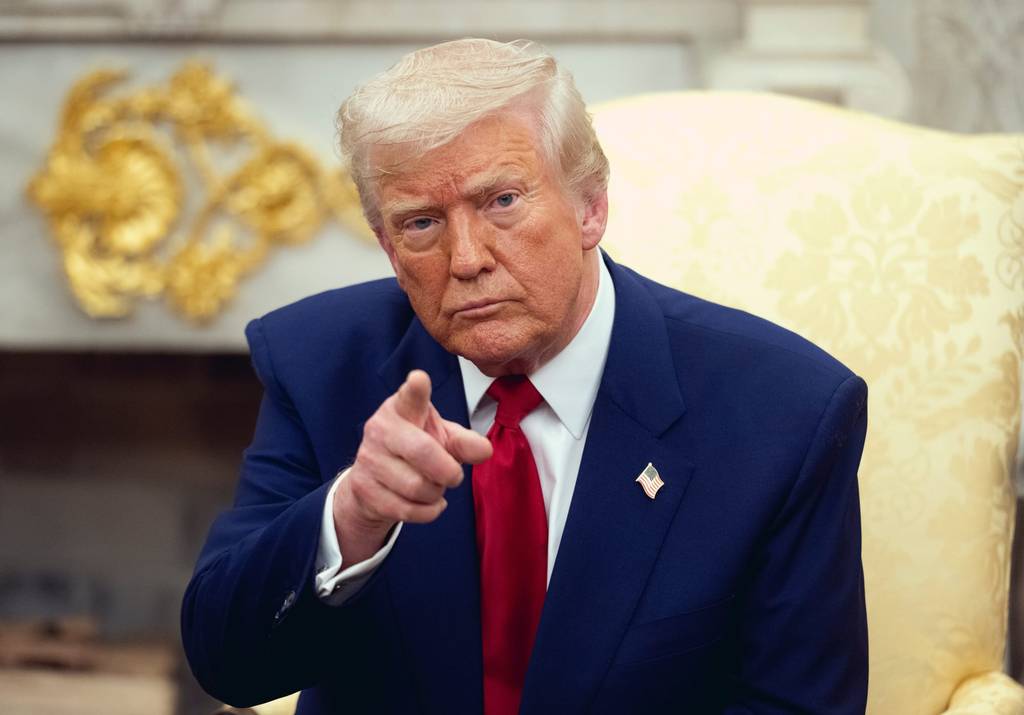
The sweeping tariffs that President Trump pushed through on the grounds of reducing the global trade deficit have been ruled “illegal” by the U.S. Court of International Trade. A central pillar of Trump’s economic agenda has, in effect, been struck down in court.
The U.S. Court of International Trade in Manhattan, New York City, ruled in a three-judge panel decision that Trump misapplied the International Emergency Economic Powers Act (IEEPA) when imposing the tariffs. The lawsuit was jointly filed by Democratic-led state governments and small businesses, and, as a result of the ruling, most of the Trump administration’s high global tariffs have been stripped of legal effect.
Trump’s legal team immediately filed an appeal, and the case is widely expected to end up at the U.S. Supreme Court. It could become a landmark precedent affecting trillions of dollars in trade worldwide.
The “emergency” justification has collapsed
Starting in 2018, Trump argued that a “persistent trade deficit is an unusual and extraordinary threat to national security” and, citing IEEPA provisions, imposed blanket high tariffs on countries around the world. In particular, additional tariffs were levied on products from China, Canada, and Mexico on the grounds of the fentanyl crisis.
The court, however, found that Trump’s determination amounted to an abuse that exceeded presidential authority. It held that the third executive order imposing tariffs on Mexico and Canada on the grounds of drug trafficking was unlawful because the tariffs were applied to a wide range of products that had nothing to do with actual drug smuggling.
Court: “If these tariffs are illegal, that applies in every state”
The Justice Department pushed back, arguing that “it is not the court’s role to second-guess the president’s judgment,” but the panel dismissed that claim. It stated that “this case is not about a narrow, isolated issue. A measure that is unlawful as to the plaintiffs is unlawful as to everyone”, and struck down Trump’s tariff orders in their entirety.
The conservative legal group Liberty Justice Center argued that Trump imposed the tariffs on the basis of a “fake emergency.” It added, “A trade deficit is neither an emergency nor an extraordinary threat. And even if it were, IEEPA does not authorize blanket global tariffs.”
Democratic-led state governments joined the challenge as well. New York Governor Kathy Hochul said, “This ruling delivers justice for American consumers who have been saddled with Trump’s tariffs as an unfair tax.”
Trade turmoil and market shock
After Trump announced the global tariffs by executive order on April 2, financial markets around the world were thrown into severe turmoil. Trillions of dollars in market capitalization evaporated and then recovered, only to repeat the cycle, and trade negotiations with China in particular repeatedly stalled or collapsed.
Following this ruling, some of Trump’s tariffs — for example, those based on Section 232 and Section 301 provisions on steel, aluminum, and automobiles — remain in force, but most of the global tariffs have lost their legal effect.
Political fallout inevitable
The Trump administration argued in court that “the judiciary is overstepping by interfering with the president’s judgment,” but the judges responded that because the president had misinterpreted IEEPA from the outset, any debate over whether an emergency existed was beside the point.
On Capitol Hill, there have been attempts to pass a “reciprocal tariffs act” granting the president authority to impose retaliatory tariffs, but the political momentum has weakened in light of the fallout from Trump’s sweeping tariff policies.
The cases are titled V.O.S. Selections v. Trump (25-cv-00066) and Oregon v. Trump (25-cv-00077), and the appeals are expected to proceed through the federal courts of appeals and ultimately to the Supreme Court.
Newsletter
Be the first to get news about original content, newsletters, and special events.
Continue reading

Note By Ryunsu
The Intelligence Layer of Financial Infrastructure
Ryunsu Sung

Aware Original
Why Bitcoin Keeps Falling: The Downward Spiral of the Gamma Trap
Ryunsu Sung

Aware Original
The Overwhelming Autonomous Driving Leader Proven by Numbers: Waymo’s Full-Scale Takeoff
Ryunsu Sung

Aware Original
The Precarious State of ‘American Exceptionalism’ and a Shaken Dollar Hegemony
Ryunsu Sung