Mar 07, 2025
Trump Rolls Back Some Tariffs on Canada and Mexico, Exempting Autos and Other USMCA Goods
Ryunsu Sung
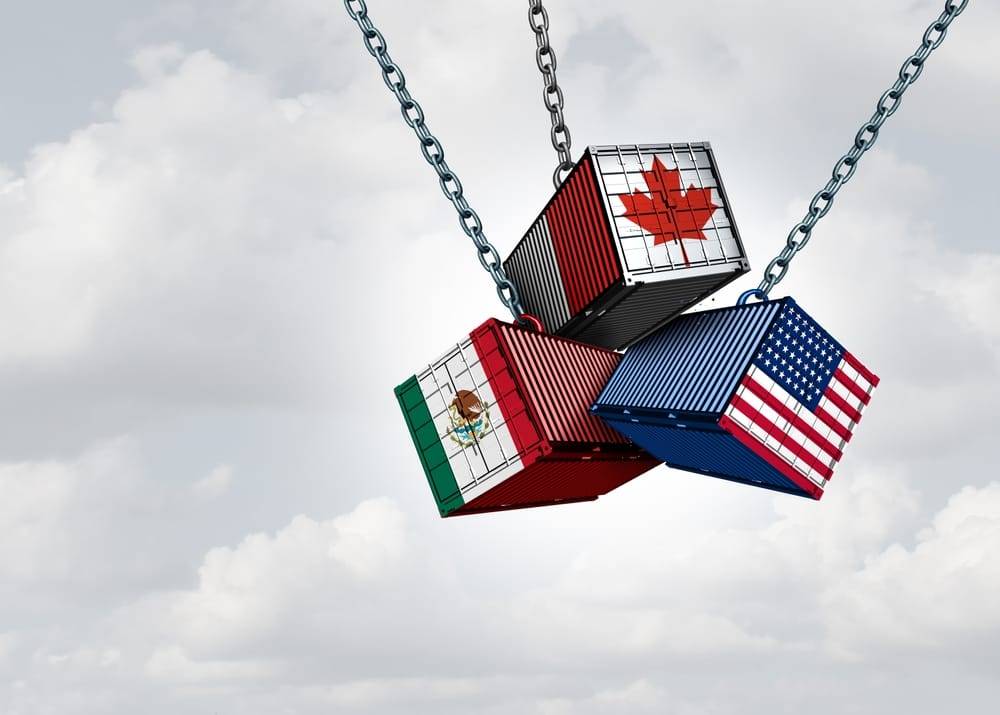
Trump has exempted certain Canadian and Mexican goods from the 25% tariff. The affected items are those covered under the USMCA, marking a major easing of trade measures against two of America’s largest trading partners.
On Thursday local time, Trump signed an executive order partially adjusting tariffs that had been imposed over illegal immigration and fentanyl trafficking. The measure is only in effect until April 2, after which he is expected to announce retaliatory tariffs on the rest of the world and additional sector-specific tariffs.
“You know they’ve been working a lot harder lately, right? We’ve made great progress on both immigration and drugs.” Trump said this at the White House, referring to Canada and Mexico.
Autos and auto parts that meet USMCA requirements are exempt from the tariffs. Canadian fertilizer (potash), which is essential to U.S. agriculture, will face a 10% tariff. According to White House officials, about 62% of Canadian imports will be subject to tariffs, with a large share of those—energy-related products—facing a 10% rate. They added, however, that the share could change as importers rush to adjust in order to comply with the rules.
Trump warned that the exemption for the auto industry is only a short-term measure and made clear it will not be extended next month. “This is the last time. We’re only going to allow it for a short period.” He told auto industry executives he would not entertain any further requests.
The move marks an abrupt shift just two days after Trump announced the largest tariff hike in a century. After the announcement roiled markets and fueled concerns within the Republican Party about the economic fallout, he appeared to partially walk back his stance. Trump, however, insists he is unconcerned. “I’m not even looking at the markets,” he said, arguing that “foreign countries are ripping us off” and that tariffs will create a more favorable environment for the United States.
The White House said auto-related products were exempted to minimize disruption for the auto industry and its workers. The United States, Mexico, and Canada share a deeply integrated automotive supply chain, and Detroit’s Big Three—GM, Ford, and Stellantis (formerly FCA)—have spent weeks lobbying aggressively for tariff relief.
Trump decided to roll back some of the tariffs after discussions with Mexican President Claudia Sheinbaum, Canadian Prime Minister Justin Trudeau, and auto industry executives.
Following Trump’s announcement, Canada put on hold plans for a second round of retaliatory tariffs on U.S. products, but said it would maintain the existing tariffs on roughly $20.9 billion worth of American goods announced on Tuesday.
U.S. Commerce Secretary Howard Lutnick had hinted at Trump’s decision in advance. In an interview with CNBC, he said, “Mexico and Canada have pledged to make significant efforts to address the fentanyl problem.” Trump has linked the latest tariff measures—along with a 20% tariff on Chinese goods—to each country’s efforts to crack down on illegal drugs and illegal immigration.
President Sheinbaum said at a press conference that during her call with Trump she laid out Mexico’s security measures in detail. “We are delivering results,” she said, adding, “We understand the concerns about the U.S. trade deficit, but continuing dialogue is the better option.”
She also warned that had the tariffs remained in place, Mexico would have had no choice but to respond in kind. But with the measures postponed until April, retaliatory action is no longer necessary, she added. “We approached the talks in a way that commanded a great deal of respect.”
An analysis of 2024 trade data by Bloomberg Economics found that 49% of U.S. imports from Mexico meet USMCA standards and are therefore exempt from tariffs, while 41% are likely to fall under other regimes such as existing most-favored-nation treatment. If those preferential tariffs are withdrawn, exporters may adjust to meet USMCA criteria in order to avoid the 25% levy. At least 10% of goods exported from Mexico to the United States are expected to be subject to the new tariffs.
For example, a White House official explained that oil is exempt if it qualifies under USMCA, but otherwise is subject to a 10% tariff.
The Trump administration granted a one-month exemption for USMCA-eligible autos and had considered exempting some agricultural imports as well, before ultimately opting for a broader easing of the measures.
The latest move marks another shift after Trump last week announced a blanket 25% tariff on Canada and Mexico, with Canadian energy singled out for a lower 10% rate. He also doubled the existing 10% tariff on China to 20%.
In response, Canada announced retaliatory tariffs on U.S. products, further heightening trade tensions.
Newsletter
Be the first to get news about original content, newsletters, and special events.
Continue reading

Note By Ryunsu
The Intelligence Layer of Financial Infrastructure
Ryunsu Sung

Aware Original
Why Bitcoin Keeps Falling: The Downward Spiral of the Gamma Trap
Ryunsu Sung

Aware Original
The Overwhelming Autonomous Driving Leader Proven by Numbers: Waymo’s Full-Scale Takeoff
Ryunsu Sung
Aware Original
The Precarious State of ‘American Exceptionalism’ and a Shaken Dollar Hegemony
Ryunsu Sung