May 20, 2025
JPMorgan CEO Jamie Dimon Issues Blunt Warning: “Credit Is a Bad Investment Right Now”
Ryunsu Sung
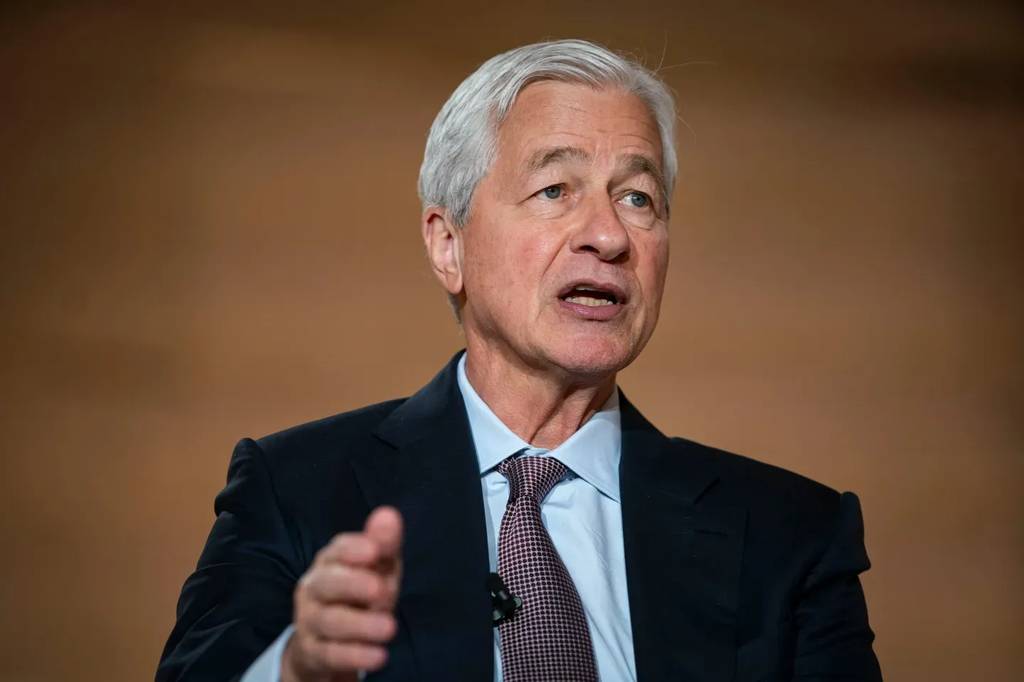
Jamie Dimon, CEO of JPMorgan Chase, has issued another warning. He argues that markets are taking a dangerously relaxed view of a complex set of risks spanning inflation, the credit market, and geopolitical tensions.
Speaking at a JPMorgan investor event on Monday, Dimon said, “Credit is currently in a dangerous zone,” adding, “Those who have never lived through a major crisis have no real sense of how credit risk actually materializes.” He stressed in particular that US asset prices remain abnormally high and that credit spreads are failing to properly price in the risk of a recession.
Market reaction, he said, remains lax. Even after Moody’s stripped the US of its last remaining triple‑A sovereign credit rating, the S&P 500 quickly clawed back its losses. Dimon said, “It’s extremely dangerous for markets to take comfort just because the impact of tariffs hasn’t been fully felt yet.” He added, “It fell 10% and then went right back up 10%. That’s an overly complacent attitude.”
The Trump administration has recently bought time by reaching a basic trade agreement with the UK and temporarily easing tariffs on China, but tariff negotiations with Japan, South Korea, India, the EU and others are still ongoing. Dimon called even the current tariff levels “still extreme,” noting that reshoring manufacturing to the US will take both time and money, and that it is uncertain how each country will respond.
He also warned that corporate earnings estimates are likely to be revised down further, and that the risks of inflation and stagflation are greater than markets assume. Geopolitical risk, in his view, also remains “very elevated.”
Even so, Dimon maintained an optimistic stance on JPMorgan itself. The bank kept its full‑year net interest income (NII) guidance at $94.5 billion, and CFO Jeremy Barnum added that after the first quarter there is even “some upside risk” to that forecast.
The bank also judges that the financial health of consumers and small businesses remains sound for now. While consumer sentiment is deteriorating, it has not yet translated into a meaningful change in spending behavior. Nonetheless, JPMorgan moved preemptively on risk management in April, setting aside an additional $973 million in loan‑loss provisions—far above the expected $290 million.
The investment banking division, however, has taken a direct hit from the volatility. Troy Rohrbaugh, co‑head of JPMorgan’s commercial and investment bank, expects investment banking fees to decline by roughly the mid‑teens percentage range year‑on‑year—a figure that is more negative than market consensus.
Co‑head Doug Petno said, “Many clients have hit the brakes,” explaining that Trump’s global trade wars have led to the suspension of a significant number of M&A and IPO deals.
Even so, JPMorgan expects revenues from its equities and fixed‑income trading businesses to post year‑on‑year growth in the mid‑ to high‑single‑digit range. In the first quarter, the equities trading division delivered record results, and Dimon recently remarked that “this kind of market volatility is not going away anytime soon.”
He concluded with this remark.
“There are simply too many risk factors in markets right now.”
Newsletter
Be the first to get news about original content, newsletters, and special events.
Continue reading

Note By Ryunsu
The Intelligence Layer of Financial Infrastructure
Ryunsu Sung

Aware Original
Why Bitcoin Keeps Falling: The Downward Spiral of the Gamma Trap
Ryunsu Sung

Aware Original
The Overwhelming Autonomous Driving Leader Proven by Numbers: Waymo’s Full-Scale Takeoff
Ryunsu Sung

Aware Original
The Precarious State of ‘American Exceptionalism’ and a Shaken Dollar Hegemony
Ryunsu Sung