Jun 05, 2025
Is Trust in U.S. Inflation Data Cracking? Labor Shortages Spur Heavy Use of ‘Imputed’ Estimates
Ryunsu Sung
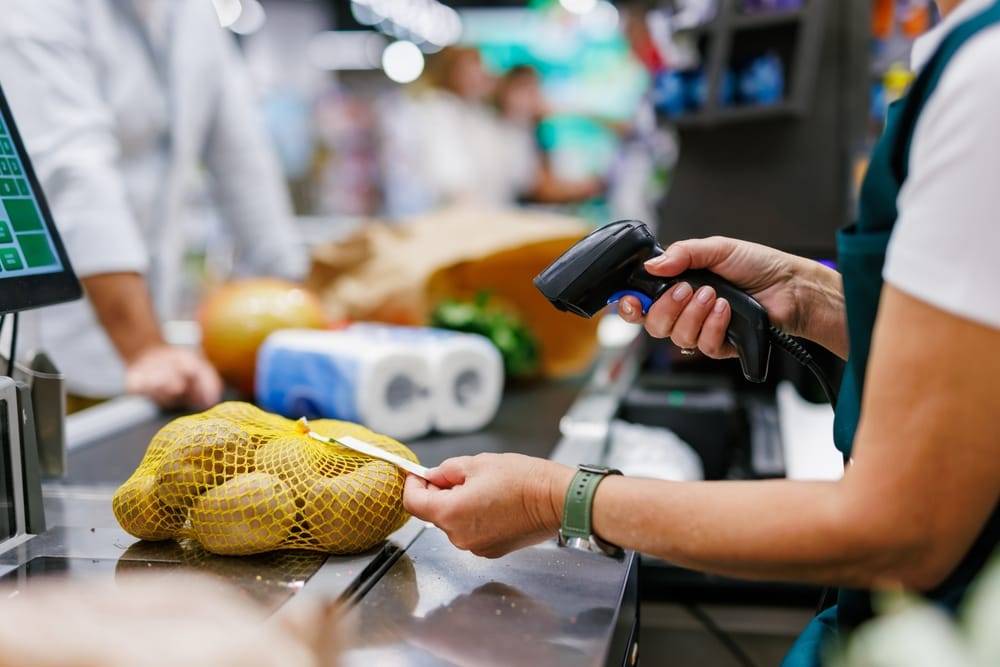
Some economists are questioning the reliability of the U.S. government’s recent Consumer Price Index (CPI) data. The Bureau of Labor Statistics (BLS) recently told outside economists that, because of staffing shortages, it has reduced the number of businesses it surveys for prices. The CPI report released in April relied far more heavily than in the past on “imputation” methods.
There was no intent to manipulate the data, but the impact of this deterioration in quality on markets and policy decisions is not trivial. U.S. inflation indicators influence everything from the federal funds rate and Social Security cost-of-living adjustments to private-sector wage contracts and the yields on Treasury Inflation-Protected Securities (TIPS).
Each month, the BLS dispatches hundreds of enumerators across the United States to collect actual transaction prices for a wide range of items, from jeans to accounting services. The CPI is constructed from these data. As the number of field staff has fallen, however, there has been a surge in cases where prices are not directly observed but instead inferred from “similar items” or “prices in other areas.” This is known as different-cell imputation.
Omair Sharif of Inflation Insights, an inflation research firm, said, “The BLS is being forced to plug gaps using less precise methods, and that’s making traders who rely on the data to trade increasingly uneasy.”
In fact, starting in April the BLS stopped conducting CPI surveys in Lincoln, Nebraska, and Provo, Utah, and from June it halted them in Buffalo, New York. The bureau has said that while the overall price index should not be significantly affected, volatility in some categories and in regional data could increase.
The problem is that these steps are not just a short-term issue. Since April, the BLS has been under a hiring freeze, and it has said that the scaled-back surveys will continue until it can recruit and train new staff. According to internal emails, “In certain cities, we have temporarily reduced the number of outlets and price quotes included in the CPI sample.”
This disruption followed the Trump administration’s January 20 order imposing a government-wide federal hiring freeze. The DOGE (Department of Government Efficiency) led by Elon Musk cut thousands of federal positions through layoffs and buyouts. It is unclear whether the BLS was directly affected.
Alan Detmeister, an economist at UBS, noted, “In the April CPI report, 29% of all price quotes were generated using different-cell imputation, roughly double the highest share seen over the past five years. It’s unclear whether this method has actually distorted the data, but when sample sizes shrink, statistical error inevitably grows.”
April’s CPI showed a 2.3% year-over-year increase, the lowest reading since 2021. But doubts are mounting over how accurately that figure reflects reality.
U.S. economic statistics have been systematically developed since the Great Depression and for decades have served as a benchmark for central banks around the world. Federal Reserve Chair Jerome Powell also stressed at a policy conference earlier this year that “getting an accurate read on the economy is extremely important, and the United States has long been a leader in this area.”
Recently, however, concerns about data quality have spread beyond the CPI. In May, the BLS stopped publishing hundreds of data series related to wholesale prices (PPI) for items such as household goods and kitchen equipment, and on Tuesday it emerged that incorrect weights had been applied in the household survey used to calculate the unemployment rate. The BLS has said the impact of these errors is minimal, but skepticism has been hard to dispel.
Experts warn that the deterioration in statistical quality is also tied to structural issues such as cuts to government statistical budgets and the dissolution of expert advisory committees. Years of warnings are now materializing.
Newsletter
Be the first to get news about original content, newsletters, and special events.
Continue reading

Note By Ryunsu
The Intelligence Layer of Financial Infrastructure
Ryunsu Sung

Aware Original
Why Bitcoin Keeps Falling: The Downward Spiral of the Gamma Trap
Ryunsu Sung

Aware Original
The Overwhelming Autonomous Driving Leader Proven by Numbers: Waymo’s Full-Scale Takeoff
Ryunsu Sung

Aware Original
The Precarious State of ‘American Exceptionalism’ and a Shaken Dollar Hegemony
Ryunsu Sung