May 12, 2025
Why No One Can Imitate Warren Buffett
Ryunsu Sung
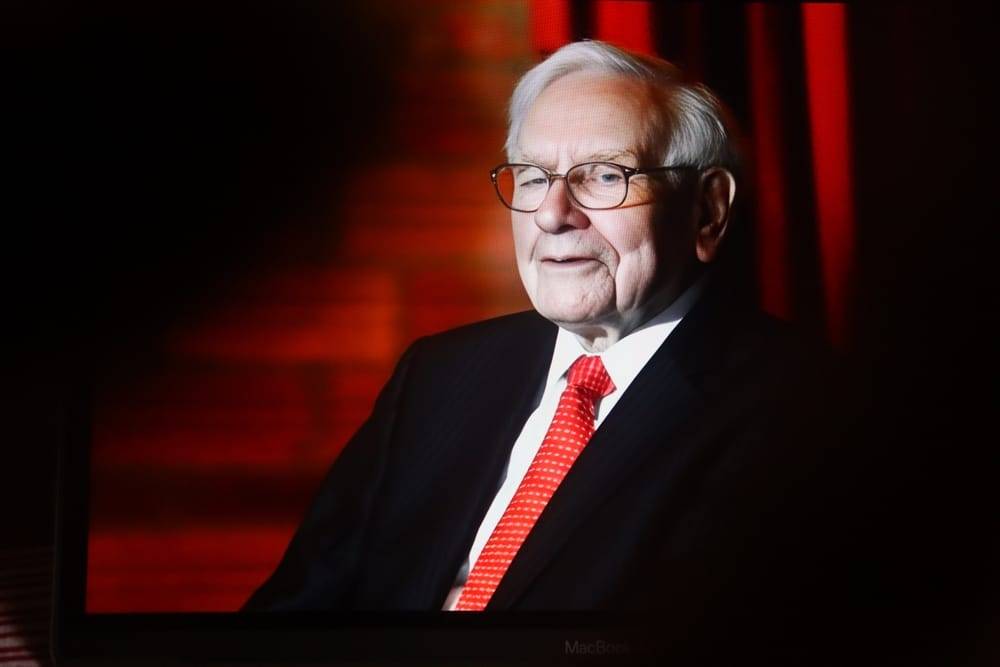
At Berkshire Hathaway’s (BRK) annual shareholder meeting last week, Warren Buffett, the renowned investor who serves as CEO and chairman, announced that he intends to step down as CEO at the end of this year. He explained that it is time for Greg Abel, currently vice chairman, to take over the CEO role. Berkshire Hathaway is the world’s largest investment company, boasting a market capitalization of 1.1 trillion dollars—over 1,500 trillion won in Korean currency.
In fact, Berkshire Hathaway is both a “failed investment case” for Warren Buffett and, as history has shown, the starting point of a giant investment conglomerate. For readers curious about the details, the article below offers a thorough explanation.
Now 94 years old, Warren Buffett has led Berkshire Hathaway to an average annual return of over 20% for the past 60 years. Many have tried to imitate his philosophy and structure, but not a single person has succeeded.
Recently, prominent investor Bill Ackman, founder of Pershing Square Capital, emphasized that his proposal to acquire Howard Hughes Holdings is a modern re-creation of the Berkshire Hathaway model. If the deal goes through, Pershing Square Capital’s funds and investment vehicles will secure a 48% stake in Howard Hughes Holdings, and he plans to turn the company into an investment holding company similar to Berkshire Hathaway. For reference, Howard Hughes Holdings is a U.S. homebuilder and land developer. Beyond Ackman, there have been many attempts to emulate Berkshire Hathaway—such as Canada’s Fairfax and Sweden’s Investor AB—but most have ended in lukewarm failure.
Of course, Berkshire Hathaway’s spectacular success is not simply the result of superior stock-picking skills. Before Buffett acquired it, Berkshire Hathaway was a textile manufacturer, and over the decades he fundamentally reshaped the company’s structure. At the core of that transformation is what he calls “permanent capital.” Because the structure does not allow investors to demand redemptions, he can deploy capital at the most opportune times. The group also secures low-cost liquidity through its insurance subsidiaries.
Buffett’s career began with running an “investment partnership.” Much like Bill Ackman’s Pershing Square Capital business today, he managed entrusted capital on behalf of investors and collected fees for doing so. After acquiring Berkshire Hathaway in 1965, he began to shape it into the investment holding company we know today.
The most pivotal moment came in 1967, when Buffett acquired a small insurer called National Indemnity for 8.6 million dollars. This gave him access to float—the temporary liquidity created when insurers collect premiums up front and pay out claims later. As he continued to buy insurance companies, Buffett’s float grew from 3.9 million dollars in 1970 to 173 billion dollars today.
The power of this structure, which makes Berkshire Hathaway a truly one-of-a-kind entity, comes from its efficiency. Today, most investment firms employ hundreds or even thousands of professionals and charge layered fees, but Berkshire Hathaway’s headquarters in Omaha has just 27 people. At his final annual shareholder meeting, Buffett remarked as follows:
If you had paid a 1% management fee to Berkshire Hathaway, you would have paid about 8 billion dollars last year… and there would have been no good reason for that. Investment management is a very good game because other people supply the capital and you collect a management fee whether your performance is good or bad… It’s a very good business model for the people managing the capital, not for the people providing it.
Today’s imitators who try to clone Berkshire Hathaway run into several obstacles. The most formidable is time. Warren Buffett had to wait decades to build up hundreds of trillions of won in “permanent capital.” The second is structure. Most fund managers earn revenue through fee arrangements tied to assets under management, which incentivizes short-term gains rather than long-term value creation. New investment vehicles such as evergreen funds, active ETFs, and multi-manager fund platforms have emerged, but none have surpassed the sheer simplicity of Berkshire Hathaway’s structure.
Even partially emulating this structure is no easy task. Private equity firms KKR and Apollo Global Management have recently acquired insurance companies, but they are still trapped in a model where they must return capital to investors when fund maturities come due. Ackman’s proposal to acquire Howard Hughes Holdings was initially rejected because it included a clause requiring the company to pay Pershing Square Capital a management fee proportional to its assets (a condition that was later partially accepted).
The power of patience cannot be overstated. Two-thirds of Berkshire Hathaway’s current value has been created over just the past five years. This underscores the power of patient capital compounding over time. Today, most fund managers are under pressure to deliver predictable and consistent results to their investors, and in the process they lose sight of the long term.
Today, Berkshire Hathaway has become exactly the kind of company Buffett has always highlighted as an ideal investment target—one with a powerful economic moat. Beyond the structural advantages mentioned above, the company has also accumulated what might be called “reputational capital,” serving as a kind of North Star for American-style capitalism.
Berkshire Hathaway has a very special reputation: in times when the government or the country faces hardship or crisis, it is regarded not as a liability but as an asset.
This remark, which Warren Buffett left at his final shareholder meeting, conveys Berkshire Hathaway’s most powerful moat in the simplest possible terms. The all-encompassing trust capital that has been built up over decades may well be the single hardest moat for anyone to ever catch up to.
Newsletter
Be the first to get news about original content, newsletters, and special events.
Continue reading

Note By Ryunsu
The Intelligence Layer of Financial Infrastructure
Ryunsu Sung

Aware Original
Why Bitcoin Keeps Falling: The Downward Spiral of the Gamma Trap
Ryunsu Sung
Aware Original
The Overwhelming Autonomous Driving Leader Proven by Numbers: Waymo’s Full-Scale Takeoff
Ryunsu Sung

Aware Original
The Precarious State of ‘American Exceptionalism’ and a Shaken Dollar Hegemony
Ryunsu Sung