Oct 25, 2024
Why I Don’t Invest in Tesla
Ryunsu Sung
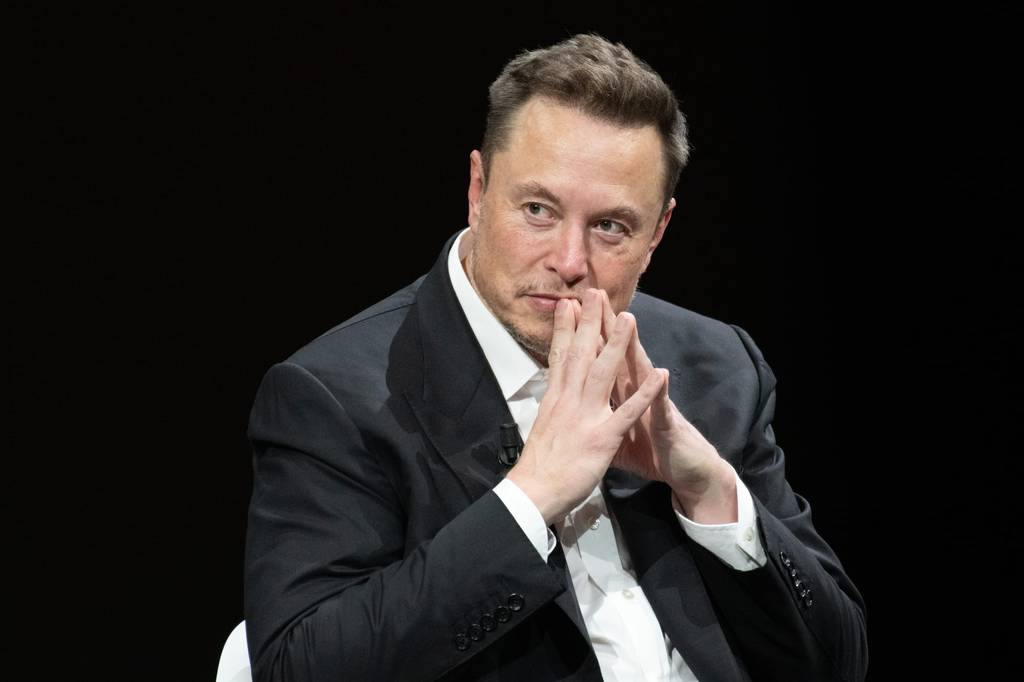
On October 23, Tesla delivered earnings that beat analyst expectations, and the stock soared about 20% in a single day. My guess is that this price action was driven by short sellers who had bet on weak results being forced into short covering. Tesla is the world’s second-largest electric vehicle manufacturer (No. 1 by production volume is China’s BYD) and operates an energy storage business. It has also announced plans to develop full self-driving technology and enter the robotaxi and robotics markets as an “innovative” company.
So why don’t I invest in this innovative company?
Because being an innovative company does not automatically make it a good investment.
What I call value investing is buying a stake at a fair price in a company that resembles the so‑called “hexagon man” you often hear about these days, and then staying on for the journey. In Tesla’s case, while it appears to be successfully pulling off highly adventurous technological bets, it is not a business model I favor, and Elon Musk as CEO is both Tesla’s greatest strength and its greatest weakness.
In Korea’s dating and marriage market, women are said to prefer a “hexagon man” who has no sharp edges—at least 175 cm tall, earning 60 million won or more with stable cash flow, parents’ retirement fully funded, an easygoing personality, and so on. Even if someone is outstanding in one area, a big shortcoming elsewhere leads to a heavy markdown. The stock market works the same way. The fundamental reason the so‑called Korea discount (personally, I don’t think Korean stocks are discounted at all) persists is that, despite Korean companies earning a lot of money, they do not return it to shareholders. The only real exception I would point to is Meritz Financial Group.
Tesla is an attractive maker of electric vehicles and does have a near‑cult fan base, but it is not particularly shareholder‑friendly. To the disappointment of Elon Musk’s fans, his stock‑option packages show the reality of Tesla’s governance: an excessive amount of money is being taken out of shareholders’ pockets. There is a big difference between aligning executive compensation with shareholder interests and executives reaping outsized, almost transcendental gains from the share price. We also frequently see Elon Musk making decisions that are unprofessional from a management standpoint—for example, firing an entire division because the head disagreed with him and then rehiring them, or appointing a woman he had a romantic relationship with as an executive.
Tesla is, at the end of the day, a car company
It is true that compared with internal combustion engine vehicles, electric vehicles use fewer parts and have a much simpler production process. But in the end, this is still an industry where scaling up output requires continuous capital expenditure, and where tangible assets play a major role.
Tesla does generate revenue beyond vehicle sales by selling its FSD driver‑assistance software, but the bulk of its revenue still comes from selling cars. The interpretation of the 20%+ share price jump on the 24th is that it was driven by automotive gross margins coming in higher than expected.
Because of the constant need for capital investment mentioned above and relatively low gross margins, the auto industry is structurally incapable of generating very high returns on equity. Since the cash‑generation ability of capital is weaker than in many other sectors, it is an open secret that automakers generally trade at low valuation multiples.
Overwhelming competitive edge in AI: none
There is intense controversy around full self‑driving technology. One camp argues that Tesla’s approach—using only cameras and neural networks—is enough to achieve full self‑driving. The other camp, which includes virtually all other autonomous‑driving developers, insists that you need to combine lidar with rule‑based hard‑coded logic and neural networks. Because most people lack a technical foundation, this issue ironically becomes the sharpest dividing line between “Teslam” believers and everyone else. In my view, since AI is still an evolving field—so much so that even leading AI experts like Andrej Karpathy and Yann LeCun have differing opinions—it is too early to declare a definitive answer.
I am not an engineer by training, but if you synthesize the views of many AI practitioners, as long as the scaling law—the phenomenon where performance improves in proportion to model size—continues to hold, Tesla’s approach will “eventually” work. Some may argue that our computing resources are finite, and that in practice we must train self‑driving algorithms within those limits. Under that premise, they claim we inevitably need to “optimize” via rule‑based hard‑coding and supplement with depth information from lidar.
However, according to analysis by Exponential View, if the scaling law continues to hold and AI models keep growing in size as they are now, the probability that we will be unable to train those models due to a shortage of computing resources is extremely low, assuming AI accelerators and GPUs keep being supplied at the current pace.
If you accept that engineering is the process of producing an optimized outcome by making trade‑offs within limited resources, then Tesla’s approach looks like a low‑probability path at this point in time. But throughout human history, computing resources have consistently outstripped demand, and we have always invented new tasks to make use of the surplus.
Even so, I do not assign a wide technological moat to Tesla’s self‑driving capabilities, because other players are not blindly adding lidar (and for the record, Tesla also uses lidar on vehicles it deploys for training) and rule‑based code in ignorance of these facts. They are making trade‑offs to achieve full self‑driving with the resources available today.
Some argue that Tesla’s self‑driving technology will leverage the data from hundreds of thousands of vehicles already on the road and the head start of its end‑to‑end models to produce results that crush competitors. But if you compare the frontier large language models from OpenAI, Meta, Anthropic, and others, it is reasonable to conclude that first‑mover advantage in AI is minimal. And to reiterate, as long as the scaling law holds, what matters far more for performance than all that real‑world driving data Tesla is collecting is who trains the larger model. Ultimately, Tesla’s approach boils down to a game of who can secure more GPUs.
We don’t know exactly when that will be, but once sufficient AI computing resources are in place, even autonomous driving companies that insisted on rule‑based algorithms and LiDAR will eventually shift to the approach Tesla advocates.
Conclusion
Tesla’s technical approach is impressive, but its valuation already embeds substantial expectations for non‑automotive businesses such as full self‑driving and robotics.
However, in Tesla’s business model, ongoing capital expenditure on facilities is a necessary fate for growth, and in my view the company does not enjoy the kind of overwhelming AI technology lead that some analysts claim.
Newsletter
Be the first to get news about original content, newsletters, and special events.
Continue reading

Note By Ryunsu
The Intelligence Layer of Financial Infrastructure
Ryunsu Sung

Aware Original
Why Bitcoin Keeps Falling: The Downward Spiral of the Gamma Trap
Ryunsu Sung
Aware Original
The Overwhelming Autonomous Driving Leader Proven by Numbers: Waymo’s Full-Scale Takeoff
Ryunsu Sung

Aware Original
The Precarious State of ‘American Exceptionalism’ and a Shaken Dollar Hegemony
Ryunsu Sung