Nov 15, 2024
How to Read the VIX Index: How Can We Use the So‑Called “Fear Gauge”?
Sungwoo Bae
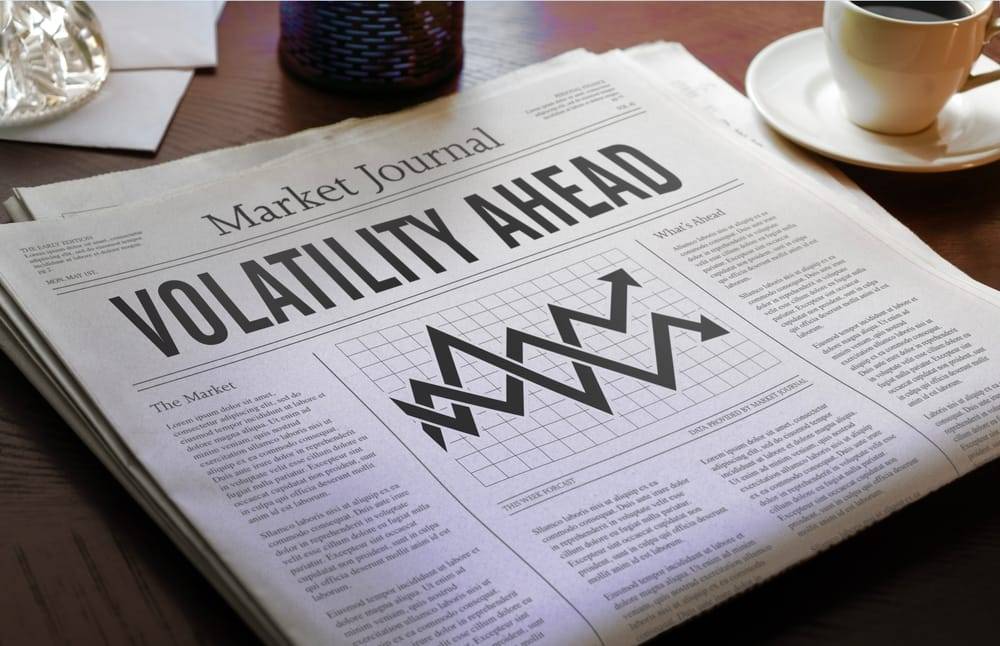
Have you heard of the VIX index?
Today, we’ll look at what the VIX—often called the “fear gauge”—actually is, how it relates to the stock market, and how investors can use it.
What the VIX Index Means
VIX stands for Volatility Index, which literally means a volatility index.
It was devised in 1993 by Professor Robert Whaley and adopted by the CBOE (Chicago Board Options Exchange). In 2003, in collaboration with Goldman Sachs, its calculation methodology was further developed into its current form. The index was created to measure stock market volatility.
"Our volatility index, the Sigma Index, is frequently updated and can be used as an underlying asset for futures and options... A volatility index will play the same role in the options and futures markets that a market index plays in the equity market."
From a 1989 Financial Analysts Journal article by Brenner & Galai
To understand why we need to measure volatility, we first have to understand implied volatility in options.
Implied volatility?
Think about auto insurance. For an average driver, premiums are usually not that expensive, but for someone who is more likely to get into an accident or who drives in riskier conditions, the premium goes up.
Similarly, in the options market, options that carry a higher risk of large price moves in certain situations are more expensive. In those cases, the option’s implied volatility rises.
When implied volatility increases, it means the market expects large price swings ahead. This is a sign that uncertainty has risen and that investors are becoming nervous. Such fragile sentiment can deteriorate risk appetite and lead to stronger selling pressure.
Volatility is therefore a critical decision-making factor because it represents risk in the equity market. While there were hedging tools for price risk, there had been no direct hedging tools for volatility itself.
In this sense, you can think of the VIX as the product of efforts to quantify market sentiment.
Why the VIX Index Rises
Why does the VIX index rise when market volatility increases?
To answer that, we need to look at the assumptions behind the VIX and how it is calculated.
The VIX uses option prices. Options act as a form of insurance when volatility is high, and when option prices are elevated, it tells us that market participants feel the need for insurance—in other words, they expect volatility.
From there, the VIX derives variance directly from the prices of multiple options with the same maturity, then interpolates the variances from two different maturities to obtain a 30-day variance. It then takes the square root of that variance to calculate the standard deviation.
Put simply: it uses the variance and standard deviation of option prices to calculate how much the market is expected to swing. The goal is to obtain the implied volatility over the next 30 days, but since there is no option that expires in exactly 30 days, it uses options with nearby maturities to estimate it.
Once you understand the process above, you can better grasp why the VIX is needed.
You can see that it is not current volatility, but the implied volatility over the next 30 days. Implied volatility reflects the uncertainty investors feel about the market. That’s why the VIX is often called the fear index.
How to read the VIX index
In general, investors look at the VIX using the following ranges.
- VIX < 20: The market is relatively stable, and investors are not expecting major volatility.
- 20 < VIX < 30: Some unease in the market, with the potential for volatility to pick up.
- VIX > 30: Market uncertainty is very high and investor fear is elevated.
Historically, the VIX index has spiked during major events.
The 9/11 attacks in 2001 (33.6), the IT bubble in 2002 (39.7), the Global Financial Crisis in 2008 (59.9), the COVID-19 pandemic in 2020 (53.5)...
But when we say volatility is high or low, we naturally start to wonder: exactly how much volatility are we talking about?
Because the VIX is reported as an annualized figure, if you divide it by the square root of 12, you get the volatility range for the S&P 500 index.
When the VIX is 10, the range is ±2.9%; when it is 20, ±5.8%; and when it is 30, ±8.7%.
The current VIX is 14.71, which converts to a volatility range of 4.2%. Applying this to the S&P 500 gives a range of roughly 5,729.9 to 6,238.1.
A ±4.2% range over 30 days shows just how stable investors currently perceive the market to be.
VIX index ETFs: VIXY and VIXM
It’s also useful to know the VIX-tracking ETFs offered by ProShares. They can serve as convenient hedging tools when you expect market volatility to rise.
1. VIXY
VIXY (ProShares VIX Short-Term Futures ETF) is an ETF that tracks short-term VIX futures. Because it is tied to futures contracts with maturities of about one to two months, it is highly sensitive to short-term volatility. It can be used when you need to react quickly to sharp moves in the VIX.
2. VIXM
VIXM (ProShares VIX Mid-Term Futures ETF) is an ETF that tracks the mid-term VIX futures index. Because it is linked to futures contracts with maturities between 4 and 7 months, it is less sensitive to short-term volatility and incurs lower rollover (futures expiration roll) costs.
However, because both products continuously suffer losses from rollover costs and contango, it is strongly recommended that you avoid holding them for the long term.
VIX, which is used as one of the seven indicators in the CNN Fear & Greed Index, turns out to have far broader applications once you look into it more deeply, beyond simply gauging market sentiment.
Newsletter
Be the first to get news about original content, newsletters, and special events.
Continue reading

Note By Ryunsu
The Intelligence Layer of Financial Infrastructure
Ryunsu Sung

Aware Original
Why Bitcoin Keeps Falling: The Downward Spiral of the Gamma Trap
Ryunsu Sung

Aware Original
The Overwhelming Autonomous Driving Leader Proven by Numbers: Waymo’s Full-Scale Takeoff
Ryunsu Sung

Aware Original
The Precarious State of ‘American Exceptionalism’ and a Shaken Dollar Hegemony
Ryunsu Sung