Jul 23, 2024
Warren Buffett’s Berkshire Hathaway: A Deep Dive into the Portfolio
Sungwoo Bae
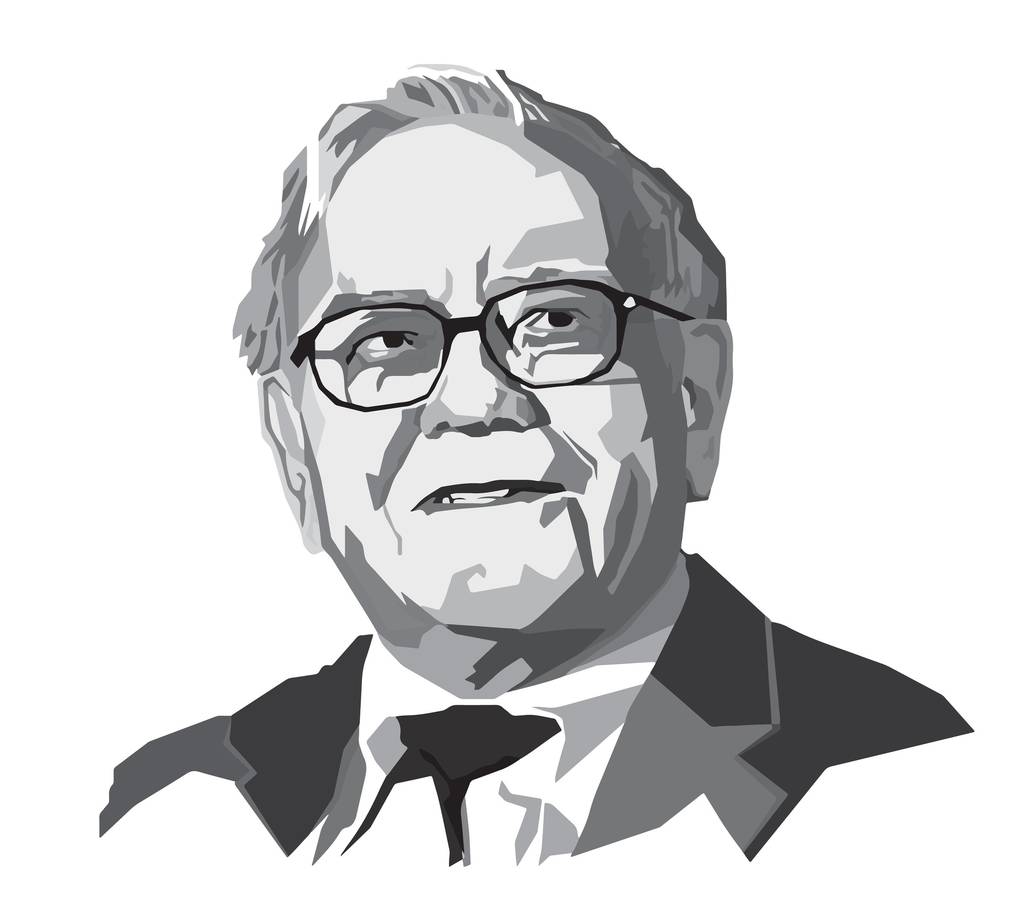
A name even non-investors recognize: Warren Buffett.
Born on August 30, 1930, in Omaha, Nebraska, Warren Buffett is known as the CEO of Berkshire Hathaway and is widely regarded as one of the most successful investors of all time.
Warren Buffett, the Value Investor
After studying for two years at the Wharton School of the University of Pennsylvania, Warren Buffett transferred to the University of Nebraska, where he earned a bachelor’s degree in economics. He then went on to Columbia University, where he studied Benjamin Graham’s value investing theory and obtained a master’s degree in economics.
Armed with his master’s degree, Buffett went to New York to gain hands-on experience at the Graham-Newman Corporation. “Benjamin Graham’s value investing theory” and the “Graham-Newman Corporation” — clearly, Buffett was captivated by Benjamin Graham’s value investing philosophy of assessing a company’s intrinsic worth and investing in those trading below that value.
A Slip of the Tongue and the Birth of a New Berkshire Hathaway
In 1956, having fully learned the ropes, Buffett returned to his hometown of Omaha and founded an investment partnership called Buffett Partnership Ltd.
There, he invested in undervalued stocks with low share prices, so-called penny stocks, delivering high returns to his early investors.
While tirelessly scouring the market every day for anything undervalued, one company caught his eye: Berkshire Hathaway. The Berkshire Hathaway we commonly associate with “Warren Buffett’s Berkshire Hathaway” is an investment conglomerate. In reality, however, Berkshire Hathaway began as a textile manufacturing company founded in 1839 by Oliver Chace.
At the time, the U.S. textile industry was in crisis due to weakening domestic demand and intense price competition from overseas. Warren Buffett believed Berkshire Hathaway was undervalued and began buying its shares in 1962.
Berkshire Hathaway: “We’d like to buy back our shares from you.”
Warren Buffett: “Sure. How about $11.50?”
Two years later, in 1964, Berkshire Hathaway’s CEO, Seabury Stanton, made Buffett a verbal offer to repurchase his shares, believing the company’s asset value exceeded its stock price. Since this would effectively generate a profit for shareholders, Buffett had no objections and agreed to sell at $11.50 per share.
Berkshire Hathaway: “On second thought… how about $11.375?”
Warren Buffett: “Seriously? That’s not what we agreed to…”
However, Berkshire Hathaway ultimately offered to repurchase the shares at $11.375 per share — $0.125 less than the originally agreed price.
Buffett saw this as a breach of their agreement and, instead of selling, began buying even more shares. By 1965, he had secured full control of the company. Immediately after taking control, Buffett dismissed Seabury Stanton and began reshaping Berkshire Hathaway.
In 1967, Buffett acquired the insurance company National Indemnity. By using the float — the pool of funds an insurer temporarily holds between receiving premiums and paying out claims — he was able to deploy capital more efficiently. He went on to invest in media and manufacturing in the 1970s, exited Berkshire Hathaway’s legacy textile business in 1985, invested in Coca-Cola in 1988, expanded into reinsurance and utilities in the 1990s, acquired railroad companies in the 2000s, and in the 2010s invested in technology firms such as Apple, growing through diversification over time.
In the end, Berkshire Hathaway was transformed from a textile manufacturer into the investment holding company it is today because of Seabury Stanton’s little scheme.
*Today, Berkshire Hathaway operates each of its business units as separate subsidiaries.
Originally, Berkshire Hathaway was a textile manufacturer, and Warren Buffett invested because he believed this textile company was undervalued. Although it has since grown into a great success, Buffett himself seems well aware of the irony—he describes his investment in Berkshire Hathaway as “the dumbest investment” he ever made.
Warren Buffett turned the dumbest investment of his life into a spectacular success. Aren’t you curious what companies he owns today? We have organized Berkshire Hathaway’s stock portfolio.
Stocks Warren Buffett Owns
As reported to the SEC on May 15, the Berkshire Hathaway portfolio as of March 31, 2024 is shown in the chart above.
It is a portfolio of 41 positions totaling $330 billion, or about 458 trillion won.
Apple 40.81%, Bank of America 11.81%, American Express 10.41%, Coca-Cola 7.38%, Chevron 5.85%
The combined weight of these five names is 76.25%.
They are followed by Occidental Petroleum (4.86%), Kraft Heinz (3.62%), Moody’s (2.92%), Chubb Limited (2.03%), DaVita HealthCare (1.50%), and Citigroup (1.05%), which together account for another 15.99%.
Among these, Bank of America, Chevron, and Occidental Petroleum were also covered as Trump-related stocks. Nice to see them again here.
What stocks does Warren Buffett personally own?
Now that we understand how Berkshire Hathaway has grown, we can start to see why its portfolio looks the way it does. So then, what stocks does Warren Buffett personally own?
It is known that Warren Buffett’s personal portfolio consists of Berkshire Hathaway and two banks, JPMorgan and Wells Fargo. But it’s a bit disappointing that the size of his stakes has never been disclosed.
In the end, we have to focus on Berkshire Hathaway, which makes up part of Warren Buffett’s personal portfolio.
If Apple accounts for more than 40% of Berkshire Hathaway’s equity holdings, does that mean there was some special arrangement between Warren Buffett and Apple?
No, Buffett didn’t buy a huge amount of Apple.
It’s more accurate to say that he didn’t buy a lot because he loved Apple, but that Apple’s share price appreciation increased its weight within Berkshire Hathaway’s portfolio.
~ 1995: Looking for money trees
In 1995, trade was picking up thanks to the North American Free Trade Agreement (NAFTA), and productivity was rising on the back of advances in the internet and computer technology. Supported by central bank monetary policy, the United States maintained low inflation and low unemployment, creating a stable economic environment.
If you look at Berkshire Hathaway’s portfolio at the time, you see a lot of familiar names: Coca-Cola, Gillette, ABC…
Among them, GEICO, American Express, ABC, Coca-Cola, Freddie Mac, and Gillette were stocks it had held since before 1995. In effect, almost the entire portfolio had already been in place for quite some time.
A quick look at the pre-1995 story:
The year Warren Buffett first invested in GEICO was 1951. You probably know from his life story that Buffett was a huge fan of Benjamin Graham. Graham was in fact the chairman of GEICO’s board. On top of that, GEICO’s premiums were about 30% cheaper than competitors’, and its underwriting profit margin* was more than four times the industry average—Buffett noticed the company just as it was demonstrating a very strong growth trajectory.
At the time, Buffett invested $10,000—half of his investment capital—and earned a 50% return in just one year. He later sold the stake, but came to regret it, and in 1976 he made a large new investment in GEICO, eventually acquiring the company outright in 1995.
*Underwriting profit margin: a measure of profitability calculated by comparing an insurer’s premium income with its claims costs
Warren Buffett became interested in American Express in 1964, right after the salad oil scandal.
The salad oil scandal was a massive financial fraud that took place in 1963, led by Allied Crude Vegetable Oil Company. Financial institutions that had extended loans backed by Allied’s salad oil inventory suffered huge losses, and American Express was one of them. When the stock price plunged as a result, Warren Buffett saw it as an opportunity. He believed that American Express’s core businesses—traveler’s checks and credit cards—would not be affected by the fraud.
ABC became an investment in 1985, triggered by a merger. At the time, ABC was a broadcaster with a powerful nationwide network across the United States. In 1985, the management of Capital Cities sought to acquire ABC, which was four times its size, and Warren Buffett believed that Capital Cities’ management and ABC’s network could generate strong synergies.
To support the deal, Warren Buffett invested $517.5 million and ended up owning about 18% of the merged Capital Cities/ABC.
Coca-Cola became an investment in 1988, when the company was regaining market share through “Coca-Cola Classic” after the failure of “New Coke,” and Buffett took advantage of the stock price decline caused by the market crash (Black Monday).
Freddie Mac became an investment in 1988, as Buffett sought to tap into the potential of the housing market amid a housing boom.
Gillette became an investment in 1989, based on its market share in the razor blade markets in the US and Europe and its ability to consistently generate profits.
Overall, Warren Buffett tends to keep a close eye on businesses that can generate cash on a steady basis, and then invest when an event occurs that either creates growth potential or sends the stock price into a deep bargain-sale territory.
Around 1997, McDonald’s and Walt Disney also briefly appear near the top of the list.
McDonald’s, which Buffett invested in in 1994, fit the pattern of a company capable of generating steady cash flows, as described earlier. Walt Disney entered the portfolio more organically through Disney’s acquisition of ABC in 1996. However, Buffett sold Walt Disney in 1999.
While it is often said that he viewed the stock as overvalued at the time, it also seems likely that Disney was fundamentally different in character from other companies in the portfolio. Disney clearly had significant potential embedded in its IP, but it would have been difficult to assess that value with confidence. Buffett later referred to this sale as a “big mistake.”
1995–2000: Diverging performance trends
At first glance, not much seems to have changed, but something feels missing. That’s because GEICO and ABC have disappeared.
ABC disappeared after losing its status as a listed company due to the acquisition mentioned earlier (ABC → Walt Disney). In GEICO’s case, it dropped out of the top holdings because of a decline in its share price.
After Buffett acquired the remaining 49.6% stake in GEICO in 1995, the company went through a nightmare.
GEICO suffered underwriting losses in 1999 and early 2000, racking up more than $86 million in losses in just the first quarter of 2000. To gain market share, it kept premiums low and loosened underwriting standards, which in turn led to more frequent claims and higher claim amounts.
During the same period, American Express steadily improved its profitability by rolling out a wider range of card products, moving online, and ramping up marketing, which together drove a sharp increase in the number of cards issued between 1998 and 2000.
There were no dramatic changes overall, but performance shifts driven by corporate decisions affected stock prices, and those price moves in turn led to changes in portfolio weights.
Around this time, Warren Buffett began to pay close attention to risk.
Freddie Mac, which he had invested in to tap the potential of the housing market, was sold in 2000 because of the risks he saw in that very housing market.
In the late 1990s, as many tech stocks began trading at irrationally high valuations, Berkshire Hathaway’s portfolio started to build cash, with cash holdings rising steadily from around 2002 onward.
2000–2005: The waiting period
The cash position that began to rise in 2002 grew to nearly half of the portfolio by 2005.
The early 2000s were a brutal time for the stock market.
- On March 10, 2000, the Nasdaq Composite peaked at 5,048 points. Then the dot-com bubble burst, sending the index down more than 10% in just a few weeks. The slide continued until October 2002, by which time it had fallen a total of 78%.
- On September 11, 2001, terrorists attacked the World Trade Center in New York and the Pentagon in Washington, D.C.—what we now simply call 9/11. Countless companies were hit, and the insurance industry alone suffered roughly $40 billion in losses.
- On December 2, 2001, energy company Enron filed for bankruptcy—the largest corporate bankruptcy in U.S. history at the time. Enron’s share price had begun to fall earlier that year, and in October it reported a quarterly loss of $618 million and announced that it would have to restate its financial statements for the previous four years. The company had been inflating its results by using accounting methods that pulled future profits into current earnings. This shattered investors’ trust in corporate financial reporting and helped expose accounting fraud at other major companies as well.
During this period, Warren Buffett did sell off some underperforming companies, but he did not sell shares of major holdings with large weights such as Coca-Cola or American Express. That is because he had already learned the lesson from his earlier mistake of selling Disney: “You should never sell a great business.”
From 2002 onward, the stock market entered a recovery phase.
2005–2010: A rally that didn’t last
As the market recovered, P&G appeared in Berkshire Hathaway’s portfolio from mid-2005. This was due to its merger with Gillette, which Berkshire already owned. P&G had a powerful lineup in household and personal care products, while Gillette, as mentioned earlier, held a dominant share in the razor and blade market. Expecting synergies across multiple areas, P&G announced on January 28, 2005 that it would acquire Gillette for about $57 billion.
Next, in 2008, as part of his investments in the energy sector, Buffett invested in the exploration and production (E&P) company ConocoPhillips. Over time he gradually reduced his stake, though. In 2014, following a spin-off, he bought shares of Phillips 66—but that is a story for later.
From 2002, the stock market had been recovering, and together with the housing boom it continued to surge until 2007.
But the good times only lasted until 2007. As home prices climbed steeply, many financial institutions issued high-risk subprime mortgages, which culminated in the bankruptcy of major investment bank Lehman Brothers on September 15, 2008.
Lehman Brothers’ collapse dealt a heavy blow to global finance, and by 2009 many European countries were facing severe sovereign debt crises.
The period from December 2007 to June 2009 is known as the Great Recession, a time widely referred to as the “Great Depression” that almost everyone has heard of at least once.
Seeing the share-price declines triggered by the subprime mortgage crisis, Buffett likely made his investment decision in ConocoPhillips. He expected long-term growth in energy demand and believed that the mortgage turmoil had pushed the stock down to an attractive level. But oil prices were at extremely high levels, and his ConocoPhillips investment ended up inflicting heavy losses on him.
2010–2015: Every time he invested in energy, Buffett ended up in tears
In 2011, Warren Buffett invested in IBM and Bank of America. He invested in IBM because he valued its long history of paying dividends and its ability to adapt to technological change, and he invested in Bank of America because, in the post-crisis push to shore up capital, he judged it a good opportunity to buy into a bank.
Although it doesn’t show up in the portfolio tables, Buffett gradually reduced his stake in ConocoPhillips and in 2013 invested in ExxonMobil instead. ExxonMobil operated an integrated business model from upstream (exploration and production) to downstream (refining and marketing), while also maintaining a strong balance sheet and high credit rating. In Buffett’s eyes, it was essentially an upgraded version of ConocoPhillips.
During this period, the U.S. economy showed signs of recovery, recording an average annual growth rate of 2.3%. The unemployment rate gradually declined, and the housing market was slowly stabilizing as well.
Meanwhile, the European sovereign debt crisis that began in 2009 started to stabilize after mid-2012 but was not fully resolved, and China’s growth rate also began to slow from 2013 onward.
This slowdown weakened oil demand, which then collided with rising U.S. shale oil production and a recovery in output from Libya and Iraq, ultimately leading to a sharp collapse in oil prices.
The decline in oil prices from the second half of 2014 through 2016 led Buffett to sell his ExxonMobil stake in the fourth quarter of 2014.
Despite his vow not to sell great businesses, Buffett reduced his position in ConocoPhillips and then went on to sell ExxonMobil, its replacement, as well.
For Warren Buffett, energy companies can be interpreted not as long-term cash generators, but as part of a broader bet on the energy market itself.
2015–2020: After IBM, he finally got a feel for tech
Bank of America climbed into the top tier of holdings on the back of steady growth, while IBM disappeared from the list.
From 2011 to 2018, while Buffett held it, IBM’s share price fell sharply, and he sold down his IBM stake between late 2017 and early 2018. Alongside the IBM exit, Buffett invested in Apple in 2016.
“A tech company is… an ecosystem!”
Looking at IBM, Buffett likely came to this conclusion.
IBM gradually fell behind because it failed to adapt to intensifying competition and rapid technological change. This illustrates how unpredictable the competitive landscape is for technology companies. From this perspective, Buffett viewed Apple less as a tech company and more as a consumer business with a powerful brand and a highly loyal customer base. Apple’s ecosystem excelled at keeping consumers within the fold and encouraging them to continue using Apple products and buy new ones.
After Buffett’s 2016 investment, Apple’s rapid growth made it the single largest position in the portfolio within just two years.
Taken together, Warren Buffett is not an investor in the conventional sense we usually imagine. He is an old man who is very interested in generating cash.
He keeps a close eye on businesses that can consistently generate cash, and instead of raising capital through capital gains, he gathers surplus money such as insurance float or the cash flows of subsidiaries to build capital. He values cash‑generation ability more than potential based on technological prowess.
Many people believe that an investor is someone who goes through the process of buying when it is cheap and selling when it is expensive. But Warren Buffett bought when it was cheap, then bought again when it was cheap, and then bought again when it was cheap. Almost like saving up a salary.
This is exactly what Buffett and Benjamin Graham, who influenced him the most, mean by value investing.
Of course, even a great value investor sometimes misses potential and sheds a few tears—as in the case of selling Disney.
So how should we interpret Warren Buffett and Berkshire Hathaway’s portfolio? It may be enough to remember just the three points below.
- Just because Buffett owns a lot of something does not automatically make it better: it may already be a fully grown tree.
- Buffett’s investments in energy companies may not be driven by the companies’ capabilities themselves.
- If he invests in a new company, it is not because of its superior technology, but because of its ability to generate cash.
I will wrap up this piece with a quote from Benjamin Graham.
"The most realistic distinction between the investor and the speculator is found in their attitude toward stock-market movements. The speculator's primary interest lies in anticipating and profiting from market fluctuations. The investor's primary interest lies in acquiring and holding suitable securities at suitable prices."
-Benjamin Graham
Newsletter
Be the first to get news about original content, newsletters, and special events.
Continue reading
Note By Ryunsu
The Intelligence Layer of Financial Infrastructure
Ryunsu Sung

Aware Original
Why Bitcoin Keeps Falling: The Downward Spiral of the Gamma Trap
Ryunsu Sung
Aware Original
The Overwhelming Autonomous Driving Leader Proven by Numbers: Waymo’s Full-Scale Takeoff
Ryunsu Sung

Aware Original
The Precarious State of ‘American Exceptionalism’ and a Shaken Dollar Hegemony
Ryunsu Sung