Jun 12, 2024
U.S. Stock Market Hours: What Is Daylight Saving Time and How Do You Trade After the Close?
Sungwoo Bae
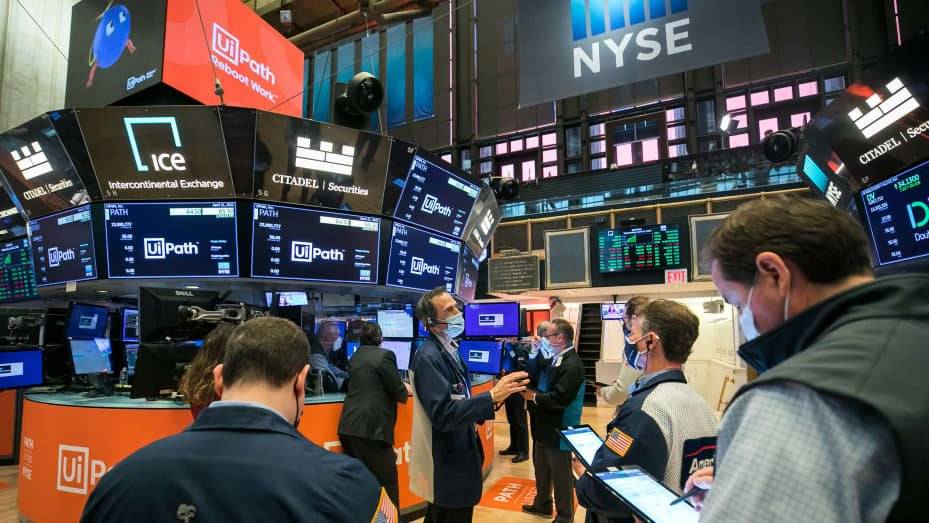
If you’ve ever searched for “U.S. stock market hours” on Google or Naver, you’re probably someone who’s been thinking about trading U.S. stocks and wants to know when you can trade, or someone who has been actively investing in Korean stocks but now wants to become a global retail investor in U.S. markets.
Interest in U.S. stocks has been running hot since the Tesla boom several years ago, and because of differences in regulations and market structure, many investors are likely thinking about shifting from Korean stocks to U.S. stocks.
Today, for those investors—and for complete beginners as well—we’ll walk through U.S. stock market opening hours, daylight saving time, pre-market trading, market holidays, and other essentials every new investor should know, in a way that’s easy to follow.
U.S. Stock Market Opening Hours – What Time Is That in Korea?
Brokerage firms usually provide detailed information on their websites about market opening hours.
In Korea time, regular U.S. trading hours run from 11:30 p.m. to 6:00 a.m. the following day. Because of the time difference between the U.S. and Korea, unlike the Korean market that opens at 9:00 a.m., U.S. trading starts late at night for Korean investors.
But there is one key difference from Korean trading hours: the note in parentheses under the trading hours that says “daylight saving time.”
Why Does Daylight Saving Time Exist? – What It Means and How It Works
“Wait, I got to work on time—how am I late?”
Daylight saving time is a system under which, during the summer months, a country moves its standard time one hour forward.
There’s a popular story that daylight saving time began as a way to save candles.
Because the sun rises earlier and there is more daylight in summer, the idea was that if people woke up earlier, they could make better use of natural light. This is often attributed to Benjamin Franklin, who served as the sixth president of the Supreme Executive Council of Pennsylvania.
Sound like a familiar face? Yes, he’s the one printed on the 100-dollar bill.
In fact, Benjamin Franklin did not propose daylight saving time.
Franklin merely remarked in the late 18th century that people were wasting daylight. In 1907, William Willett submitted a bill to Parliament proposing daylight saving time for economic and health reasons, but it was voted down. Then in 1916, during World War I, Germany adopted the system for economic reasons. From there it spread to other European countries such as Austria, the United Kingdom, and Denmark.
But is all that wasted daylight really such a big deal?
If you forget to reset your alarm and don’t set it earlier, you could end up late for work – so why does this old-fashioned custom still stick around?
In fact, in 2022 the U.S. Senate passed the Sunshine Protection Act, proposing to make daylight saving time permanent, but it ultimately failed to pass. It could still be abolished at some point, but for now it seems to be hanging on, likely due to various lobbying efforts and other factors.
So when is daylight saving time in the U.S.?
In 2024, U.S. daylight saving time runs from Sunday, March 10 to Sunday, November 3 in Korea time.
In 2023 it ran from March 12 to November 5, so you can see how the dates shift slightly each year because of the time difference.
To sum up, until November 3, you can trade U.S. stocks from 10:30 p.m. to 5:00 a.m. the next day.
After November 3, from 11:30 p.m. to 6:00 a.m. the next day will be the trading hours for U.S. stocks from Korea.
Pre-market and after-hours trading
You’re exhausted after 10 p.m., and before 6 a.m. it’s hard to even open your eyes, right?
That’s why the U.S. stock market has a pre-market session before regular trading hours and an after-hours session after the regular close.
Pre-market runs from 6:00 p.m. to 11:30 p.m. Korea time.
After-hours runs from 6:00 a.m. to 8:00 a.m. Korea time.
During daylight saving time (March 10 to November 3, 2024), you can think of both pre-market and after-hours sessions as being shifted one hour earlier.
Why U.S. stocks aren’t traded 24/7 like Bitcoin
If you’ve ever traded Bitcoin even once, you already know this.
Unlike stock exchanges, cryptocurrency exchanges run 24/7 with no opening, closing, or holidays.
So why can’t stocks trade like that?
Actually, they can.
That is because Blue Ocean, one of the alternative trading systems (ATS) in the United States, has received approval for overnight trading from the U.S. Securities and Exchange Commission (SEC) and the Financial Industry Regulatory Authority (FINRA), and is offering this service to Korean brokerages. This is called the "daytime trading service," and most Korean brokerages now offer this service.
If you use the daytime trading service, you can trade from 10 a.m. to 6 p.m.
If you also take advantage of pre-market and after-hours sessions, you are effectively able to trade around the clock.
However, there are a few issues you need to be aware of.
Daytime trading issue 1 – Everything could go down at once
As mentioned above, daytime trading is a service made possible because an alternative trading system has received approval for overnight trading.
Because this requires approval from the SEC and FINRA, there are not many U.S. alternative trading systems that can offer the service. As a result, a single ATS provides services to a large number of Korean brokerages. If that ATS experiences a system problem, the daytime trading function at every brokerage that relies on it can go completely offline.
In fact, around April 2024, daytime trading in U.S. stocks was suspended across all Korean brokerages.
Daytime trading issue 2 – What if my order never gets filled?
“I swear I bought it, but the order never went through!”
For an order to be executed, someone has to buy at the price and size you are selling, or someone has to sell at a price where you are willing to buy. But because daytime trading is not the regular session, there are not enough natural buyers and sellers.
Our daytime trading relies on a liquidity provider (LP) posting two-sided quotes so that trades can be executed smoothly.
However, liquidity providers cannot perfectly replicate the regular market. Because liquidity is ultimately limited, your orders may not get filled.
If you are just getting started with U.S. stocks and only wanted to learn how to place trades, this may already feel overwhelming.
For those who know the basics but want to go deeper and grow their assets,
For those who know the markets very well but are tired of chasing fast-moving news,
AWARE lightens the load for people like you and creates an environment where you can truly rest easy.
Newsletter
Be the first to get news about original content, newsletters, and special events.
Continue reading

Note By Ryunsu
The Intelligence Layer of Financial Infrastructure
Ryunsu Sung

Aware Original
Why Bitcoin Keeps Falling: The Downward Spiral of the Gamma Trap
Ryunsu Sung

Aware Original
The Overwhelming Autonomous Driving Leader Proven by Numbers: Waymo’s Full-Scale Takeoff
Ryunsu Sung

Aware Original
The Precarious State of ‘American Exceptionalism’ and a Shaken Dollar Hegemony
Ryunsu Sung