Nov 13, 2024
What Will Dominate the Stock Market in 2025?: The Nightmare Rising to the Surface, U.S. Debt
Sungwoo Bae
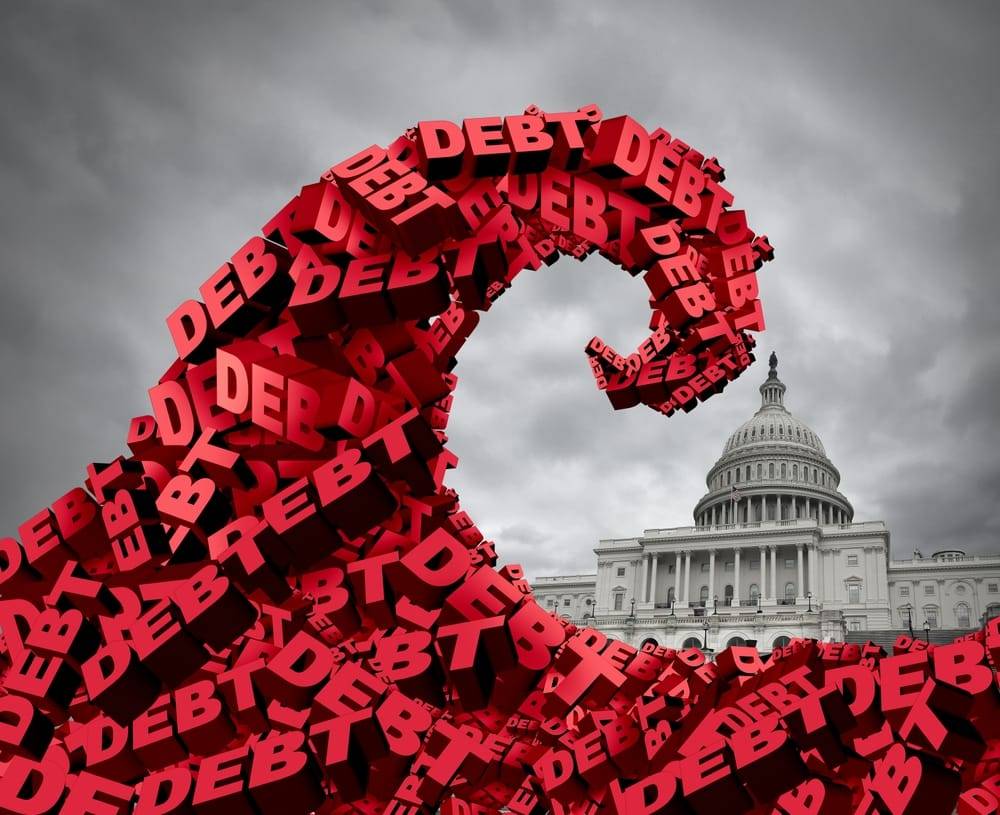
Regardless of whether Republicans or Democrats are in charge of the administration, U.S. debt has steadily increased. Rising debt in a highly trusted sovereign is not, in itself, a major problem. If asset values grow faster than interest costs, the math still works.
Recently, however, the trajectory of U.S. debt has become worrisome. To understand why, we need to go back three years, to 2021.
Suspending the U.S. Debt Ceiling: Kicking the Headache Down the Road
On December 16, 2021, Congress raised the debt ceiling to 31.38 trillion dollars. The debt ceiling is a statutory limit that caps how much debt the Treasury is allowed to issue.
But that limit was breached on January 19, 2023, meaning total U.S. debt had already surpassed the ceiling.
As mentioned earlier, the absolute size of the debt is not the key issue. What matters is the ability to service the interest. When the ceiling was breached, Treasury Secretary Janet Yellen stated that, thanks to extraordinary measures taken after the limit was hit, the government would be able to continue meeting its obligations until June 1.
In May 2023, with about a month left before the June deadline Yellen had flagged, Republicans and Democrats agreed to suspend the debt ceiling until January 1, 2025.
Suspending the ceiling is essentially a way to avoid default risk.
If tax revenues and budget resources are exhausted and the government can no longer borrow, it faces default. By suspending the ceiling, the government regains the ability to borrow and thus avoids default.
The only reason the U.S. can unilaterally grant itself this kind of reprieve is because it issues the world’s reserve currency and because U.S. Treasuries still enjoy exceptional credibility.
So the real question becomes: “Can U.S. Treasuries maintain their credibility?”
When someone asks, “Can the United States pay back its debt?” the answer still needs to be, “Of course it can.”
The State of U.S. Debt: America, Can You Really Pay This Back?
With the suspension deadline approaching, what does the U.S. debt picture look like now?
From my perspective, the U.S. debt problem is now close to its limits. That doesn’t mean a crisis will explode tomorrow or the day after, but it does mean the government must take action to address it.
The series labeled “Federal Outlays: Interest” in the chart refers to the portion of the federal budget spent on interest payments on debt. The line shows that these interest costs are rising sharply. You’ll recall that the ability to service interest matters more than the sheer size of the debt. Growing interest costs signal mounting fiscal pressure.
Over the past few years, as interest rates have risen, the U.S. has had to issue new Treasuries at higher yields to raise funds, causing interest expenses to surge.
In the early 2020s, annual interest payments were around 500 trillion won in Korean won terms; now they have soared to over 1,200 trillion won a year, and interest payments have climbed to 13% of total federal spending. That is on par with what the U.S. currently spends on defense.
As interest costs rise, investment in critical infrastructure and other growth drivers naturally gets squeezed, dragging down the economy’s growth rate. The longer the problem is left to fester, the worse the outcome.
The government is, of course, not simply ignoring the issue. If we look at the key provisions of the Fiscal Responsibility Act of 2023, which included the May 2023 debt ceiling suspension:
Hardline Republicans complained that the bill did not sufficiently reflect their demands for spending cuts and policy changes, but overall it did signal a willingness to tackle the debt problem.
The Congressional Budget Office estimated that this bill would reduce federal debt by about $1.5 trillion over the next 10 years.
Even so, it is still not enough, because short-term debt does not wait 10 years to mature. The United States needs to ease its debt burden by spreading interest costs across other countries or increasing tax revenues.
Since 2022, in the high-rate environment, the U.S. government’s aggressive increase in short-term debt issuance has become a factor that adds to its fiscal burden.
As of June 2024, short-term Treasuries account for about 21% of all marketable federal debt.
Meanwhile, the extension of student loan repayment relief has ended, and credit card delinquencies are rising sharply.
The data show that the net charge-off (NCO), which refers to losses on loans deemed uncollectible, has climbed to 4.73. That already exceeds the 4.70 level seen in the early stages of the 2008 financial crisis.
Bank stocks are posting strong earnings, so is there really a problem?
That is correct. Strong third-quarter earnings reports from U.S. banks have driven a sharp rally in their share prices. This is because the rebound in third-quarter NII (net interest income) eased earlier concerns about a decline in NII due to rate cuts.
Rising NCOs are a negative signal from a risk perspective, while higher NII is a positive signal for profitability. In other words, banks need to carefully balance these two indicators. But if they ultimately fail to get NCOs under control, bank profits will be continuously eroded.
Once profits are squeezed in this way, banks will prioritize avoiding credit risk over expanding lending. Put simply, they stop making loans.
If banks pull back on lending, consumption and investment naturally fall, and credit-tightening risks can emerge.
In the end, the government has to solve this problem, but it is also struggling with its own short-term refinancing pressures.
So until private-sector debt is brought under control, debt-ceiling negotiations need to go smoothly.
What if debt-ceiling negotiations go off the rails?
Think back to when Standard & Poor’s (S&P) downgraded the U.S. sovereign credit rating.
On August 5, 2011, S&P, one of the world’s three major credit rating agencies, downgraded the U.S. sovereign rating for the first time ever, cutting it one notch from the top-tier AAA to AA+. The decision was based on the following concerns.
- U.S. federal debt had reached $14.58 trillion, exceeding the size of U.S. nominal GDP in 2010
- The U.S. government failed to present a credible plan to address the national debt problem
- Concerns that partisan gridlock would become an obstacle to future fiscal policy
Before and after that episode, U.S. debt problems remained a recurring theme, and over July and August the S&P 500 fell 16% and the Nasdaq dropped 17%.
Is Warren Buffett’s stock selling tied to U.S. fiscal risks?
"The government owns a portion of our profits, and it can change the tax rate at any time. The current rate is 21%, but if the fiscal deficit problem persists, it is highly likely to rise." Warren Buffett, after selling Apple
Lately, Warren Buffett’s comment about the ongoing “fiscal deficit” after he sold Apple keeps ringing in my ears.
Some might criticize Buffett, saying he has often been wrong in his decisions.
But that view is based purely on price gains.
Warren Buffett is not an investor who tries to time the market; he has always treated investing as running his own business and focused on the intrinsic value of companies themselves.
With that in mind, let’s revisit Warren Buffett’s remarks:
Buffett may see America’s debt problem not as a crisis that will erupt in the near term, but as a long-term issue that could take a long time to fix structurally. If he judged that corporate profitability could be constrained until those structural improvements are made, his decision to sell becomes entirely understandable.
The concern Buffett raised—that the United States might raise the tax rate to solve its debt problem—can be set aside for now with Republican Donald Trump’s election, but that simply means the burden will be shifted abroad or addressed through budget reallocations and other measures. And those choices can eventually circle back and affect corporate profitability in indirect ways.
In other words, only the truly strong will remain in the stock market going forward.
Newsletter
Be the first to get news about original content, newsletters, and special events.
Continue reading

Note By Ryunsu
The Intelligence Layer of Financial Infrastructure
Ryunsu Sung

Aware Original
Why Bitcoin Keeps Falling: The Downward Spiral of the Gamma Trap
Ryunsu Sung

Aware Original
The Overwhelming Autonomous Driving Leader Proven by Numbers: Waymo’s Full-Scale Takeoff
Ryunsu Sung

Aware Original
The Precarious State of ‘American Exceptionalism’ and a Shaken Dollar Hegemony
Ryunsu Sung