Nov 06, 2025
The Company That’s Truly Serious About Robots—And It’s Not Tesla?
Ryunsu Sung
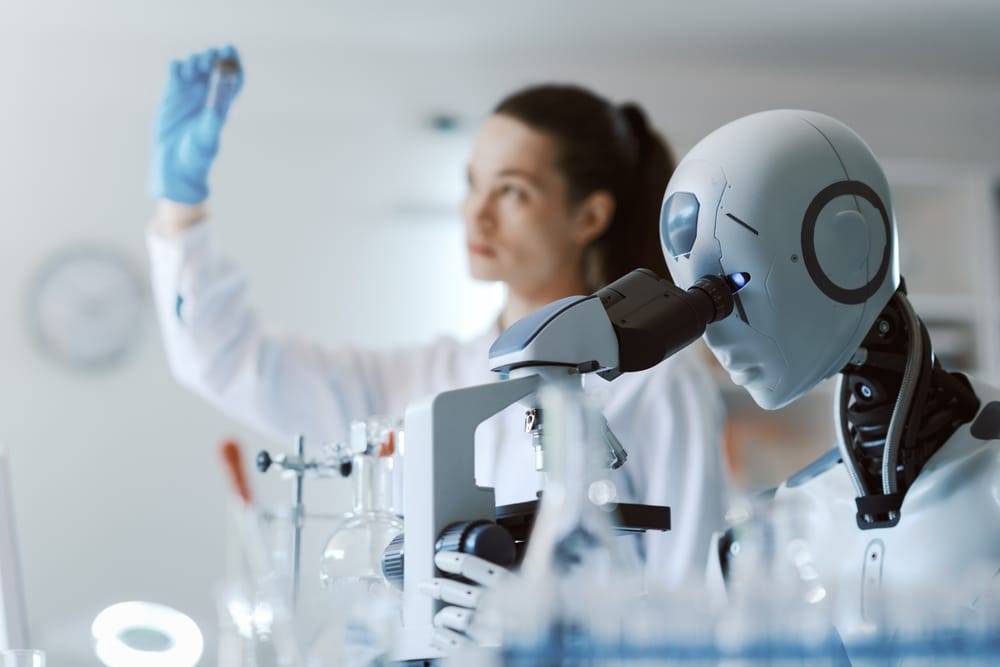
Is Tesla’s Optimus Robot an “Infinite Money Printer”?
Not long ago, Tesla (TSLA) released its third-quarter results and offered revenue and margin guidance that fell well short of analysts’ expectations. The official explanation was that U.S. federal EV purchase subsidies ended in October, so the pull‑forward demand from buyers rushing to purchase before the deadline is now reversing. But given that peers like Ford (F) and GM have both raised their U.S. EV market share guidance while also issuing higher net income forecasts, I’m inclined to believe this is the result of Tesla neglecting its core competitiveness—spending years indulging CEO Elon Musk’s personal tastes with oddball models like the Cybertruck while rivals made painful efforts to catch up in EVs and software. Tesla’s volume models, the 3 and the Y, were first unveiled in 2016 and 2020, respectively, and have yet to see a full model change. The overwhelming cost advantage Tesla once demonstrated by being the first to deploy innovations like the Giga Press is also eroding quickly, even though it’s been using virtually the same molds for nearly a decade. In the U.S., the consensus is that Tesla vehicles now lag competitors in product appeal, which means they need to be sold cheaply—yet even that is getting difficult. Wall Street analysts’ 2025 full‑year net income estimates have been slashed by a staggering 50% from the consensus at the start of the year.
Even so, Tesla’s share price rose by a solid mid‑single‑digit percentage the day after earnings were released. That’s because, despite the continued deterioration in the auto segment that still generates most of its revenue, Tesla is no longer seen as an EV company but as a company developing AI robots that will eventually be installed in every household worldwide. On the earnings call, Musk once again reiterated that the “scheduled for release this year” Full Self‑Driving (FSD) service he has been promising for the past decade will turn Tesla vehicles from depreciating liabilities into income‑generating assets that make money for their owners. He also announced plans to launch the third‑generation Optimus humanoid robot in the first quarter of next year. He claimed that “because the third‑generation Optimus robot we’re developing doesn’t need rest or sleep like humans, it will effectively replace corporate employees and constantly generate cash as an ‘infinite money glitch’—a kind of infinite money printer”, and went on to say that “eventually, it could generate $10 trillion in revenue for Tesla.”
Anyone even moderately rational can judge how credible those claims are just by looking at his past statements, so instead of offering my own verdict I’ll simply attach below the Optimus video released by Salesforce founder Marc Benioff after his recent visit to Tesla’s offices. Of course, those who are less than rational will watch the same video and once again be awestruck by Tesla’s supposedly transcendent AI capabilities.
What Elon Musk Really Wants With His $1 Trillion Pay Package
Elon Musk is urging shareholders to approve a performance‑based stock compensation package for himself worth up to $1 trillion, and stressing that unless he secures a 25% voting stake, he will feel extremely reluctant to develop such “transcendent” AI robots within Tesla. He argues that 25% is the minimum stake he needs to block any attempt by unscrupulous actors to launch a hostile takeover of Tesla—a company whose AI and robotics capabilities, he says, could potentially bring about the end of humanity—while still being low enough that if he completely loses his mind, the remaining shareholders can band together and oust him.
Of course, Tesla’s major shareholders (including Norway’s sovereign wealth fund) have not been moved by this lofty reasoning and have publicly opposed the package. If they approve it, Musk’s ownership stake will rise and other shareholders’ stakes (and thus the value of their holdings) will be diluted. Because U.S. stock exchanges prohibit issuing new shares with enhanced voting rights that infringe on existing shareholders, raising Musk’s voting power from the current 15% to 25% would require issuing roughly 12% more common stock.
Some argue that there’s no need for Elon Musk to build an AI robot army inside Tesla at all—that he could simply spin it off. At first glance, that seems like the most reasonable solution. Tesla, whose revenue is still mostly from EVs, would remain an automaker, while the AI robot business Musk is so concerned about would be carved out into a new, independent entity. Some analyses claim that more than half of Tesla’s market cap is attributable to its AI robot business, so Musk could give up part of his stake in the legacy Tesla (the pure EV maker) in exchange for a larger stake in the new AI robot company. That way, he could easily reach a 25% or even higher ownership stake, and Tesla could bring in a new CEO and refocus on electric vehicles.
But that is not going to happen. The robotics division needs the cash flow generated by Tesla’s existing EV business, and Tesla in turn needs the AI robot army to justify the massive valuation premium that puts its multiple more than 25 times higher than that of pure‑play automakers (Tesla’s P/E of 323 vs. GM’s 13). If you were to neatly formalize this beautiful, mutually beneficial relationship—like a secret “Manito” game from school where everyone quietly helps one another—everything would become a little too clear.
Amazon: The “Low‑Profile” Giant Planning to Replace 600,000 Workers With Robots
The company that is truly serious about robots is Amazon, which had more than 1.6 million employees as of the end of 2024. The headline of the article above makes it sound as if Amazon is about to replace 600,000 workers with robots starting tomorrow, but in fact it’s saying that, under the company’s internal projections for e‑commerce growth through 2033, it won’t need to hire the additional workers it otherwise would have. What convinced me that Amazon is genuinely serious about robots is the fact that New York Times reporters obtained this information from an internal strategic document. In a board presentation, Amazon’s top executives projected that by 2033 the company would be able to sell twice as many products as it does today without increasing its headcount, thanks to automation using robots. By the end of 2027—which is not far off—the figure is 160,000, and Amazon is already expanding its business without adding to its workforce. The company’s robotics team reportedly aims to ultimately automate 75% of its logistics and operations tasks.
Executives are so confident about replacing workers with robots that they are considering ways to step up participation in local events and charitable programs for low‑income children in communities where their fulfillment centers are located, so that Amazon will be seen as a “good corporate citizen.” If automation proceeds as planned, each center will employ fewer people, so they are factoring in potential community backlash. The leaked document even states that Amazon will avoid using the words “automation” and “AI” in public and instead refer to “advanced technology,” and is considering using the neologism “cobot” instead of “robot” to convey the image of machines working alongside humans. These are not the kinds of things you worry about unless you’ve already made substantial progress on automation.
In a statement, Amazon spokesperson Kelly Nantel said that “the leaked document is not final and does not represent the views of the company’s leadership as a whole,” and noted that the company plans to hire 250,000 new workers for the November holiday season.
Newsletter
Be the first to get news about original content, newsletters, and special events.
Continue reading

Notes by Ryunsu
The Intelligence Layer of Financial Infrastructure
Ryunsu Sung

Aware Original
Why Bitcoin Keeps Falling: The Downward Spiral of the Gamma Trap
Ryunsu Sung
Aware Original
The Overwhelming Autonomous Driving Leader Proven by Numbers: Waymo’s Full-Scale Takeoff
Ryunsu Sung

Aware Original
The Precarious State of ‘American Exceptionalism’ and a Shaken Dollar Hegemony
Ryunsu Sung