Dec 28, 2022
Apple’s Crumbling Semiconductor Throne
Ryunsu Sung
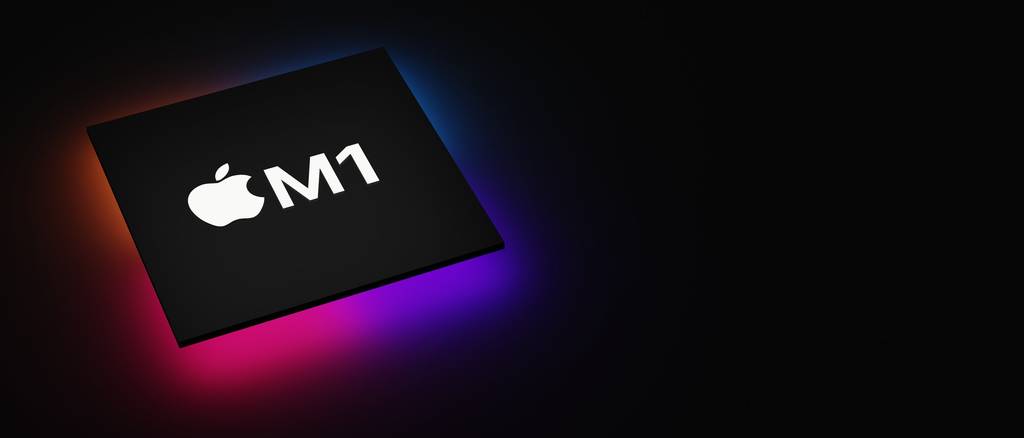
For more than a decade, Apple’s silicon engineering group has played a crucial role in giving the company an edge in the smartphone and laptop markets. Its custom chip designs have enabled Apple devices to run faster and deliver longer battery life. In fact, the iPhone is often cited as the flagship smartphone with the longest real-world battery life.
But starting last year, cracks began to appear in this silicon engineering group.
Apple originally planned to equip the A16 Bionic chip in the iPhone 14 Pro with a newly designed graphics processor, but early prototypes consumed far more power than software simulations had predicted. As a result, Apple ended up using a design that was largely unchanged from the previous generation GPU. Excessive power draw can cause devices to overheat and shorten battery life. Because the graphics processor powers the phone’s user interface, games, and essentially everything you see on the screen, it is a critical component.
When Apple unveiled the A16 Bionic chip, the company highlighted only “50% more memory bandwidth” for graphics performance and offered no other concrete performance metrics.
Inside Apple’s silicon engineering group, this kind of setback was unprecedented. Benchmark tests show that the iPhone 14 Pro delivers only modest graphics gains over the previous generation, yet it still ranks as one of the best-selling flagship phones.
The key feature Apple had to strip from the iPhone 14 Pro’s graphics processor was ray tracing, a technology that simulates the behavior of light to create more lifelike graphics, such as natural-looking shadows, in games. The absence of such a major upgrade can be a negative factor when users consider upgrading (though early demand for the iPhone Pro models has been very strong). The GPU misstep ultimately led to a reorganization of the team, and some managers were removed from the project. But Apple’s silicon engineering group faced another problem: the departure of key personnel who had been essential to establishing Apple as a powerhouse in cutting-edge chip design.
Apple’s success stems from many factors—design, marketing, and its inescapable ecosystem, among others—but at the core is the silicon engineering group. Led by Johny Srouji, Apple’s senior vice president of Hardware Technologies, the group has reduced Apple’s reliance on other companies’ semiconductor designs, cutting licensing costs and giving Apple greater control over future technologies. Like a well-oiled machine, the team has reliably delivered new iPhone chipsets every year, significantly enhancing the iPhone experience.
Physics itself, however, is making it increasingly difficult for the silicon engineering group to keep improving its technical achievements year after year. The semiconductor industry as a whole is striving to maintain Moore’s Law—the idea that transistor density doubles roughly every 18 months—but the path of miniaturization is now encroaching on the realm of quantum mechanics.
Ian Cutress, principal analyst at More than Moore, said, “Apple is still improving its chip performance faster than the market expects,” but added, “The pace of improvement is slowing, and given Apple’s current situation, it’s unclear whether that pace can be sustained.”
Interviews with more than 20 former Apple employees and court records show that since 2019 Apple has lost dozens of key semiconductor engineers to startups and rivals. These materials offer the clearest picture yet of how Apple’s secretive silicon engineering group operates and of the behind-the-scenes drama that unfolded after Gerard Williams III, who had overseen Apple’s CPU efforts, left the company. Williams went on to found his own chip startup, Nuvia, in 2019; in 2021, Qualcomm (QCOM) acquired Nuvia for $1.4 billion.
Dylan Patel, principal analyst at research firm SemiAnalysis, said, “Over the past few years, Apple’s CPU performance gains have been very modest and have largely come from manufacturing improvements rather than Apple’s chip designs,” adding, “Since Williams left, Apple’s CPU performance gains have slowed dramatically.”
Six months after Williams left, Apple sued him, alleging that he had used Apple’s intellectual property at his new startup and poached key employees. Earlier this year, Apple made similar claims in a lawsuit against chip startup Rivos.
According to people familiar with both startups, the loss of key talent has had a deep personal impact on Srouji and his right-hand man, Sribalan Santhanam. It has also strained relations with venture capitalists Lip-Bu Tan and Amarjit Gill, who invested in Nuvia and Rivos. Tan, one of the most influential figures in the semiconductor industry, serves as an outside director at Intel (INTC) and has close ties to a company that supplies software tools essential for Apple’s chip design. Gill briefly worked at Apple after the company acquired his startup, P.A. Semi.
A Warning to Employees
Inside Apple’s silicon engineering group, managers are reportedly scrambling to keep employees from leaving. Even before the lawsuit against Rivos, Apple managers showed staff a two-page presentation arguing that semiconductor startups are extremely risky and that only a tiny fraction ever succeed.
The presentation also singled out Gill, the Nuvia co-founder, claiming that he alone had been properly rewarded for the efforts of startup employees. Managers further stressed that Apple is a safer workplace in an economic downturn and that the company is preparing new, game-changing products.
Newsletter
Be the first to get news about original content, newsletters, and special events.
Continue reading
Note By Ryunsu
The Intelligence Layer of Financial Infrastructure
Ryunsu Sung

Aware Original
Why Bitcoin Keeps Falling: The Downward Spiral of the Gamma Trap
Ryunsu Sung

Aware Original
The Overwhelming Autonomous Driving Leader Proven by Numbers: Waymo’s Full-Scale Takeoff
Ryunsu Sung

Aware Original
The Precarious State of ‘American Exceptionalism’ and a Shaken Dollar Hegemony
Ryunsu Sung