Apr 07, 2025
Don’t Scoop Up Tesla on the Dip
Ryunsu Sung
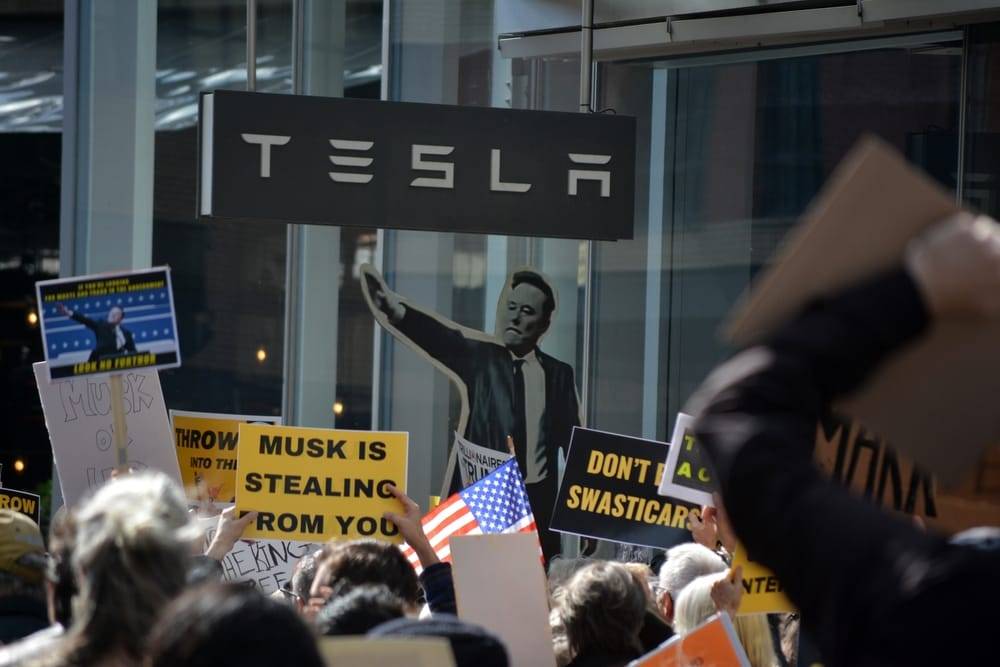
In the article above, written on October 25, 2024, I argued that “just because a company is innovative doesn’t mean it’s a suitable investment.” At the time, Tesla (TSLA) was trading around $260. The stock first surged as Trump’s election odds rose, and then spiked again once his victory was confirmed. The dominant interpretation was that Elon Musk—Tesla’s CEO and largest shareholder (often mistakenly thought of as the founder; in reality, he acquired the company when it was on the verge of collapse)—had played a major role in Trump’s win, and that he and the companies he leads would directly benefit from the Trump administration.
Afterward, Trump’s reckless tariff policy severely damaged investor sentiment, and Tesla gave back all of its gains from before and after the election. Other stocks—mainly tech companies—also fell sharply on tariff risk, so it would be wrong to say Tesla’s decline was a problem unique to the company. But Korean retail investors’ love for Tesla is well known, and I want to once again stress how dangerous it is for people to “buy the dip” when Tesla’s fundamentals are deteriorating so rapidly.
According to the Wall Street Journal, Tesla’s vehicle deliveries in the first quarter of 2025 fell 13% year over year. It’s true that the launch of the refreshed Model Y in the first quarter caused some non-organic production declines. But after Tesla recorded its first annual decline in deliveries in 2024 (-1%), this performance is a far cry from management’s forecast that growth would resume this year.
I have repeatedly emphasized that Tesla is, at its core, an automaker. The company’s much-touted FSD (Full Self-Driving) software is still stuck in beta, and the subscription price that Elon Musk said would rise over time has actually been cut due to weak demand. On top of that, there is no clear timeline for when the Optimus robot, which uses AI, might be commercialized. Tesla diehards dismiss skeptics by saying, “You just don’t understand Elon Musk’s vision,” and telling them to “go study how monumental Tesla’s ambitions really are.” This is a consistent but baseless line of nonsense. I can say with confidence that I’m one of the people who has studied Tesla and Elon Musk’s vision more diligently than almost anyone. It is some consolation that the company’s energy division is growing rapidly, but its share of Tesla’s total revenue and profit is still negligible. In the end, when all is said and done, Tesla is an automaker.
The reason I keep stressing that Tesla is an automaker is that, like every manufacturing business, Tesla cannot escape margin compression when utilization falls. While Tesla’s sales have been declining, competitors’ EV sales have actually been rising. Tesla, once the undisputed number-one EV company, lost that status last year in terms of production volume, and this year it is expected to fall behind BYD in revenue as well. In response, the company has tried to sustain deliveries with very aggressive discounting since the fourth quarter of last year. But now that other brands are finally offering compelling alternatives, the reasons to buy a Tesla are disappearing. This kind of organic decline in sales ultimately leads to price cuts, and for the company, even if it maintains utilization, lower selling prices mean lower contribution margins. In other words, the odds that Tesla will post a loss this year have risen significantly.
Wall Street analysts still expect Tesla’s earnings to rise slightly year over year, but as product competitiveness erodes, the CEO—who, as I’ve said before (“Elon Musk is Tesla’s greatest strength and its greatest weakness”), should be working to protect the downside—is instead becoming the company’s biggest liability at a precarious moment.
In fact, Dan Ives, widely seen as one of the most bullish Wall Street analysts on Tesla, cut his price target this morning, saying, “We now believe Tesla (and Elon Musk) has lost 10% of its potential customer base because of the brand issues it has created,” adding, “and that may be a conservative estimate.”
Newsletter
Be the first to get news about original content, newsletters, and special events.
Continue reading
Note By Ryunsu
The Intelligence Layer of Financial Infrastructure
Ryunsu Sung

Aware Original
Why Bitcoin Keeps Falling: The Downward Spiral of the Gamma Trap
Ryunsu Sung
Aware Original
The Overwhelming Autonomous Driving Leader Proven by Numbers: Waymo’s Full-Scale Takeoff
Ryunsu Sung

Aware Original
The Precarious State of ‘American Exceptionalism’ and a Shaken Dollar Hegemony
Ryunsu Sung