Jun 14, 2025
A Survival Guide for Investors Facing War
Ryunsu Sung
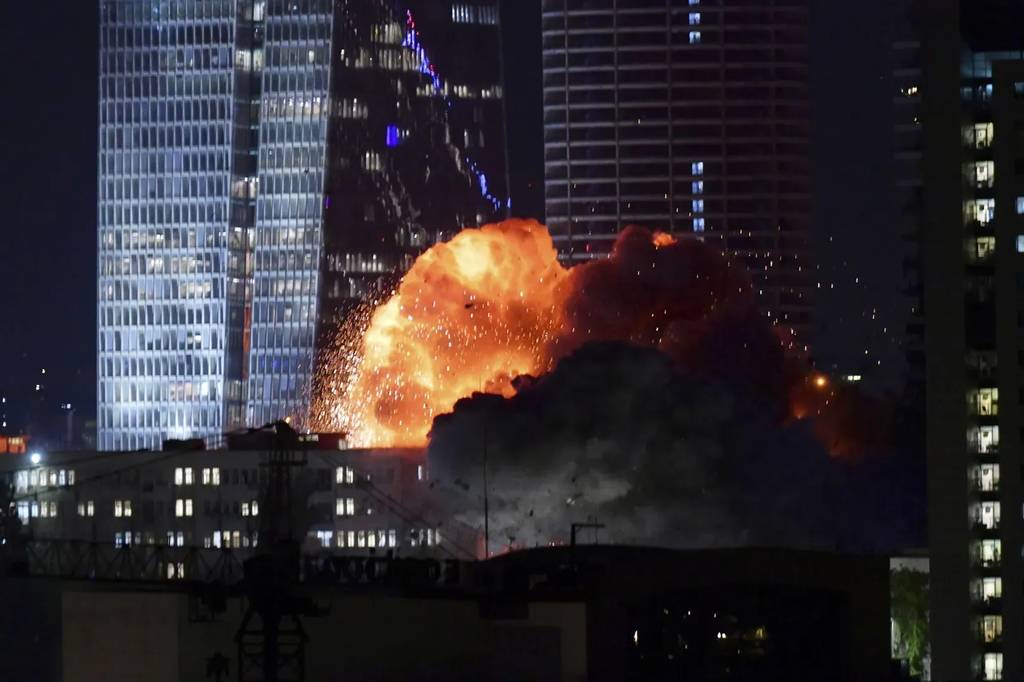
Outbreak of the Israel–Iran War
Israel abruptly launched an attack on Iran (according to Bloomberg, an operation that had been in preparation since last November), and Iran immediately struck back, triggering a war between Israel and Iran. Because the conflict has only just begun, it is extremely difficult to predict how events will unfold.
However, according to early reports, local Israeli media are so far describing the operation as a success. Israel claims to have killed 12 of Iran’s nuclear scientists and senior military officials, inflicted serious damage on key nuclear facilities, and constrained Iran’s ability to retaliate. On Friday night, Israel announced that it had struck yet another nuclear facility, this time in Isfahan.
Since the late 1990s, Israeli Prime Minister Netanyahu has argued that no threat to Israel compares to Iran. Iran denies the legitimacy of Israel as a Jewish state, has enriched uranium and developed ballistic missiles, and has armed anti-Israel forces across the Middle East.
During his previous terms as prime minister in 2010 and 2012, he also sought to launch military strikes against Iran’s nuclear program, but both times the plans were shelved at the last minute. His security chiefs, key cabinet members, and then–U.S. President Barack Obama opposed the move. Today, however, his aides and major ministers are giving him full support. Trump says publicly that he backs negotiations with Iran, but Israel’s sudden attack is unlikely to have gone ahead without his approval.
Given Israel’s military capabilities, it lacks the capacity to completely eliminate Iran’s nuclear facilities without U.S. assistance. Netanyahu therefore argues that this operation is more about delaying Iran’s development of nuclear weapons than making it impossible, and that to stop it entirely, Trump must either proactively order U.S. military intervention or a comprehensive agreement must be reached.
Don’t Panic
The first rule investors must keep in mind during a geopolitical crisis is to not panic. As the data clearly show, from the perspective of investors holding positions for more than a month, most geopolitical events have almost no impact on equity-market returns.
Let’s say it again: “No panic!”
And resist the urge to rush out and sell your stocks. On average, the right response in a geopolitical crisis is not to sell, but to buy risk assets that have plunged.
When a crisis erupts, investors tend to overextend what has just happened across the past and future, imagining scenarios in which “a clash will soon escalate into a world war.” At such times, the “geopolitical experts” who appear on TV and in newspapers stoke fear by predicting World War III, a 1970s-style oil shock, and stagflation.
But these “end of the world” warnings mostly rest on the assumption that the crisis will spiral out of control into a full-scale war. Historically, that has been extremely rare. Over the past 150 years, there have been only two cases in which war truly spun out of control: World War I and World War II.
By contrast, there have been countless local wars and conflicts that “could have turned into World War III.” The Korean War, the Vietnam War, the Cuban Missile Crisis, numerous Middle East wars, tensions between nuclear-armed North Korea and its neighbors, the civil wars that broke out during the Arab Spring in 2011…. Yet most of these remained under control. The reason is simple: people want peace and do their utmost to avoid war. For a conflict to escalate, both sides have to make enormous miscalculations. One “mad dictator” is not enough; you need two, or one dictator combined with appeasement on the other side.
A Four-Step Checklist for Geopolitical Crises
Once you’ve taken a deep breath and calmed your pulse and blood pressure (remember: don’t panic), it’s time to analyze the situation and act.
Question 1
Has the investee country’s infrastructure (ports, railways, telecom networks, etc.) been destroyed?
- No → Move on to the next question.
- Yes → The local economy is likely to suffer major damage. GDP and corporate earnings growth may slow. After a sharp plunge, the share prices of companies that operate infrastructure can take a long time to recover. Insurers and reinsurers may face large compensation burdens (if force majeure cannot be invoked). Conversely, companies involved in infrastructure repair and construction (construction, telecom, IT hardware, etc.) may see new opportunities. Shift your allocation toward defensive sectors (health care, consumer staples, etc.) to prepare for an economic slowdown.
Question 2
Is there an inflation shock likely to last more than a year?
(e.g., disruption to global oil and gas supply, large-scale government spending to finance war)
- No → Move on to the next question.
- Yes → Focus on sectors that benefit from inflation.
In DCF analysis, you should assume a higher inflation rate and a lower earnings growth rate. Although equities are generally considered “real assets” and thus an inflation hedge, once inflation exceeds 4%, companies struggle to fully pass higher costs on to consumers, and margins come under pressure.
Question 3
Is there any factor likely to affect real interest rates for more than a year?
(e.g., rapid rate hikes or cuts by the central bank, financial repression policies by the government)
- No → Move on to the next question.
- Yes → This implies a combination of structurally higher cost of capital and weaker demand. You should brace for a broad bear market.
In DCF analysis, it is advisable to revise real interest rates upward and earnings growth downward.
Question 4
Did you answer “No” to all three questions above?
- No → Go back and review again.
- Yes → This is your opportunity. Buy risk assets.
If this geopolitical shock does not permanently affect inflation, real interest rates, or corporate earnings, then the current decline is merely a spike in risk premia—investor fear. Such panic phases usually subside within days or weeks. Secure as much buying power as you can while prices are plunging.
Best response: Buy the dip
Research backs this up. When the pattern “geopolitical shock → sharp equity sell-off” appears, the default response is to buy.
Only when you see confirmation of “permanent effects” such as persistent inflation, rising real rates, or prolonged earnings declines does it make sense to consider some selling. Short-term earnings downgrades over a quarter or two are just noise.
“In the short run, the market is a voting machine, but in the long run, it is a weighing machine.”
- Benjamin Graham
When the crowd is casting its votes by rushing for the exits, a skilled investor weighs value and acts accordingly.
Notes
- Reference: https://rpc.cfainstitute.org/en/research/foundation/2021/geo-economics
- Many so-called “geopolitics experts” come from international relations or political science and have little experience with financial markets. Conversely, among economists there are plenty who suddenly present themselves as geopolitics experts in times of crisis, yet have done no empirical work on geopolitics or markets and have never managed money—these are “geopolitics tourists.” You wouldn’t let a tourist be your guide, would you?
Newsletter
Be the first to get news about original content, newsletters, and special events.
Continue reading

Note By Ryunsu
The Intelligence Layer of Financial Infrastructure
Ryunsu Sung

Aware Original
Why Bitcoin Keeps Falling: The Downward Spiral of the Gamma Trap
Ryunsu Sung

Aware Original
The Overwhelming Autonomous Driving Leader Proven by Numbers: Waymo’s Full-Scale Takeoff
Ryunsu Sung

Aware Original
The Precarious State of ‘American Exceptionalism’ and a Shaken Dollar Hegemony
Ryunsu Sung