May 31, 2025
Robotaxis Already Dominating the Roads — And They’re No Longer Tesla’s Game
Ryunsu Sung
Robotaxi Services at an Inflection Point
According to data collected by the state of California and reported by Wall Street Journal columnist Ben Cohen, Alphabet’s (Google’s) self-driving subsidiary Waymo has surpassed 10 million cumulative robotaxi rides.
In August 2023, Waymo logged 10,000 paid rides per week. By May 2024, weekly rides had reached 50,000. In August, they topped 100,000, and they have now blown past 250,000.
Waymo, which has been leading the race in autonomous taxis, is now starting to widen the gap. It’s not just because Waymo is expanding into new regions. It’s because the way people accept and use autonomous vehicles is changing.
The recently released quarterly data from California is especially encouraging. In January and February 2024, Waymo’s number of paid rides grew by about 2% each month, but in March it suddenly surged by 27%. Nearly two years after people in San Francisco first started paying to ride in autonomous vehicles, this is the first time that growth, after a few months of plateauing, has spiked again.
These numbers show that Waymo is approaching an inflection point. The phase of “novelty” has passed; it is now becoming part of everyday life.
By the end of 2023, cumulative paid rides had surpassed 1 million. By the end of 2024, they exceeded 5 million, and now, before we are even halfway through 2025, they have crossed the 10 million mark. At this pace, topping 20 million rides by year-end seems entirely feasible.
“This is what exponential growth looks like,” Waymo co-CEO Dmitri Dolgov said recently at Google’s developer conference.
Right now, Waymo’s autonomous taxis are available only in a handful of U.S. cities, including Phoenix, Arizona; Los Angeles, California; and San Francisco. But in those cities, robotaxis have already become a more popular tourist attraction than cable cars.
“A year from now, we’ll look back and realize that this was only the beginning for Waymo,” co-CEO Tekedra Mawakana said.
The Competition Begins
The real competition is only just getting underway. Tesla is finally about to unveil the robotaxi service it has been promising for years. Waymo enjoys a first-mover advantage, but it still isn’t profitable and has poured billions of dollars into turning the “unrealistic dream” of autonomous vehicles into reality. Elon Musk is convinced that Tesla can catch up with a far cheaper strategy.
But the longer Waymo remains the only company operating truly autonomous vehicles, the wider that gap becomes.
Waymo is gaining traction not only as it enters new cities, but also in the places where it is already established. Earlier this year, it partnered with Uber to launch in Austin, Texas. This summer it will begin service in Atlanta, Georgia, followed by expansions to Miami, Florida, and Washington, D.C. It is currently building high-definition maps in Boston, Nashville, New Orleans, Dallas, Las Vegas, and San Diego, and it recently announced tests in Orlando, Houston, and San Antonio. It is even collecting data across the Pacific in Tokyo.
This kind of exponential expansion is in fact the result of steady progress accumulated over months, years, and even decades.
“Waymo’s growth is a direct result of the technological advances that have accumulated across the company,” Mawakana said.
Robotaxis as Part of Everyday Life
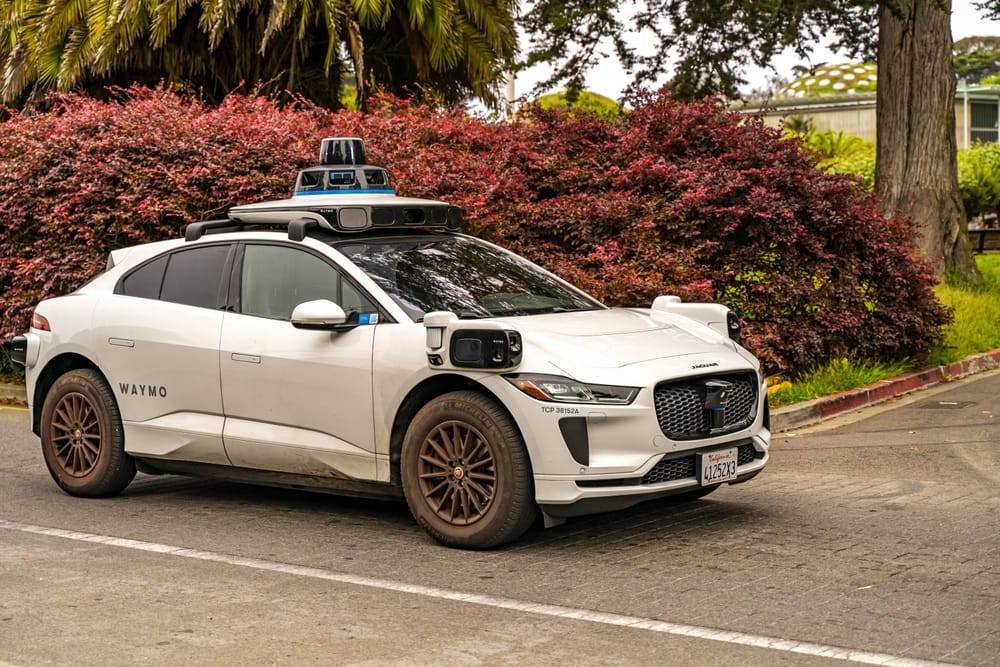
A reporter visiting San Francisco recently took a Waymo for the first time. A white Jaguar, topped with a spinning lidar sensor like a crown, pulled up in front of them. Only after unlocking the door with a smartphone and fastening the seat belt could they brace for this unfamiliar experience.
They knew, in technical terms, how it worked. But they had no idea what it would feel like until they actually got into a Waymo.
When the car started moving with no one in the driver’s seat, a mix of curiosity, slight anxiety, and hyper-awareness of the surroundings washed over them. They watched stop signs as intently as if they were behind the wheel, and their heart raced on the way down a steep hill. But that unease faded within a few blocks. Waymo drove cautiously and courteously, gradually earning their trust. By the time they reached their destination, they were looking at their phone, barely conscious of the act of driving itself.
The strangest part was how unstrange it felt.
The success of robotaxis ultimately depends on this kind of shift in human behavior. And recent data suggests that this change is already underway.
“This is not something out of a sci-fi movie,” Mawakana said on CNBC. “This is not the future. It’s happening right now.”
At first, even people in San Francisco weren’t exactly thrilled. Until it became part of everyday life, self-driving cars were mostly a nuisance.
Waymo launched a limited paid self-driving service in San Francisco in 2023, and fully opened it to the public in 2024. Since then, the city’s perception has completely changed.
Different philosophies on safety and cost
Technically speaking, you don’t need the lidar, radar, and 29 cameras currently mounted on Waymo vehicles to detect every obstacle on the road.
So far, Waymo has accumulated more than 50 million miles (80 million kilometers) of driverless data, equivalent to crossing the United States about 20,000 times. In the U.S., millions of traffic accidents occur every year and more than 100 people die every day, but in the robotaxi business, even a single horrific accident can bring growth to an abrupt halt.
Most of the companies that tried to catch up with Waymo have already given up. Uber and Lyft halted their self-driving projects, and GM shut down the robotaxi program of its subsidiary Cruise. Amazon owns Zoox, but Waymo’s strongest competitor in the U.S. right now is Tesla.
Six years ago, Musk confidently claimed robotaxis would be on the road within just one year. Only this year, six years later, is Tesla finally planning to launch a robotaxi-hailing service in Austin, Texas, sometime in June. Before long, empty Teslas may be lining up at traffic lights next to driverless Waymos.
The two companies take completely different approaches to self-driving technology and economics. Tesla relies solely on cameras and artificial intelligence, while Waymo integrates high-definition maps, lidar sensors, and human feedback. That makes it more expensive. Waymo, which sits under Alphabet’s “Other Bets” segment, raised 5.6 billion dollars in new funding last year.
“The problem with Waymo is that it costs way more,” Musk sneered in April.
“For us, safety comes first, and then cost,” Mawakana told CNBC. “Not cost first.”
She added, “There are many ways to do this (self-driving), but so far, we’re the only ones who have actually done it.”
Related originals
Newsletter
Be the first to get news about original content, newsletters, and special events.
Continue reading

Note By Ryunsu
The Intelligence Layer of Financial Infrastructure
Ryunsu Sung

Aware Original
Why Bitcoin Keeps Falling: The Downward Spiral of the Gamma Trap
Ryunsu Sung
Aware Original
The Overwhelming Autonomous Driving Leader Proven by Numbers: Waymo’s Full-Scale Takeoff
Ryunsu Sung

Aware Original
The Precarious State of ‘American Exceptionalism’ and a Shaken Dollar Hegemony
Ryunsu Sung