Dec 13, 2022
Tesla’s Relentlessly Falling Share Price and Why It’s Happening
Ryunsu Sung
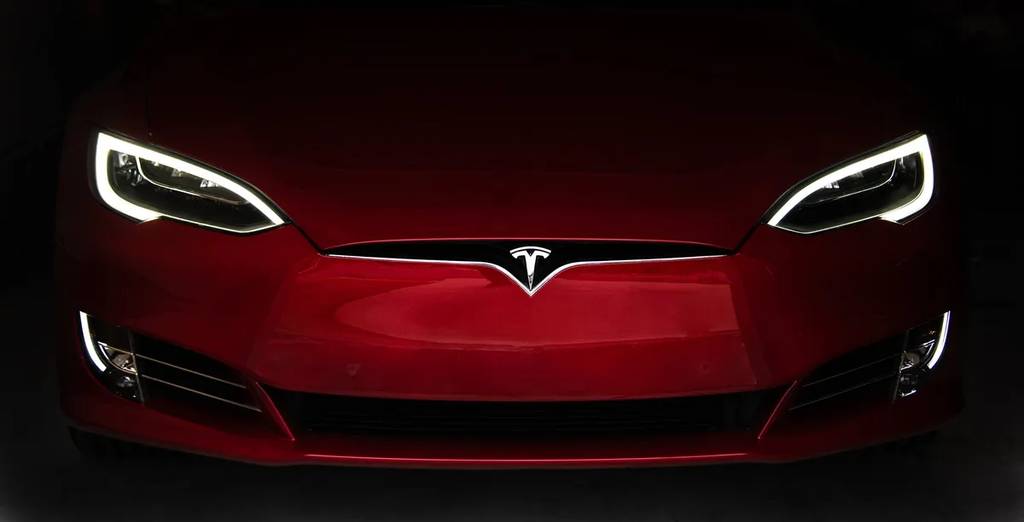
Electric vehicles (EVs), especially Tesla (TSLA), are often called “iPhones on wheels,” and the brand is perceived less as a traditional carmaker and more as a premium electronics company.
Yet this year Tesla’s share price has been languishing. More recently, it has been increasingly underperforming the broader market.
The problems fall broadly into two buckets.
- Weakening demand in China
- The CEO’s acquisition of Twitter
Let’s start with the demand issue in China.
China is one of the most aggressive countries in providing subsidies for domestic EV production and sales. Local brands such as Nio, Xpeng, and BYD have emerged, turning the country into the fiercest battleground in the global EV market across both the high-end and mass-market segments.
Recently, rumors spread—later confirmed—that Tesla was offering its own subsidies on inventory vehicles in China. That was the first thing to weigh on investors’ minds. Bloomberg and Reuters then reported that Tesla would cut production at its Shanghai plant, further amplifying concerns about demand.
Tesla has claimed that reports of production cuts are “inaccurate,” but Bloomberg has reported details such as shorter shifts, suggesting that in practice production is indeed being scaled back.
Demand risk is something Tesla has essentially never faced before—hardly even imagined. Demand has always outstripped supply, so the company’s biggest challenge to date has been producing enough cars. Over the past two years, new-vehicle shortages and strong appetite for premium cars have actually been a tailwind for Tesla, which sells EVs at higher price points.
Complicating matters, China’s EV purchase subsidies will be reduced starting next year, meaning some of this year’s demand has likely been pulled forward from the future. In this context, any sign of demand trouble in the world’s largest auto market is hardly going to help Tesla’s share price.
Tesla’s EPS (earnings per share) is expected to grow 41% next year versus this year. It is fair to question whether Tesla can overcome these demand issues and continue selling far more vehicles at today’s elevated margins.
What’s interesting is that Tesla, long treated as something other than a car company, is suddenly being compared directly with traditional automakers this year. The key variable behind this shift appears to be demand.
Tesla’s forward P/E ratio is about 32. Even assuming next year’s earnings forecasts prove optimistic, that multiple is close to the lowest level in the company’s history. In a sense, Tesla has morphed into a value stock.
You could say this price now reflects a range of different concerns.
To finance his acquisition of Twitter, Tesla CEO Elon Musk pledged Tesla shares as collateral. If he fails to turn Twitter profitable in the near term, he may be forced to sell a substantial portion of his Tesla holdings.
Another concern is that by taking on the CEO role at Twitter and personally leading its restructuring, Musk will no longer be able to devote as much attention to Tesla as he once did.
We should also remember that beyond Tesla and Twitter, he serves as CEO of several other companies, including SpaceX and Neuralink.
If EVs really are smartphones on wheels, Tesla can be compared directly with Apple (AAPL).
When iPhone shipment growth began to plateau, investors assumed Apple’s margins would normalize downward like those of other smartphone makers, and the market was reluctant to assign it a premium valuation.
But Apple carved out an ultra-premium smartphone segment and built a surrounding ecosystem of accessories, software, and content subscriptions. That allowed the company to sustain robust growth and high margins, which in turn supported a higher valuation.
Tesla, in its earnings calls, often compares itself to Apple, arguing that as we enter the era of autonomous driving, it will be able to steadily expand a high-margin business built on its own ecosystem, much like Apple has. It will be important to watch whether Tesla can actually deliver on that vision.
If Tesla’s vision does materialize and it manages to sustain growth of close to 50% per year, then today’s share price would almost certainly be deeply undervaluing the company.
Three-line summary:
- EVs are better thought of as “smartphones on wheels” than as traditional cars.
- Tesla’s demand problem in China could be more serious next year than it is this year.
- We need to watch whether Tesla can build out its own ecosystem the way Apple did.
Newsletter
Be the first to get news about original content, newsletters, and special events.
Continue reading

Note By Ryunsu
The Intelligence Layer of Financial Infrastructure
Ryunsu Sung

Aware Original
Why Bitcoin Keeps Falling: The Downward Spiral of the Gamma Trap
Ryunsu Sung
Aware Original
The Overwhelming Autonomous Driving Leader Proven by Numbers: Waymo’s Full-Scale Takeoff
Ryunsu Sung

Aware Original
The Precarious State of ‘American Exceptionalism’ and a Shaken Dollar Hegemony
Ryunsu Sung