Oct 04, 2022
How Did Yeom Seung-hwan Invest? How to Watch for Profit, Full Return Disclosure
Sungwoo Bae
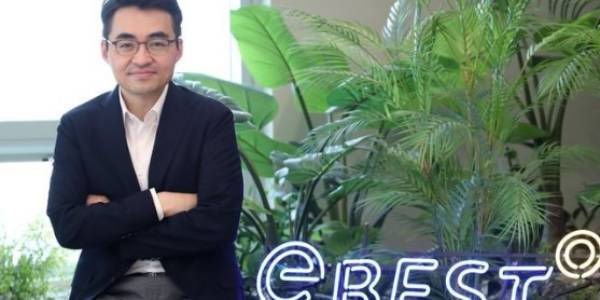
Director Yeom Seung-hwan of Ebest Investment & Securities, affectionately nicknamed “Yeomvely,” enjoys strong support from many investors.
He appears on YouTube live shows on a regular basis, leaving comments on the stocks that viewers ask him to analyze, and his broad knowledge across sectors that makes those comments possible often draws admiration.
But the bear market is still ongoing, and YouTube keeps churning out content regardless of market conditions.
What would have happened if you had watched the shows featuring Yeom Seung-hwan from January through September and simply followed along with the investments?
We looked at the stocks Yeom Seung-hwan mentioned explicitly,
and among the stocks on which he left comments in response to viewers’ requests for analysis, we filtered for those where he argued you should buy or hold.
From January to September, Yeomvely’s Picks
(2022)
January
"From now on, there’s no need to have a negative view on Kakao."
On January 6, Yeom Seung-hwan appeared on the YouTube channel Kim Writer TV, where he discussed Kakao and Naver.
He explained that what we are seeing now is that interest rates have risen and the market’s tone has changed, and that this does not mean there is something wrong with the companies themselves.
He went on to say that the stocks that have risen this time—such as Kia, Meritz Fire & Marine Insurance, and Hyundai Steel—belong to sectors that did not perform well in the second half of last year.
The fact that these companies are rising in the early part of this year means that the market is looking for undervalued names,
He stressed that the decline in certain stocks is the result of a shift in the market’s tone leading investors to dump shares they were holding, and that this does not indicate problems at the company level.
Based on this view of the market,
he commented that Kakao’s share price decline is due to platform regulation and that if you already hold the stock, you should not sell it now.
Regarding Naver, he also expressed expectations for returns based on the value-stock rally seen around April–May of last year.
"Those who had the courage made money"
"We are now once again in a zone where you need to be courageous"
He said that January and February may feel frustrating, but that another rally could unfold afterward.
"Try holding LG Electronics for a while"
On the 7th, Director Seung-Hwan Yum went on to discuss LG Electronics, Samsung Electronics, and Krafton.
He said LG Electronics’ home appliance division is doing well, and that expectations around its electric vehicle components and the Apple Car theme are likely to continue through 2024, adding that the stock is worth holding to at least 160,000 won.
"A supply–demand issue you don’t need to fear even if the stock falls"
Regarding Samsung Electronics, he said there is no need to doubt the industry cycle, and explained the recent decline as selling by financial institutions that dumped 4 trillion won out of 7 trillion won worth of shares in order to receive the dividend.
The same supply–demand issue Samsung Electronics is facing could also be seen in Krafton. His point was that there is no need to worry.
Given that there appear to be no issues with Battlegrounds, the game that is generating Krafton’s revenue, he stressed that there are no concerns about the company’s fundamentals.
He explained that the recent inclusion in the KOSPI 200 and MSCI indices triggered a supply–demand distortion driven by pension fund events, and that this liquidity is now ebbing away like the tide going out.
He added that because it is classified as a growth stock, it tends to fall more, but since there is no problem with the fundamentals, investors should take advantage of this and have the courage to act against the crowd.
He also mentioned Dongjin Semichem on the 21st.
As supporting evidence, he pointed to the fact that Samsung Electronics and SK Hynix have been moving to adopt domestically produced products following Japan’s export restrictions.
In an environment where the need for localization is growing stronger, equipment and materials that demonstrate high technological capabilities are bound to command a premium,
and he argued that if there is domestic equipment that offers the same level of competitiveness as overseas equipment, there is no reason not to use the domestic option.
The reason it was mentioned is that Dongjin Semichem has localized EUV photoresist.
February
"Warren Buffett said that a company that maintains a double-digit ROE every year is truly an outstanding business."
"And Korea Financial Group has been maintaining that since 2017."
With the start of February, Director Seunghwan Yeom highlighted Kangwon Land, Korea Financial Group, and Daesang.
He first explained Kangwon Land by comparing it with Lotte Tour Development.
Lotte Tour Development targets foreign customers, while Kangwon Land targets domestic customers. Taking into account uncertainties such as the ban on gambling junkets coming from China, he said Kangwon Land is the clearer choice.
February is clearly the month that Director Yeom described as likely to feel frustrating after January.
Even so, there is a company that he lavished praise on: Korea Financial Group.
From 2016 to 2020, net profit has continued to grow, and given the nature of the industry, it keeps generating margins even when the market is weak. Despite consistently strong earnings, the share price has fallen and is now trading at a level that does not even reflect the value of its stake in its largest subsidiary, KakaoBank.
Investing in these kinds of names is a textbook example of value investing, and he lavishly praised them as stocks where you won’t lose money even if their growth potential doesn’t immediately stand out.
As for Daesang, he noted that the company has consistently generated more than 100 billion won in operating profit, which he described as a solid performance.
He added that if agricultural commodity prices come down, margins will improve further, and said it would be reasonable to set a target price in the high 20,000 won range.
"Earnings will start to be reflected from 2023–2024"
On the 7th, some time later, Director Yeom Seung-hwan said that for Hyundai Mipo Dockyard, LNG carrier prices had risen for 11 consecutive weeks, indicating a favorable market environment.
He pointed out that Hyundai Mipo Dockyard’s main vessel, which used to be priced at $40 million, is now being exported at $134 million, making it inevitable that the company will generate strong margins.
While discussing names with strong sales growth, he also mentioned undervalued stocks.
On the 16th, Director Yeom introduced SFA as an undervalued stock, noting that compared with the previous year, its revenue was up 0.9%, operating profit 12.9%, and net profit 7.8%, yet the share price alone has been sluggish.
The reason, he said, is that earnings beat expectations by as much as 9%, yet the stock price remains low.
March
"There are a few semiconductor names I’m quite positive on."
When Director Yeom Seung-hwan talked about semiconductors in March, the stocks he mentioned were Leeno Industrial, Iones, STI, and Protec.
Director Yeom praised Leeno Industrial as a company that has long been excellent and has grown so well that its share price has not pulled back. However, when it comes to new investments, he expressed concern about the high valuation and instead highlighted companies that look undervalued based on their PER.
Iones, which provides coating so that semiconductor consumables last longer,
derives about half of its revenue from supplying to Applied Materials, the number-one U.S. semiconductor equipment maker, and he cited its high margins and PER below 10 times as reasons he likes the stock.
STI, a company that makes specialty gas supply systems, trades at a PER of 7–8 times,
and Protec, which manufactures liquid dispensing equipment used on semiconductor substrates, also trades at a PER of 7–8 times.
In this way, he introduced these companies through the lens of their PER multiples.
"It means they’re going to give it everything they’ve got."
Following semiconductors, there was also a mention of Kakao.
He noted that the company has actually begun efforts to appease shareholders and employees, such as canceling 300 billion won worth of treasury shares, and said the stock should no longer be viewed negatively by the market.
April
"When I ran the numbers, BNK turned out to be really cheap."
Director Yeom Seung-hwan said that, in the current environment, banks and cash-rich companies look more attractive than highly leveraged firms vulnerable to rate hikes, and he introduced BNK Financial Group.
Reference: This stock is way too cheap, start accumulating it going forward (Director Yeom Seung-hwan)
He highlighted regional banks, saying they benefit when interest rates rise, are undervalued, offer high dividend yields, and are not particularly hurt by inflation,
and among them, he was especially positive on BNK, calling it the cheapest of the group.
On the 13th, he went on to discuss JT and ISC.
For JT, he pointed to the fact that it signed an automation equipment supply contract with SK hynix worth 15 billion won, equivalent to 22.97% of its sales,
The fact that it supplies to all three companies—Samsung Electronics, SK Hynix, and Micron—
and that it is the world’s No. 1 company in burn-in sorters, which are used to test semiconductors after fabrication, are the reasons he viewed it positively.
Based on the disclosed order backlog, there was a comment that this year should be solid as well.
For ISC, the reason he liked it is that its standalone operating profit in the first quarter of 2022 jumped 203%.
For a semiconductor materials and equipment company to generate this level of operating profit is remarkable,
and he noted that the company is even trying to expand into the business model currently pursued by competitors through acquisitions, introducing it as an “Yeom-bley Pick.”
May
The stocks Director Seung-hwan Yeom mentioned in May were Daou Technology, DL E&C, KB Financial, and once again BNK Financial Group.
He explained that Daou Technology is the largest shareholder of Kiwoom Securities, so it will likely move in tandem with Kiwoom; and for Kiwoom’s share price to rise, trading value in the market needs to increase.
He added that around the second half of the year, when the market is expected to improve, could be a good time.
Although DL E&C’s earnings were weak, he still presents it as an extremely cheap company, noting that its PER is only 4 times. He also adds that for construction companies you have to look not only at the domestic market but also at the Middle East including Iran, and comments that the company is doing well in the Middle East.
Moving on to KB Financial, he explains that bank stocks see profitability improve when interest rates rise, and that this time lending rates are actually going up, so at least until June things should be fine.
He then continues by mentioning BNK Financial Group, a regional bank that should enjoy the same benefits but whose stock price is still cheap.
June
"This is all you need to look at. Supply is going down for semiconductors. It can’t be increased."
Executive Director Yeom Seung-hwan, who had mentioned Samsung Electronics back in January, brought it up again in June and talked about where he sees the bottom for Samsung Electronics.
With semiconductor equipment also in short supply right now, he said supply cannot increase, and that what we really need to think about is whether demand can grow going forward.
End-demand for semiconductors is in bad shape, but areas related to the fourth industrial revolution, such as autonomous driving,
ultimately make servers the most important piece. Looking at servers, there’s no need to worry, he says, adding that the current drop is because PCs and mobile devices are weak.
Based on PBR, he explains that roughly 1.3 times (around 65,000 won) is the bottom range for Samsung Electronics.
We’re almost at 1.3x,
and he explains that going below that to a PBR of 1.1x (the low 60,000 won range) would mean an extreme situation, basically when the market has broken down.
"Even after this run-up, it’s still cheap."
He then goes on to say that
Kia is showing strength among the finished car makers,
Hyundai Mobis is recovering as semiconductor supply improves,
and, considering its recent acquisition of Doosan Machine Tools, he highlights DTR Automotive, which is trading at 6x PER.
He also mentioned Dongsung Finetec and Korea Carbon when he appeared on the YouTube channel Sinsaimdang.
There is one reason he brought up these two companies: LNG.
He explains that the shortage of natural gas supply could last through 2025, which would drive up demand for LNG, and that LNG is an area where Korea has a competitive edge.
For LNG carriers, the specialized equipment is insulation materials, and he introduces Dongsung Finetec and Korea Carbon as Korean companies that both produce these materials and compete for the global number 1 and 2 positions. (Video 25:30)
July
"I don’t know exactly where the bottom is, but it is true that we’re getting very close to it."
In July, Samsung Electronics came up again.
In July, Director Yeom Seung-hwan described the current market as being in a state of extreme pessimism, and explained it as a time when investors should actually stay in the market.
Looking at Samsung Electronics, he noted that historically the current share price is not expensive, and even if the outlook turns out to be wrong, there is not much to lose, pointing to the price-to-book ratio (PBR). This is the same logic he used in June to explain where Samsung’s bottom might be.
On this day, there were also comments on Naver and Kakao.
The logic is the same as in the following video.
On July 18, he discussed stocks that had recently rebounded.
That day, Director Yeom Seung-hwan talked about Naver and Kakao in the context of
The decline in growth stocks due to rising interest rates
Reopening, and concerns about a slowdown in revenue growth as people start going out again and use the internet less.
Concerns that over the past two years the stock price has risen too much.
These three factors were cited as the causes of the previous share price decline.
However,
The market perception that US inflation is likely to peak and roll over,
The renewed spread of Omicron,
And the removal of valuation overhang after the stock price was cut in half,
are now being cited as the reasons for the rebound, as the earlier headwinds have been resolved.
In other words, the situation has changed.
In discussing notable stocks that day, there were also comments on Hyundai Heavy Industries.
The recent rebound in Hyundai Heavy Industries was attributed to the fact that the stock had fallen significantly,
and regarding Hyundai Heavy Industries’ situation, it was explained that due to Europe’s dependence on Russia, it is in a position where it has no choice but to import a large amount of LNG over the next several years.
It was also noted that there will be significant investment in LNG infrastructure in Europe and likewise in the United States going forward.
At the center of this were Korean shipbuilding stocks, and he said he has a positive view on them through next year as he went on to explain Hyundai Heavy Industries.
August
In August, there was no case where Director Yeom Seung-hwan showed a clear preference for specific stocks.
When asked to analyze individual stocks, he took a neutral stance, for example by pointing out operating profit issues at companies with strong sales.
August was the month when the entire market turned down after the 16th.
At the late-July FOMC meeting, Powell raised rates by 0.75 percentage points but said the economy was not in a recession,
and with CPI coming in below expectations, the market had been rebounding—until it reversed after the FOMC minutes revealed the Fed’s strong determination to bring inflation under control.
You could also say it was a month when Powell’s remarks and the expectations around them dominated the market.
September
After a turbulent August, in September Director Seung-Hwan Yum once again spoke out about Naver and Kakao.
In response to the question, “Is it reasonable to cut my losses on service stocks and use that money to buy semiconductors and rebalance?”
He commented that for the representative service names Naver and Kakao, it would be hard for them to fall much further and that it is not that they won’t move at all,
acknowledging that they are indeed high-valuation stocks, that rates need to roll over, and that in Kakao’s case the overhang from its subsidiaries’ listings has not yet been resolved.
He concluded that rebalancing ultimately comes down to an individual choice.
"The point is, they’re cheap right now."
On the 5th and 13th, Director Yum also shared comments on Samsung Electronics and Samsung Electro-Mechanics.
He acknowledged that external factors are indeed unfavorable, but pointed to their low share prices as the key rationale.
On Samsung Electronics, he said semiconductors are the kind of sector you should buy when things look bad, and that investors should take a long-term view and accumulate slowly over time.
He added that after electric vehicles comes autonomous driving, and that companies supplying smartphone components such as cameras and displays can also supply the auto industry, highlighting Samsung Electro-Mechanics, which provides flip-chip substrates.
Reference:
Director Seung-Hwan Yum’s portfolio and performance
Director Seung-Hwan Yum has said that it is right to rebalance when the market has fallen.
His view is that you build your portfolio around companies that can become market leaders when conditions improve, and then rebalance in sharp sell-offs when those companies become cheap.
In that video, Director Seung-Hwan Yum talked about portfolio weights.
He divided stocks into structural growth names, cyclical names, consumer stocks, and high-dividend stocks,
and when it came to specific weightings,
he explicitly mentioned 50% in structural growth stocks and 25% in cyclicals.
Reference:
Sectors that fall into the categories defined by Director Seung-Hwan Yum
Structural growth stocks: autos, metaverse, semiconductors, energy, medical devices, etc.
Cyclical stocks: construction, steel, shipbuilding, etc.
Consumer stocks: duty-free shops, cosmetics, apparel, liquor, convenience stores, etc.
High-dividend stocks: banks, insurers, securities firms, etc.
In addition, Executive Director Seunghwan Yeom once mentioned that if he had 1 billion won, he would allocate 500 million won to government and corporate bonds and the remaining 500 million won to equities, including dividend stocks when constructing a portfolio.
Reference:
For bonds, 10-year Korean Treasury bonds and corporate bonds (Korean Air).
For high-dividend stocks, Hyundai Motor preferred shares and BNK.
Based on this, the inferred portfolio is as follows.
Bonds and stocks at 50:50, with no mention of the split between Treasuries and corporate bonds,
The equity portion consists of the structural growth stocks, cyclical stocks, consumer stocks, and high-dividend stocks mentioned earlier.
Since the ratio of structural growth stocks to cyclical stocks was 2:1,
the final portfolio, with the remaining equity weight distributed equally, is as follows:
- Treasuries and corporate bonds 50%
- Structural growth stocks 25%
- Cyclical stocks 8.33%
- Consumer stocks 8.33%
- High dividend 8.33%
However
The comments on portfolio allocation were made in July 2021, and the suggestion to allocate half of the portfolio to bonds came in June 2022,
and while he did say to rebalance when there is a sharp drop, we assumed there would be individual differences in what constitutes a sharp drop.
For the return projections, we made two arbitrary assumptions.
A. Buy and hold every stock that Director Seunghwan Yum mentions, allocating a fixed weight each time he mentions it.
B. Buying the stocks mentioned by Director Yeom Seung-hwan from the time they are mentioned and holding them, then selling everything at the end of the month
On the assumption that investors follow along, we compared returns using the opening price on the day after the video was uploaded.
A. Buying a fixed weight every time a stock is mentioned and just holding on
If you had kept buying the mentioned stocks over time and not sold them,
The return would have been 10.3% below KOSPI and 5.3% below KOSDAQ,
and the standard deviation of monthly returns would have been 6.78,
higher than KOSPI’s 6.66 but lower than KOSDAQ’s 9.35.
B. Selling everything at the end of each month
If you had rebalanced the mentioned stocks on a monthly cycle,
The return would have outperformed by 7.7% versus KOSPI and 17% versus KOSDAQ.
The standard deviation of monthly returns is 5.67,
which is lower than KOSPI’s 7.95 and KOSDAQ’s 9.95.
Of course, weak market conditions will have played a role,
but it is clear that the stocks that Director Yeom Seung-hwan tells investors to hold for a certain period or until a target price have underperformed the market in both return and volatility.
Words that Director Yeom Seung-hwan frequently uses:
Contrarian, Samsung Electronics, Kakao, Naver, dividend stocks, bonds, undervalued, PER, PBR
Given how often PBR and PER come up among investment metrics,
he is clearly an expert that typical retail investors seek out, and he explains share prices using relatively simple terms to match that audience.
He appears to be an expert who strives to help retail investors view the stock market from multiple perspectives.
How to watch Yeom Seung-hwan’s content “smartly”
If you scroll through the comments on the YouTube channels where Director Yeom Seung-hwan appears, you often see remarks like this:
"This guy tells you to buy on 364 out of 365 days."
I don’t think so.
It’s not uncommon to see him point out that companies with poor valuations are in fact not attractive, and I find the fundamental drivers he cites for each stock to be reasonable.
And there is clearly a wide range of sectors on which Director Yeom Seung-hwan can comment, and there is little room to dispute the breadth of that coverage.
This is one of Director Yeom’s strengths,
and when you leverage this strength and look at the portfolio results above,
the conclusion on how to follow him “smartly” comes down to the following.
- Refer to Director Yeom Seung-hwan’s reasoning for the side that aligns with your own view of the overall market
- Let Director Yeom Seung-hwan’s final buy/sell calls on individual stocks go in one ear and out the other
Three-line summary:
- The stocks Director Yeom Seung-hwan mentioned most frequently from January to September were Kakao, Naver, Samsung Electronics, and BNK Financial Group
- Compared with monthly rebalancing, simply holding Director Yeom’s stock picks underperformed the market (in both return and volatility terms)
- It is better to focus on Director Yeom’s fundamental drivers and reasoning rather than his final calls
Newsletter
Be the first to get news about original content, newsletters, and special events.
Continue reading

Note By Ryunsu
The Intelligence Layer of Financial Infrastructure
Ryunsu Sung

Aware Original
Why Bitcoin Keeps Falling: The Downward Spiral of the Gamma Trap
Ryunsu Sung

Aware Original
The Overwhelming Autonomous Driving Leader Proven by Numbers: Waymo’s Full-Scale Takeoff
Ryunsu Sung

Aware Original
The Precarious State of ‘American Exceptionalism’ and a Shaken Dollar Hegemony
Ryunsu Sung