Jul 08, 2024
NVIDIA Faces French Antitrust Scrutiny: What Could It Mean for the Stock Price?
Sungwoo Bae
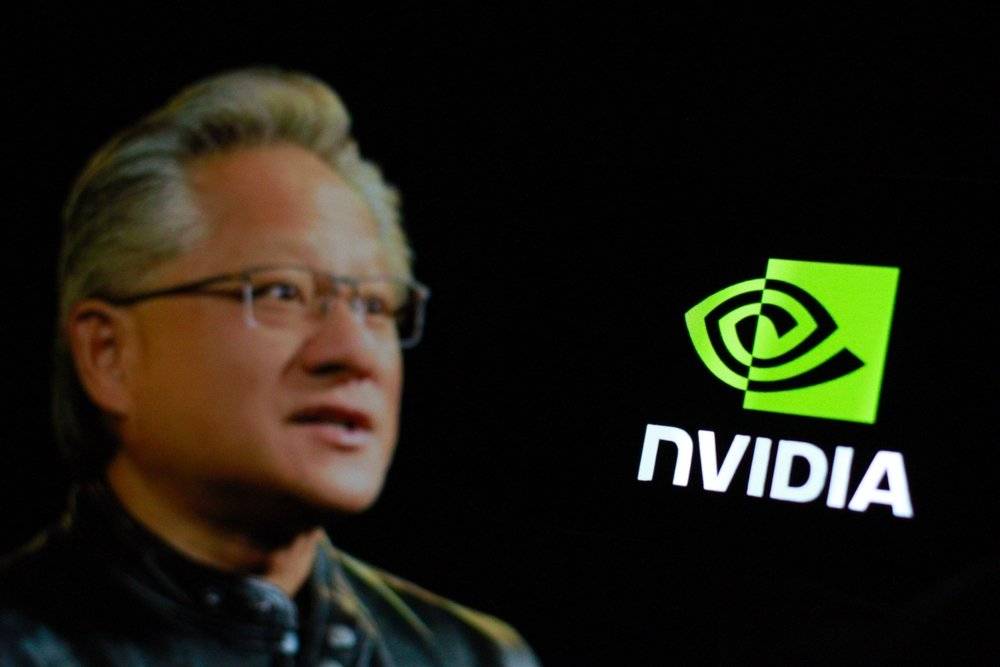
NVIDIA recently reclaimed the top spot in global market capitalization for a brief moment on the back of its steep growth, delivering an overwhelming thrill to countless “NVIDIA holders.”
Yet it didn’t take long for that excitement to turn into concern. This time, the reason is France.
Antitrust: France Has It In for NVIDIA
"NVIDIA COULD RISK FINES OF AS MUCH AS 10% OF ITS GLOBAL ANNUAL TURNOVER OF REVENUE FOR BREACHING FRENCH ANTITRUST RULES."
A fine worth as much as 10% of annual revenue is serious enough, but the real concern is whether regulation will cause lasting damage to future sales, whether other countries will also come after the company on antitrust grounds, and whether the business could end up being broken apart.
In fact, there is precedent: companies that once dominated an era, such as Standard Oil Company and AT&T, were broken up into multiple pieces, and even Microsoft once came close to being split apart over antitrust violations.
For more context, this is a good one to read first:
According to Reuters, French authorities are preparing to bring antitrust charges against NVIDIA, and on the 2nd they said they are concerned about dependence on the CUDA chip programming software and NVIDIA’s recent investment in CoreWeave.
To understand this relationship, let’s first clarify what each of these companies actually does:
- CoreWeave is a cloud service provider specialized in AI and high-performance computing workloads. The company primarily uses NVIDIA GPUs to support large-scale data processing and AI model training. In April 2023, it received an investment from NVIDIA.
- CUDA is a parallel computing platform and programming model developed by NVIDIA that is fully compatible with NVIDIA GPUs, enabling complex computations to be processed quickly using GPUs.
Neither CoreWeave nor CUDA has any direct connection to France. It can be interpreted that France, without any special vested interest of its own, is raising concerns purely about the potential for NVIDIA’s market dominance to restrict competition.
CUDA has significantly boosted efficiency and has become an essential tool for AI engineers, but it runs properly only on NVIDIA GPUs. On top of that, CoreWeave is highly compatible with CUDA while also offering the latest NVIDIA GPUs, delivering higher performance and stability than competing services. In today’s world, where training complex AI models requires cutting-edge graphics cards, that’s a critical advantage.
This French fixation is not actually new.
- September 2022, a dawn raid
In the early morning of September 2022, the French competition authority carried out a surprise inspection targeting Nvidia’s graphics cards. The investigation also covered major cloud service providers such as Microsoft, Google, and Amazon, and aimed to determine whether they held a monopolistic position.
- June 2023, report published
In 2023, the French regulator published a report expressing concerns about dependence on CUDA and Nvidia’s investment in CoreWeave. The report pointed out that these actions could constitute an abuse of market dominance. There was no trace of similar reports being issued on the other companies raided in 2022. Nvidia appears to be the sole target.
This suggests that the current notice of charges is not a sudden ambush, but rather the result of concerns that have been building up over several years. Still, the fact that only Nvidia’s case produced a report among the companies raided in 2022 makes it clear that regulators’ worries have converged on a single firm because of its market share profile.
Even so, it feels unfair to be the sole target of the regulators’ scrutiny.
Hold on—if you still don’t see why this feels unfair, let’s first look at past antitrust enforcement cases and how those actions affected share prices.
How antitrust sanctions affect stock prices
"No License, No Chips"
Let’s start with Qualcomm’s case in 2019.
Qualcomm is a U.S. company focused on research and development in wireless telecommunications. In 2019, Qualcomm held a strong position in the AP (Application Processor) and SoC (System on Chip) markets. In particular, it had a 65% share in the premium segment above $300, and its market share was still rising despite already being at that level.
Qualcomm charged high royalties on its patented technologies, effectively forcing manufacturers to keep using Qualcomm chips by making it costly not to do so. At the same time, it signed exclusive deals with manufacturers to block the use of rival products and restrict competition.
- January 27, 2017: The U.S. Federal Trade Commission (FTC) files an antitrust lawsuit against Qualcomm.
- November 6, 2018: The court denies Qualcomm’s motion to dismiss and grants in part the FTC’s motion for summary judgment.
- January 4, 2019: A 10-day bench trial begins.
- May 21, 2019: The U.S. District Court for the Northern District of California rules that Qualcomm violated antitrust law.
- May 28, 2019: Qualcomm appeals the ruling to the Ninth Circuit Court of Appeals and seeks a stay of enforcement.
- August 11, 2020: The Ninth Circuit unanimously overturns the lower court’s decision and dismisses the FTC’s claims.
(Reference: FTC v. Qualcomm)
a. November 3, 2017: Broadcom announces its plan to acquire Qualcomm.
b. April 16, 2019: Qualcomm and Apple agree to drop all litigation.
When the antitrust lawsuit was filed, Qualcomm’s share price had already taken a major hit due to its litigation with Apple. The filing itself did not trigger a noticeable drop, but after the FTC’s motion for partial summary judgment was granted, and later during the bench trial and the liability ruling, we can see that the stock price fell sharply.
Next, let’s look at Meta’s case.
Meta (Facebook) acquired Instagram in 2012 and WhatsApp in 2014, and then in 2020 it was hit with an antitrust lawsuit on the grounds that it refused to provide its API to competitors.
- December 9, 2020: The U.S. Federal Trade Commission (FTC) and attorneys general from 48 states file an antitrust lawsuit against Meta.
- June 28, 2021: A federal court dismisses the FTC’s lawsuit.
- August 19, 2021: The FTC files an amended complaint.
- January 11, 2022: The federal court decides not to dismiss the FTC’s amended complaint.
a. February 3, 2022: The day Meta’s number of active users declined for the first time.
In a sense, after a long battle had created the perception that “Meta did nothing wrong,” the decision not to dismiss the lawsuit appears to have shocked the market and driven the stock down—that is, if we ignore the shock from the active-user decline.
In 2022, TikTok was gaining strength with short-form content, undermining Meta’s position, and there were growing concerns about Meta’s spending on augmented reality and metaverse projects. Against this backdrop, Meta announced a decline in active users for the first time in its history, and to be very clear, this was at least twice as shocking to the market as the January 11 ruling on the lawsuit.
Over time, on May 1, 2023, the federal court dismissed the antitrust lawsuit against Meta, but by the time of the dismissal the stock price had already more than doubled—over 2.5 times—from its bottom. It is therefore ambiguous to interpret the antitrust case as a risk factor that weighed on Meta’s valuation, and even if it did act as a risk factor, it is hard to argue that it had a meaningful impact on the share price.
Other examples include: the January 2023 lawsuit over Google’s dominance in the digital advertising market; the February 2024 decision to block biotech company Illumina’s acquisition of Grail; and, in the same month, a preliminary injunction against Kroger’s acquisition of Albertsons (the largest attempted supermarket merger in U.S. history).
Google’s share price did not fall further after the lawsuit; Illumina’s stock had already bottomed out; and Kroger’s share price actually rose after the injunction.
Overall, it’s hard to say that antitrust issues are driving the stock price, but for some companies it does seem to be having an impact. Naturally, as investors, we don’t want to leave even a sliver of risk on the table, so it’s impossible not to worry.
On top of that, when media reports suggest Nvidia’s antitrust issues could broaden, it’s only natural to feel uneasy. Nvidia’s market share is, by any measure, extremely high.
Will other countries join France in regulating Nvidia?
Google is a good example of a case where France took the lead in filing charges or opening an investigation, and other countries later followed.
In 2019, French regulators opened an investigation into Google, alleging that it had manipulated ad auctions between advertisers and publishers by sharing information in a way that favored its own platform. Two years later, in June 2021, France fined Google 220 million euros and Google agreed to change how it runs its ad business. This became the world’s first regulatory case targeting the process of display ad transactions.
After France’s probe, 10 US states including Texas filed antitrust charges in 2020. The UK also opened an investigation into Google in 2022, and in 2023 the European Union issued a statement of objections over Google’s abuse of ad tech.
So shouldn’t Nvidia be worried too? As for Nvidia’s stance—well, we haven’t heard much of anything.
Unfazed Nvidia: “We already saw this coming”
France is rattling its saber and shareholders are nervous, but Nvidia itself has not issued any official statement.
Here’s how I interpret that:
Nvidia was already aware of this risk and doesn’t see the need for a big response.
"The company in a regulatory filing last year said regulators in the European Union, China and France had asked for information on its graphic cards."
According to Reuters, Nvidia already disclosed last year that regulators in the European Union, China, and France had requested information on its graphic cards.
Let’s walk through this step by step.
#1. European Union, doubts about the bottleneck
First, Margrethe Vestager, the European Commission’s executive vice president in charge of competition policy, said the following in a July 5 interview with Bloomberg.
“We’ve been asking them questions, but that is really preliminary,”
Margrethe Vestager is referring to bottlenecks in Nvidia’s supply chain. In other words, the EU is investigating whether this bottleneck is caused by Nvidia’s “potential antitrust violations.”
However, this bottleneck did not arise because Nvidia engaged in “some antitrust-violating conduct.”
It is more accurate to interpret it as arising from “surging demand driven by strong technology and intense market interest.”
According to the Financial Times, Nvidia plans to ship more than one million H20 chips over the coming months. These are for export to China.
We’ve discussed this in a previous post: the United States views China’s growth via semiconductors very negatively and therefore enforces strict export controls on chips. But the H20 that Nvidia plans to sell is a low-cost chip with about one-quarter the performance of the H100, so the explanation is that it can slip outside the scope of those controls.
"The sources note that H20’s performance is approximately one-fourth that of H100, resulting in a less favorable cost-performance ratio. Additionally, production capacity is unable to meet demand, with mass production expected to commence in the second half of this year."
Even though it’s a cheap chip that just clears the export-control bar, supply still falls short of demand. Let me repeat that: it delivers only one-quarter of the performance.
Globally, both the technology and the demand have already been proven. You can safely set aside the European Union’s “concerns about bottlenecks” now.
#2. China: regulations are just a pretext, we’re only checking in
And as for the Chinese regulators’ request for information: this can be interpreted simply as checking whether Nvidia is properly living up to the conditions they set.
In 2020, China announced its conditional approval of Nvidia’s $6.9 billion acquisition of Mellanox.
- Do not bundle Mellanox products together with Nvidia’s own products when selling
- Supply products on non-discriminatory terms
- Maintain interoperability with products from other suppliers
- Other measures (various steps to address concerns about tighter U.S. export controls, etc.)
As you can see from these conditions, what China is ultimately asking is simply to make sure that Nvidia is supplying fairly and without discrimination.
Earlier we mentioned that Nvidia plans to ship more than 1 million H20 chips as a way to “export while skirting regulations,” right? It is more than meeting China’s demands. There’s nothing to worry about here.
#3. France could be a problem… but there’s plenty of room for appeal
Lastly, let’s look at France.
To recap once more:
France’s first objection: “CUDA—didn’t you design it so that it only works really well with your own GPUs?”
France’s second objection: “By investing in cloud infrastructure companies like CoreWeave, aren’t you trying to create conflicts of interest and lock in a monopoly?”
First, on CUDA: Nvidia can argue that as CUDA evolved, it naturally became optimized for its own GPUs.
Nvidia unveiled CUDA in 2006 when it introduced the Fermi architecture. CUDA dramatically lowered the barrier to entry for programming with GPUs. Since then, CUDA has been continuously improved, and of course that process has gone hand in hand with Nvidia’s GPUs. The optimization that resulted from this is a natural outcome.
There are even startups developing software that could serve as an alternative to CUDA. Unless Nvidia is actively obstructing these startups, it will be hard to make a serious case against it on this front.
Next, CoreWeave: If you read CoreWeave’s blog, you’ll see that the company started out in 2016 as a cryptocurrency mining business. The GPUs it amassed for mining eventually grew into a full-fledged data center, and the company pivoted into a cloud infrastructure provider.
On its website, CoreWeave markets itself as being “up to 35 times faster and 80% cheaper” than competitors.
When we checked in practice through Paperspace, we found that, based on A100 chips, CoreWeave was noticeably cheaper than its peers. If Nvidia is supplying GPUs to CoreWeave at a lower price, that could indeed raise antitrust concerns.
However, the fact that CoreWeave offers its cloud services to competitors at the same low prices suggests there is room for Nvidia to appeal.
For example, Microsoft and CoreWeave compete in GPU cloud services, yet CoreWeave has signed a cloud computing infrastructure deal with Microsoft.
To sum up:
“”
Nvidia’s share price might go down? At the very least, it won’t be because of the antitrust lawsuit.
Newsletter
Be the first to get news about original content, newsletters, and special events.
Continue reading

Note By Ryunsu
The Intelligence Layer of Financial Infrastructure
Ryunsu Sung

Aware Original
Why Bitcoin Keeps Falling: The Downward Spiral of the Gamma Trap
Ryunsu Sung

Aware Original
The Overwhelming Autonomous Driving Leader Proven by Numbers: Waymo’s Full-Scale Takeoff
Ryunsu Sung

Aware Original
The Precarious State of ‘American Exceptionalism’ and a Shaken Dollar Hegemony
Ryunsu Sung