Dec 28, 2022
What if Japan Raises Interest Rates?
Sungwoo Bae
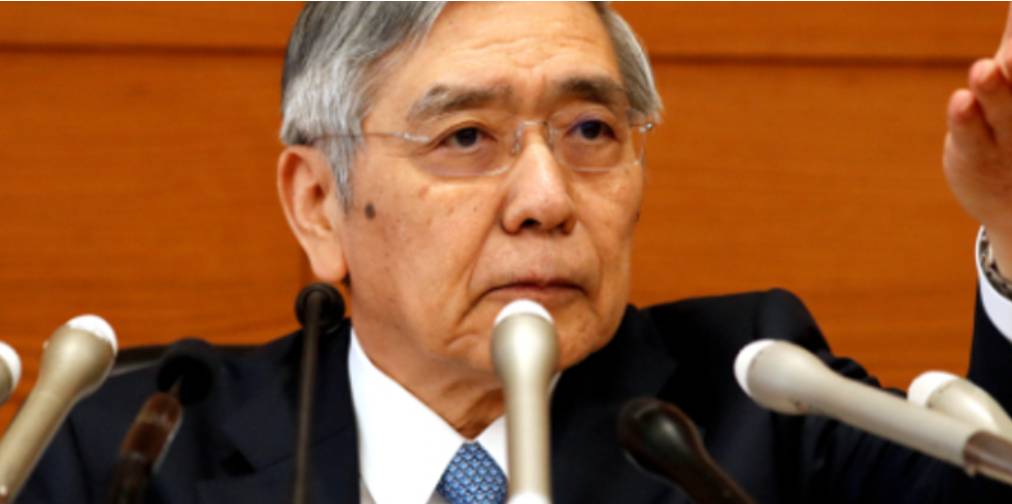
On the 20th, Bank of Japan Governor Haruhiko Kuroda announced that he would widen the trading band for the 10-year government bond yield from ±0.25% to ±0.5%.
Japan has long maintained low interest rates to ease deflation and has been buying government bonds to suppress any rise in yields.
As the BOJ kept purchasing JGBs, the central bank came to hold more than half of all outstanding Japanese government bonds,
and this latest widening of the band is being framed as an attempt to restore the impaired functioning of the bond market caused by those purchases.
Markets have effectively taken this as a de facto rate hike, since the yield had been pinned near the upper end of the previous band.
Kuroda, however, has stressed that the decision is not a tightening move.
Speaking at the Japan Business Federation (Keidanren) on the 26th, he reiterated that the move is meant to allow the BOJ to continue its accommodative stance, not to signal an exit strategy, and again argued for the need to maintain easy policy.
Even if this decision ends up having an effect similar to an actual rate hike, as long as Kuroda’s term has not ended, the BOJ is highly unlikely to abandon its easing stance—or even to sound overtly hawkish.
That is because, after years of Abenomics, Japan finally appears to be emerging from deflation.
From Kuroda’s perspective, barring a sudden collapse in the economy, he can finish his term looking successful.
Prime Minister Fumio Kishida, Japan’s 101st prime minister, has also said that there will be absolutely no change to the easing policy during Kuroda’s term.
But Kuroda’s term does not have much time left.
His term ends on April 8, 2023, and the policy path will hinge heavily on which of the two leading candidates is chosen as the next governor.
According to the Asahi Shimbun, the two frontrunners are current BOJ Deputy Governor Masayoshi Amamiya and former Deputy Governor Hiroshi Nakaso.
Both are seen as broadly dovish, but there is a clear possibility that they will not follow exactly the same path as Kuroda.
"The government should choose someone who has a clear idea on how the BOJ could normalize monetary policy,"
“정부는 일본은행이 어떻게 통화정책을 정상화할 수 있는지에 대해 명확한 생각을 가진 사람을 선택해야 한다.”
- Kenta Izumi, policy chief of the Constitutional Democratic Party of Japan
Even though Kuroda has consistently stuck to ultra-easy policy, his inflation target was only partially met this year, helped by the surge in energy prices.
Japan already knows that monetary easing cannot be extended indefinitely, and it is fully aware that the current situation is abnormal.
Kishida’s remark at a meeting with lawmakers in May—“Choosing the next governor gives me a headache”—underscores this awareness.
He seems to recognize that simply keeping Abenomics on autopilot is not an ideal answer.
If Japan Shifts Toward Raising Interest Rates
What happens if Japan shifts toward tighter policy, or begins to scale back its easing in stages?
We have previously discussed Japan’s debt problem, so this time we will look at a different angle.
The yen’s value against the dollar is currently at its weakest level since 1998.
As a result, there is one asset that Japanese investors almost automatically hold as a hedge against exchange-rate volatility.
US Treasuries.
With the yen plunging and US Treasury yields rising, Treasuries have been an extremely attractive asset for Japanese investors.
But the long-standing rule of thumb—“FX hedge equals US Treasuries”—has started to break down.
After Kuroda’s decision to widen the yield band, the yen-hedged yield on 10-year Treasuries has lost much of its appeal.
The key point is that there is no longer any guarantee that Japan will remain ultra-dovish going forward.
If the basic assumption that Japanese investors have held for so long changes, they will start selling their US Treasuries.
And they will start buying JGBs instead. For both individuals and institutions, that will simply make more economic sense.
That is because JGB yields will look more attractive than the cost of hedging currency risk.
If policy direction also shifts in a more overtly hawkish direction, Japanese investors’ overseas bond holdings will increasingly be rotated into domestic government bonds.
Given that Japan is the largest foreign holder of US Treasuries, it is not hard to imagine how significant the impact could be.
If this large stock of Treasuries keeps coming onto the market, there is another implication to consider.
US market interest rates.
As the supply of Treasuries increases, their prices fall, and as bond prices fall, market interest rates rise.
On September 22, for the first time since 1998, Japan intervened in the foreign-exchange market to stem the yen’s decline,
and that intervention triggered a sharp spike in the 10-year US Treasury yield.
If Japan continues to offload Treasuries, it would mean higher funding costs for US companies and households.
At AWARE, we have consistently highlighted the damage caused by the Federal Reserve’s rate hikes.
Now 2023—the year many economists have been worrying about—is almost upon us,
and even if the Fed slows the pace of its rate hikes, we now have to start worrying that Japan’s policy shift next year could become a new source of volatility.
The first BOJ monetary policy meeting after Kuroda’s term ends is scheduled for April 28, 2023.
In which direction will Japan’s monetary policy head?
Three-line summary:
1. We must allow for the possibility that BOJ policy may not remain ultra-easy after Governor Kuroda steps down.
2. If the BOJ shifts toward tightening, Japan’s massive US Treasury holdings could be rotated into JGBs, pushing US market interest rates higher in the process.
3. The first BOJ monetary policy meeting after Kuroda’s term ends will be held on April 28, 2023.
Newsletter
Be the first to get news about original content, newsletters, and special events.
Continue reading

Note By Ryunsu
The Intelligence Layer of Financial Infrastructure
Ryunsu Sung

Aware Original
Why Bitcoin Keeps Falling: The Downward Spiral of the Gamma Trap
Ryunsu Sung

Aware Original
The Overwhelming Autonomous Driving Leader Proven by Numbers: Waymo’s Full-Scale Takeoff
Ryunsu Sung

Aware Original
The Precarious State of ‘American Exceptionalism’ and a Shaken Dollar Hegemony
Ryunsu Sung