Dec 19, 2024
SpaceX, When Will It Go Public? How to Invest in Advance
Sungwoo Bae
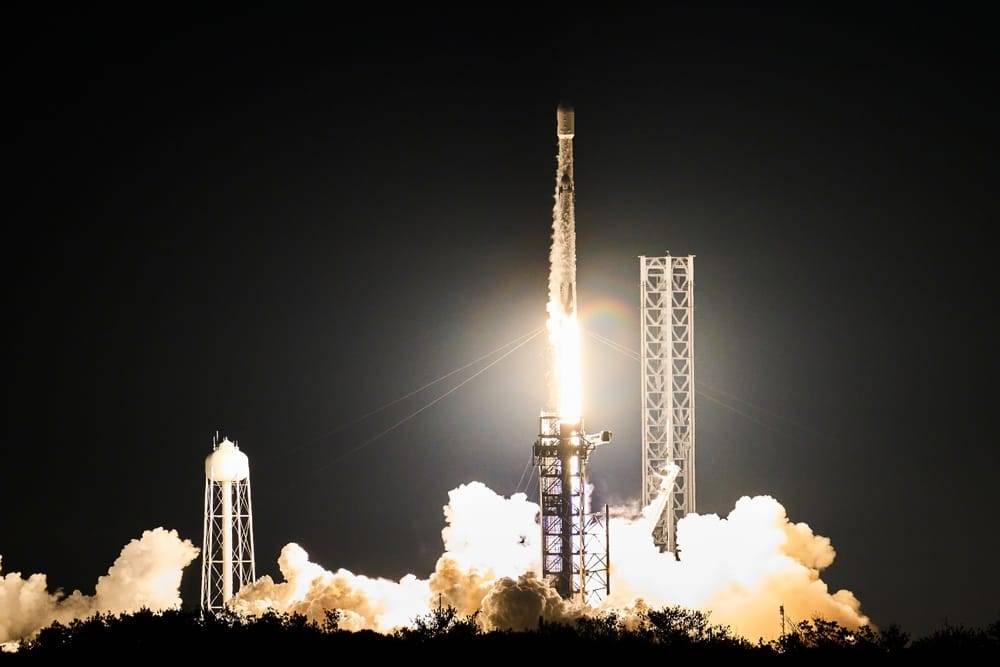
The rocket we launched actually comes back?
Do you remember the video from a month ago of a rocket returning after launch?
That was SpaceX’s Falcon 9, whose first stage showed the bizarre sight of returning on its own. In fact, the first-stage landing of Falcon 9 was first demonstrated in December 2015, but the success of its fifth flight test is an important milestone proving that the technology has moved beyond the experimental phase and established itself as a commercially viable system that can be reused repeatedly.
Rockets are generally designed for single use, so the fact that it can take off and land five times means that SpaceX has secured an economic edge with this technology, and that the rocket itself has achieved an extraordinary level of durability.
And this too is one of Elon Musk’s companies. Musk played a major role in Donald Trump’s victory in the presidential election and has been benefiting since the win. Tesla’s share price, which was $251.4 just before the result was confirmed, now stands around $440.1, clearly showing how much it has benefited.
As a result, SpaceX’s shares are also drawing intense interest.
On the 11th, Bloomberg reported that SpaceX was valued at $350 billion in an insider share sale totaling $1.25 billion.
This means the shares were traded at $185 per share in a secondary sale of existing stock that did not involve any new capital raising. This is 67% higher than the previous peak valuation set through a secondary sale in June.
"What’s truly amazing is that, even at a $350 billion valuation, almost no investors wanted to sell their shares! SpaceX actually reduced the amount of stock it was buying from employees in order to give some new investors a chance." - Elon Musk, X
Musk expressed his surprise on his social media platform X, saying that "there were almost no investors who wanted to sell the shares they held" despite the high price.
How to Trade SpaceX Shares
What matters to us—and what we’re curious about—is how to trade SpaceX shares.
Right now, SpaceX is a private company, so only professional investors or qualified purchasers can buy shares from existing SpaceX employees and investors.
1. Indirect investment via funds and companies that hold SpaceX
There are roughly three investment options that come to mind.
- ARK Venture Fund (ARKVX)
- Destiny Tech 100 (DXYZ)
- ERShares Private-Public Crossover ETF (XOVR)
First, the ARK Venture Fund has 12.4% of its portfolio allocated to SpaceX.
The ARK Venture Fund is listed on Nasdaq and invests in private companies.
However, for domestic investors to access it, they must open a U.S. brokerage account and meet certain investment requirements, which is somewhat cumbersome.
Next, the Destiny Tech 100 has 36.9% of its portfolio allocated to SpaceX.
Destiny Tech 100 is listed on the New York Stock Exchange, and domestic investors can easily invest in it. However, the company is a closed-end investment company rather than a traditional ETF or mutual fund, meaning investor capital is not used to purchase equity in the company itself. In addition, it spends 2.5% of total assets annually as fees, which are paid to Destiny Advisors LLC, an affiliated investment advisory firm that shares the same management team and address as DXYZ, and this structure has been a source of controversy.
XOVR has 11.24% of its portfolio allocated to SpaceX.
It is a traditional ETF without the two drawbacks mentioned above, and in addition to SpaceX it holds names such as
- AppLovin Corp Ordinary Shares - Class A (5.73%)
- Alphabet Inc Class A (5.19%)
- NVIDIA Corp (4.69%)
- Meta Platforms Inc Class A (4.43%)
- Salesforce Inc (4.02%)
- Oracle Corp (3.49%)
and other companies.
If you are interested in SpaceX, this is an ETF worth considering.
2. Indirect investment through SpaceX-related stocks
It is also a reasonable approach to focus on companies that benefit from SpaceX’s growth. While SpaceX develops most of its components in-house, there are a few companies that have commercial relationships with SpaceX.
First, Velo3D is a company with metal 3D-printing technology that manufactures rocket and spacecraft components through its collaboration with SpaceX.
In September 2024, SpaceX signed an $8 million license and technical support agreement with Velo3D, which owns metal 3D-printing technology. The one-year contract consists of $5 million in technology license fees and $3 million in technical support service fees.
If you believe the contract is likely to be extended after one year, it can be viewed as a meaningful related stock.
Second, it would be remiss not to mention Tesla. Both Tesla and SpaceX are led by Elon Musk. Although there is no direct equity relationship between the two, the fact that they share the same CEO means there is a high likelihood of ongoing synergies through the exchange of technology and human capital.
On February 6, 2018, SpaceX launched Elon Musk’s personal Tesla Roadster into space on the first test flight of the Falcon Heavy rocket.
In 2022, Musk mentioned that Tesla vehicles would be able to access cellular signals via Starlink V2 satellites, hinting at the possibility that SpaceX’s Starlink satellite internet service could be integrated into Tesla cars.
It is difficult to say that Tesla directly benefits from SpaceX’s growth in a trickle-down sense, but it is likely to enjoy technological benefits at a lower cost.
Third, Garmin is a company that manufactures GPS technology and avionics equipment.
According to the company’s announcement in February 2023, Garmin’s fēnix 7 smartwatch is expected to be used to monitor astronauts’ health data during SpaceX’s Polaris Dawn space mission. While there is currently no detailed information confirming a direct navigation equipment supply relationship between SpaceX and Garmin, if the smartwatch is used in a space mission, it is reasonable to expect a marketing effect to follow.
Lastly, Iridium Communications is a company that provides satellite communication services and has successfully launched its next-generation satellite network, the Iridium NEXT satellites, using SpaceX’s Falcon 9 rockets.
The last launch took place in 2019, and Iridium has not announced any plans to launch new satellites. However, if Iridium’s global data network and SpaceX’s Starlink network end up working together in a complementary way, Iridium could be considered a relevant stock to watch.
Newsletter
Be the first to get news about original content, newsletters, and special events.
Continue reading

Note By Ryunsu
The Intelligence Layer of Financial Infrastructure
Ryunsu Sung

Aware Original
Why Bitcoin Keeps Falling: The Downward Spiral of the Gamma Trap
Ryunsu Sung

Aware Original
The Overwhelming Autonomous Driving Leader Proven by Numbers: Waymo’s Full-Scale Takeoff
Ryunsu Sung

Aware Original
The Precarious State of ‘American Exceptionalism’ and a Shaken Dollar Hegemony
Ryunsu Sung