Feb 21, 2023
A New Scenario for the Economic Cycle, and Slok’s Concerns
Sungwoo Bae
A hard landing scenario, where excessive quantitative easing is followed by rapid tightening, pushing the economy into recession
And a soft landing scenario, where a strong labor market allows the economy to withstand higher rates until inflation normalizes
While opinions have been clashing over these two scenarios, a new possibility has rapidly emerged and is drawing attention.
No landing.
What is no landing?
"In our view, 'no landing' is just a soft or hard landing waiting to happen."
- Ellen Zentner, Chief U.S. Economist at Morgan Stanley
Ellen Zentner, chief economist at Apollo, describes no landing as follows:
“Waiting for either a soft or a hard landing to happen”
In other words, despite tightening measures, the economy does not fall into recession, but inflation also fails to slow, forcing the tightening stance to persist.
In a previous piece, “CPI Above Expectations and How the Dallas Fed Sees the Situation,” we saw President Lorie Logan argue that inflation will remain elevated and that there is a need to restrain it through monetary policy.
And in an earlier article, “[Rates] Why President Bullard Is Optimistic About 2023,” President Bullard argued that the current labor market is very strong and conditions are favorable for a soft landing, but that it will take a long time for inflation to come down.
Among Fed officials, the hottest topic now seems to be the pace of rate hikes.
Because inflation is still staying at an elevated level.
Current economic indicators look solid, Powell appears set to maintain a tightening stance, and inflation does not seem likely to fall quickly.
This is the backdrop for the emergence of the no-landing scenario.
A no-landing scenario where the economy remains strong and both inflation and monetary tightening persist for a long time,
If you just look at the concept, it may feel like nothing much will happen, since it is simply a continuation of the current situation.
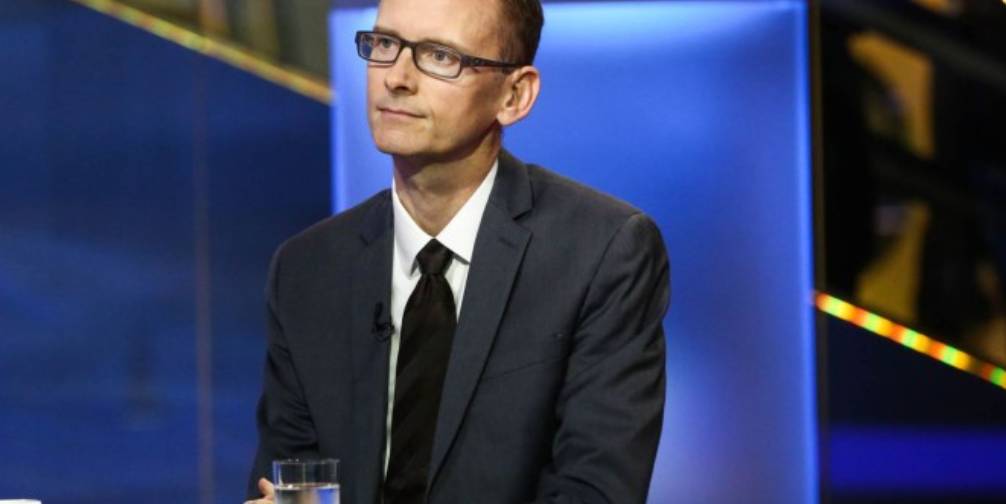
However, Torsten Slok, chief economist at Apollo, argues that this no-landing scenario would be negative for the stock market.
The no-landing scenario itself is a risk
"The risk is a no-landing scenario, which would mean more downside for U.S. stock and credit markets because it will force the Federal Reserve to raise its benchmark interest rate higher than market participants or central bankers currently expect,"
- Torsten Slok, Apollo Global Management
In a February 10 interview with MarketWatch,
Slok explained that the no-landing scenario itself is a risk because the current situation would force the Fed to raise rates more aggressively than the market expects.
To recap the current situation,
1. Inflation is still high
2. The labor market remains strong
3. Stock prices rebound sharply
Torsten Slok recently explained the reason for the rebound in stock prices as being because there are no clear signs of an economic slowdown.
Monthly new hiring is on a gradual downward trend, and the pace of inflation is also coming down. Conditions are taking shape for Chair Powell to acknowledge that inflation is slowing.
There are no signs of an economic slowdown, and according to this explanation, “investors who lost last year”—that is, investors who were underweight equities during last year’s market rally—have all rushed in to buy stocks.
Torsten Slok’s Concern #1
And the main driver behind this phenomenon was the labor market.
A far-stronger-than-expected 517,000 jobs were added, the unemployment rate fell to 3.4%, the lowest level since 1969, and weekly jobless claims also remain low.
On top of the strong labor market, the strength in the services sector is a problem.
Slok notes that while activity in interest-rate-sensitive sectors such as autos and durable goods is slowing, the services sector, which makes up 80% of the US economy, remains robust.
He explained that if the services sector has to fill hundreds of thousands of jobs, wage growth could become a threat that keeps inflation sticky.
Torsten Slok’s Concern #2
He also raised concerns about housing.
Home prices had previously fallen sharply, helping to pull down inflation.
Slok now says that may no longer be the case.
He points out that although mortgage rates have risen sharply, they have recently come off their peak, and real estate agents are reporting that traffic from prospective homebuyers has started to pick up ahead of the spring selling season.
He said this suggests there are signs that the housing market downturn is easing.
This implies that the disinflationary impact of the housing market could disappear.
Torsten Slok’s Concern #3
Upward pressure on commodity prices driven by China’s reopening.
This is the same rationale we heard earlier when President Bullard argued that “rates need to be raised in advance.”
Based on these three points, Slok warned that the Fed may be forced to hike rates much more aggressively than the market currently expects.
The longer the “no-landing” scenario—where we simply wait for inflation to come down—persists, the greater the chance that worrying issues will surface and force the Fed to respond.
A situation where rates are raised much more sharply than the market expects injects volatility into markets. It means we could enter an environment where both equities and bonds become difficult to trade.
Three-line summary:
1. The “no-landing” scenario—waiting for either a hard or soft landing—has quickly come to the fore.
2. Apollo’s Torsten Slok argues that the longer this scenario persists, the more it will push the Fed to raise rates “more aggressively than expected.”
3. If rates rise much faster than the market anticipates, both stocks and bonds could become difficult to trade.
Newsletter
Be the first to get news about original content, newsletters, and special events.
Continue reading

Note By Ryunsu
The Intelligence Layer of Financial Infrastructure
Ryunsu Sung

Aware Original
Why Bitcoin Keeps Falling: The Downward Spiral of the Gamma Trap
Ryunsu Sung

Aware Original
The Overwhelming Autonomous Driving Leader Proven by Numbers: Waymo’s Full-Scale Takeoff
Ryunsu Sung

Aware Original
The Precarious State of ‘American Exceptionalism’ and a Shaken Dollar Hegemony
Ryunsu Sung