Jun 04, 2022
[Driverless Tech] GM Cruise launches the first fully authorized autonomous driving service Tesla hasn’t received
Ryunsu Sung
![[Driverless Tech] GM Cruise launches the first fully authorized autonomous driving service Tesla hasn’t received 썸네일 이미지](https://cdn.awarelab.io/194a15bd-8a31-40f2-a4ba-0430978893dc.jpeg)
The California Public Utilities Commission has for the first time authorized a commercial robotaxi service. GM subsidiary Cruise had previously been operating a driverless taxi service for free, but this newly approved service, passed on a 4–0 vote, is a fully fledged autonomous driving service that can charge passengers fares. This outcome was achieved even though John Reynolds, a member of the commission and a former Cruise employee, abstained from the vote.
Cruise is targeting $5 billion in annual revenue from its robotaxi service by 2030, and is planning to expand beyond other cities in California to markets outside the state as well. It aims to emerge as a powerful competitor to Uber (UBER) and Lyft (LYFT) in the ride-hailing industry.
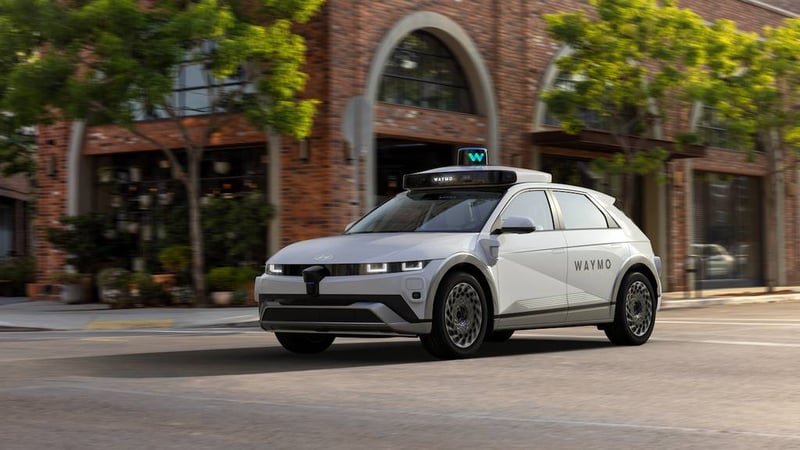
Given that Tesla (TSLA) currently offers only a Level 2 driver-assistance system that mimics human driving behavior but still requires constant human attention, fully autonomous services in major cities may well prove that the approaches taken by Waymo and Cruise are superior.
General Motors (GM) is Cruise’s majority shareholder with an 80% stake. GM dismissed former Cruise CEO Dan Ammann after tensions arose between him and GM CEO Mary Barra over taking Cruise public in a separate IPO, and subsequently acquired SoftBank Vision Fund’s entire stake in Cruise. Mary Barra is said to view Cruise as a core asset for GM and to have opposed a standalone IPO.
Tesla (TSLA), often cited as the most promising player in autonomous driving, is in reality exposing the shortcomings of its software, with not only a lack of true self-driving capability but also a steady stream of reports of egregious errors even in basic driver-assistance functions.
According to Bloomberg U.S. edition, Tesla’s so-called “phantom braking” — sudden automatic hard braking that occurs intermittently even when there is no vehicle ahead — has long been flagged as a problem. But this year alone, complaints filed with the National Highway Traffic Safety Administration (NHTSA) have reached 758 cases, more than double the number from a year earlier.
As the number of complaints has more than doubled, NHTSA has requested an official response from the company by June 20. However, given that phantom braking has persisted for years, it seems highly likely that Tesla’s engineers still lack a clear understanding of the precise causes of this phenomenon.
Michael Brooks, executive director and counsel at the Center for Auto Safety, said the following in an interview with Bloomberg:
“That is a huge number of complaints in a short time and indicates that NHTSA’s probe should be stepping up. We have hundreds of owners per month reporting false activation of their emergency braking systems, and untold numbers of others not reporting the issue to NHTSA.”
“That is an enormous number of complaints in a short period of time and shows that NHTSA needs to ramp up its investigation. Every month, hundreds of Tesla owners are reporting false activation of their automatic emergency braking systems, and if you include the many who never report the issue to NHTSA, the true number is likely far higher.”
Newsletter
Be the first to get news about original content, newsletters, and special events.
Continue reading

Note By Ryunsu
The Intelligence Layer of Financial Infrastructure
Ryunsu Sung

Aware Original
Why Bitcoin Keeps Falling: The Downward Spiral of the Gamma Trap
Ryunsu Sung
Aware Original
The Overwhelming Autonomous Driving Leader Proven by Numbers: Waymo’s Full-Scale Takeoff
Ryunsu Sung

Aware Original
The Precarious State of ‘American Exceptionalism’ and a Shaken Dollar Hegemony
Ryunsu Sung