Nov 14, 2022
The Collapse of FTX Could Impact the Entire Cryptocurrency Market
Sungwoo Bae
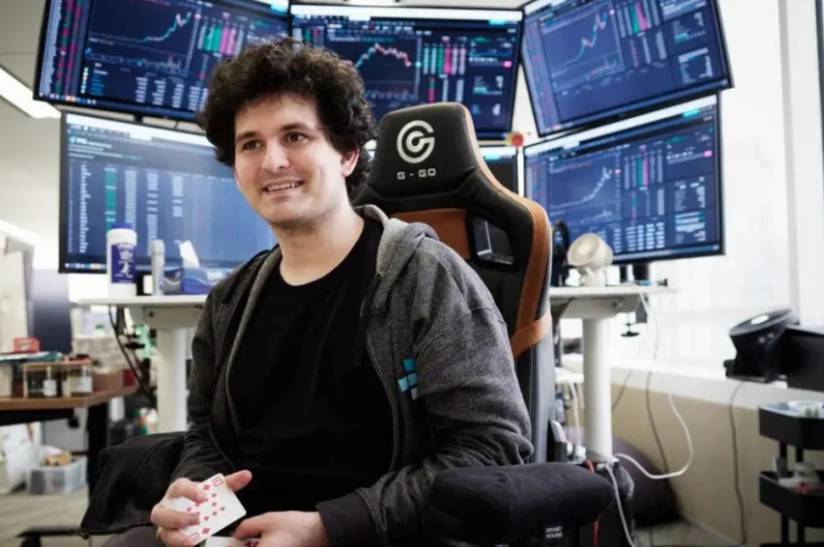
Ran Neuner is the CEO of Onchain Capital, a blockchain and cryptocurrency fund.
On the 11th, Ran Neuner appeared on Kitco News for an interview about the FTX exchange and discussed the gravity of the situation.
"It’s a huge catastrophe… I expect the cleanup operation from this to last a long time."
Ran Neuner, Kitco News
The FTX Crisis Triggers a Major Cryptocurrency Sell-off
For those who are not familiar with what exactly happened with FTX, here is a brief explanation:
In short, loans tied to FTX, the world’s third-largest cryptocurrency exchange, became excessively large, and the entire exchange effectively collapsed under their weight.
Bitcoin (BTC), which accounts for 40% of the cryptocurrency market, had held the 19,000 to 20,000 dollar range throughout the broad equity market downturn since June.
Even within AWARE, people were commenting that the market behavior was unusual, as crypto prices appeared to have strong downside rigidity. That apparent floor, however, collapsed almost overnight starting on November 7.
At 6:49 a.m. on November 7, Changpeng Zhao, CEO of Binance, the world’s largest exchange, posted a tweet announcing that he had decided to liquidate all of Binance’s holdings of FTT, the native token of FTX.
That day, Zhao said he was acting on lessons learned from the Luna incident, which he referenced in his tweet.
"I won’t pretend to love after a divorce."
"I won’t support people who lobby against other industry players behind the scenes."
Changpeng Zhao, Twitter
It was effectively a scathing criticism of the FTX exchange.
Immediately after this tweet, many investors concluded that the long-running feud between Binance and FTX had finally boiled over, and concerns about a market downturn quickly became dominant.
Zhao’s decision to dump FTT was a severe blow to FTX.
The reason lies with Alameda Research, an affiliate of the FTX exchange.
The trading firm Alameda Research held most of the FTT tokens issued by FTX,
used them as collateral to borrow dollars, and then sent those dollars back to FTX.
If the price of FTT fell, the value of the collateral would drop, putting Alameda Research at risk of bankruptcy,
and because Alameda Research was supplying FTX with dollars in excess of the value of its collateral, Alameda’s bankruptcy would lead directly to FTX’s bankruptcy.
To avoid going bankrupt, Alameda Research would have to sell off the various assets (coins and tokens) it held and use the proceeds to repay its obligations.
This is why, in hindsight, investors’ concerns after the tweet make sense.
During the repayment process, large-scale liquidations would push the market down.
FTX appeared to acknowledge that it lacked the capacity to withstand this situation,
and on November 9 it asked Binance to acquire the entire exchange, along with its liabilities.
Binance initially signed a nonbinding letter of intent mentioning the possibility of an acquisition, but on the 10th it quickly withdrew its decision to proceed.
Once the acquisition was called off, investors again feared FTX’s imminent bankruptcy and rushed to withdraw funds from the exchange all at once, triggering a bank run.
The FTX collapse could ripple across the entire cryptocurrency market
Coming back to Ran Neuner, on Kitco News he
gave an interview stressing that this is more than just an issue of exchange users not getting their money back.
"...this is just the amounts that are invested by FTX and the project is a four page long..."
Ran Neuner, Kitco News
Ran Neuner showed the scale of more than 160 projects that were funded with loans FTX had raised,
and explained how many people’s funds were tied up in this fund.
"FTT is now worth zero and FTX can’t repay the loan."
Ran Neuner, Kitco News
He went on to say that FTX failed to repay its loans,
and warned that this situation—where investors in the fund can no longer withdraw assets like bitcoin, ether, or dollars—will ripple across the broader market.
Because of trust.
Neuner added that lenders effectively have no real money left.
That means institutions have little capital to deploy into the industry, and the trust that has evaporated in this crisis will also make it harder for fresh capital to come in.
He explained that this large amount of leverage, which vanished all at once, will drain liquidity from the industry.
In other words, the crypto industry—where new services were emerging and both scale and user numbers were growing rapidly—could now see a very different trajectory.
At the end of the day, companies need real money to build, launch, and run products, and for lenders to keep investing, new capital inflows are essential.
He also struggled to give a definitive answer when asked which exchanges investors can still trust with their money.
Saying that no one really knows which exchanges are safe, he advised that if you want to trade, the safest approach is to trade and then withdraw your funds once you are done.
When you need to block out the noise and look to the horizon
On the other hand, when it comes to investing in Bitcoin and Ethereum, he also said, "If you believe in the underlying blockchain technology, then buy."
He meant that we are in the middle of a passing storm, and in the end this technology will do what it is meant to do, and the moment will come when people return to it.
"...does this look like a technology which is not being adopted?"
Ran Neuner, Kitco News
Showing the steadily increasing number of Bitcoin and Ethereum wallets, he explained that now is exactly the time to focus on the fundamentals.
He described the recent incidents as major mistakes made by some participants who were greedy and took on excessive leverage.
Once you shut out the noise, the takeaway is that long-term demand for blockchain technology is growing rapidly.
He may not know which exchanges are truly trustworthy, but if you believe in the technology, he says, you should buy the coins.
Is he effectively saying that now everyone needs at least one USB stick—a cold wallet—to store their coins?
If it is not trusted, it might as well be worthless
From gaming-related NFT companies to staking services and exchanges
In the cryptocurrency market, companies that fail to deliver real value to consumers—or that have bulked up their balance sheets with leverage far beyond the value they can actually provide—are collapsing.
When the market was growing rapidly, some people shouted "Too big to fail," but the claim that something has become too large to be allowed to fail no longer holds water.
That is because people no longer cheer at charts that rise endlessly day after day.
We are living in a time when we are acutely aware of inflation, checking how much money we actually have left as interest rates rise, and paying more attention to our own survival.
This reminds me of an earlier AWARE piece on the cryptocurrency industry.
Trust sits at the center of all value.
Without trust, normal economic activity cannot take place—not only in virtual worlds but in the real world as well.
The degree of trust in a central bank can even affect how effective its interest-rate adjustments are.
The cryptocurrency market had already been losing trust even before the FTX collapse, and before the Luna debacle.
Now, when it comes to investing in the cryptocurrency market,
the question of whether a company is genuinely trustworthy and transparent has become more important than simply calculating ROI.
Three-line summary:
1. The FTX incident wiped out leverage and credit in one blow, and the crypto industry may face difficulties in project financing and liquidity.
2. Rather than trying to find an exchange you can trust, the safest approach is to complete your trades and withdraw your funds.
3. Ran Neuner argues that if you believe in the fundamental technology of blockchain, you should buy, but I believe that right now a company’s transparency matters more than its ROI.
Newsletter
Be the first to get news about original content, newsletters, and special events.
Continue reading

Note By Ryunsu
The Intelligence Layer of Financial Infrastructure
Ryunsu Sung

Aware Original
Why Bitcoin Keeps Falling: The Downward Spiral of the Gamma Trap
Ryunsu Sung

Aware Original
The Overwhelming Autonomous Driving Leader Proven by Numbers: Waymo’s Full-Scale Takeoff
Ryunsu Sung

Aware Original
The Precarious State of ‘American Exceptionalism’ and a Shaken Dollar Hegemony
Ryunsu Sung