Sep 10, 2024
When Is the FOMC Meeting in Korea Time?
Sungwoo Bae
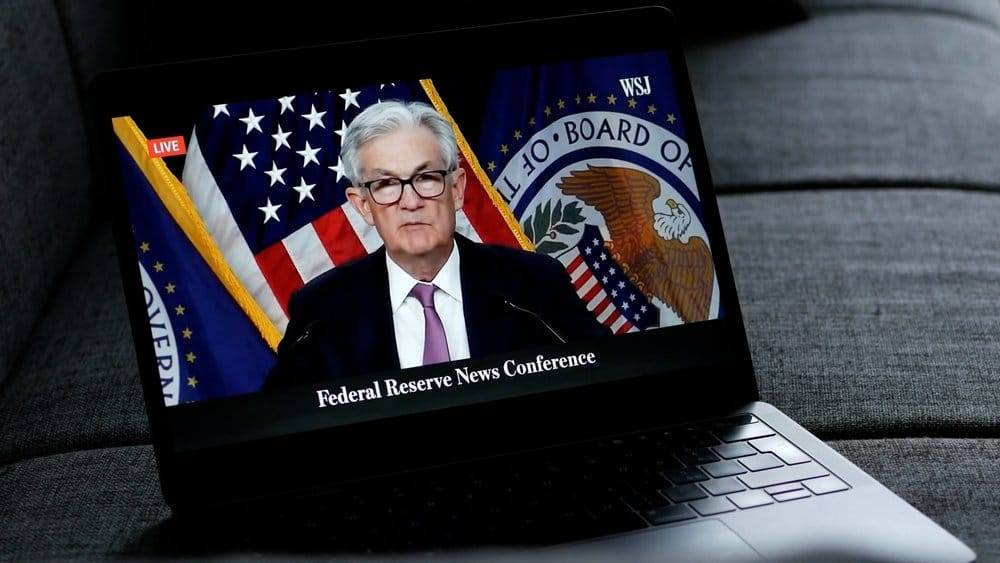
The FOMC (Federal Open Market Committee) is a committee within the FED (Federal Reserve System) that discusses future economic policy.
In particular, because the interest rate decided at the FOMC meeting affects the global economy, the policy rate set there—or expected to be set—can have a major impact on future stock prices.
Have you ever seen markets whipsaw and headlines explode just from a single comment by Fed Chair Jerome Powell? The policy rate decision made at the FOMC is marked with three stars on Investing.com, meaning very high expected stock-price volatility. If you invest in equities, this is a calendar you must follow.
The FOMC meeting runs over two days, and the policy rate decision is announced on the final day (around 3–4 a.m. Korea time the following day).
Before we look at the FOMC schedule in Korea time,
At the 2nd, 4th, 6th, and 8th meetings, marked with an asterisk (*) on the calendar, the Summary of Economic Projections (SEP) and the dot plot are released together.
The SEP is a report that compiles FOMC participants’ projections for real GDP growth, unemployment, inflation, and the federal funds rate. You can think of it as a summary of how the Fed views the economy and market conditions.
The dot plot is a visual chart that shows, as dots, the policy rate each participant sees as appropriate. Like the SEP, it lays out the Fed’s thinking with very little filter.
2024 FOMC Meeting Schedule and Korea Time
In 2024, FOMC policy rate decisions are scheduled to be announced at around 3–4 a.m. Korea time on September 19, November 8, and December 19.
The upcoming September 19 meeting, now just a week away, is especially important because both the SEP and the dot plot will be released.
2025 FOMC Meeting Schedule and Korea Time
In 2025, FOMC policy rate decisions are scheduled to be announced at around 3–4 a.m. Korea time on January 30, March 20, May 8, June 19, July 31, September 18, October 30, and December 11.
2026 FOMC Meeting Schedule and Korea Time
As of 2026, the FOMC meeting schedule (policy rate announcement dates) is expected to be announced between 3–4 a.m. Korea Standard Time on January 29, March 19, April 30, June 18, July 30, September 17, October 29, and December 10.
Rate outlook: How to read the FedWatch Tool
Wait a second. Is a rate cut always something to cheer about?
If only financial markets were that simple.
For investors already participating in the market, a future that is fully anticipated is not particularly surprising, and at least in the short term it may fail to move stock prices. This is what is often referred to as being "priced in."
That is why we also need to look at the level of interest rates the market is expecting.
If you go to the FedWatch Tool, you will see a table like the one above.
Interpreted, it means that “for the policy rate the Fed will decide on September 18 (U.S. local time), there is a 29.0% probability that the target range will be 4.75–5.00, and a 71.0% probability that it will be 5.00–5.25”.
To address a few questions you might have at this point:
1. Why are the rates shown as numbers instead of percentages (%)?
The figures in the table above are expressed in basis points.
1 bp = 0.01%, so 475–500 = 4.75%–5.00%.
In other words, there is a 29% probability that the target range for the policy rate will be set between 4.75% and 5%.
As of September 10, 2024, the current target range for the U.S. federal funds rate is 5.25%–5.50%. This can be interpreted as a 29% probability of a 0.5 percentage point (50 bp) cut.
2. Why it’s a range, not a single value
First, setting the target rate as a range allows the Fed to respond to volatility in short-term interest rates. In the past, the U.S. government attached a condition to a record bailout of a failed mortgage guarantor that the funds be supplied to the short-term funding market. Once massive liquidity began to flow into the financial system, it became difficult to hit a single target rate. After the Fed switched to a target range, the market stabilized considerably.
Subsequently, under the Emergency Economic Stabilization Act of 2008, the Fed has been paying 0.25% interest on excess reserves that financial institutions hold above required reserves. This means that even if the policy rate is only 0.25%, the economy can still enjoy the effect of a zero interest rate environment.
In short, by presenting the policy rate as a 25-basis-point range, the Fed has gained the flexibility to adjust rates in line with funding demand conditions.
Coming back to our example, “a 71.0% probability that the rate will be set at 5.00–5.25%”
Market participants currently expect the Fed to cut rates by 25 basis points. If, contrary to that expectation, the Fed were to cut by 50 basis points, the market reaction would of course be explosive.
However, because these projections are derived from futures prices, their accuracy increases as the announcement date approaches. In most cases, the actual decision ends up within the expected range.
So how should we actually use this data?
It’s best used as a tool to read overall market sentiment.
In the comparative chart above, you can see the probabilities for each possible target rate range—moving from right to left, they correspond to one month before, one week before, one day before, and the current reading.
At this point, market participants increasingly see it as a near certainty that the Fed will cut rates by 25 basis points rather than 50 basis points. A rate cut is generally good news because it means more liquidity flowing into the market, but when a cut is already fully priced in, a smaller-than-expected cut means there is less room for additional funds to enter the system.
Accordingly, you can interpret the current mood of the market as having a bias toward mild weakness or a soft tone.
As long as it doesn’t put a burden on the economy, the earlier rate cuts come, the better the news is for investors.
That’s why the most important things are the future direction of rate decisions and the pace of change. If we could know in advance what path and what speed the Fed plans to use in adjusting rates going forward, it would be like a dream come true.
For that reason, carefully reviewing the meeting minutes released three weeks after each meeting is a good way to understand how the Fed is thinking.
Newsletter
Be the first to get news about original content, newsletters, and special events.
Continue reading

Note By Ryunsu
The Intelligence Layer of Financial Infrastructure
Ryunsu Sung

Aware Original
Why Bitcoin Keeps Falling: The Downward Spiral of the Gamma Trap
Ryunsu Sung

Aware Original
The Overwhelming Autonomous Driving Leader Proven by Numbers: Waymo’s Full-Scale Takeoff
Ryunsu Sung

Aware Original
The Precarious State of ‘American Exceptionalism’ and a Shaken Dollar Hegemony
Ryunsu Sung