Dec 03, 2024
Elon Musk to Buy MSNBC? It Could Ignite a Media War
Sungwoo Bae
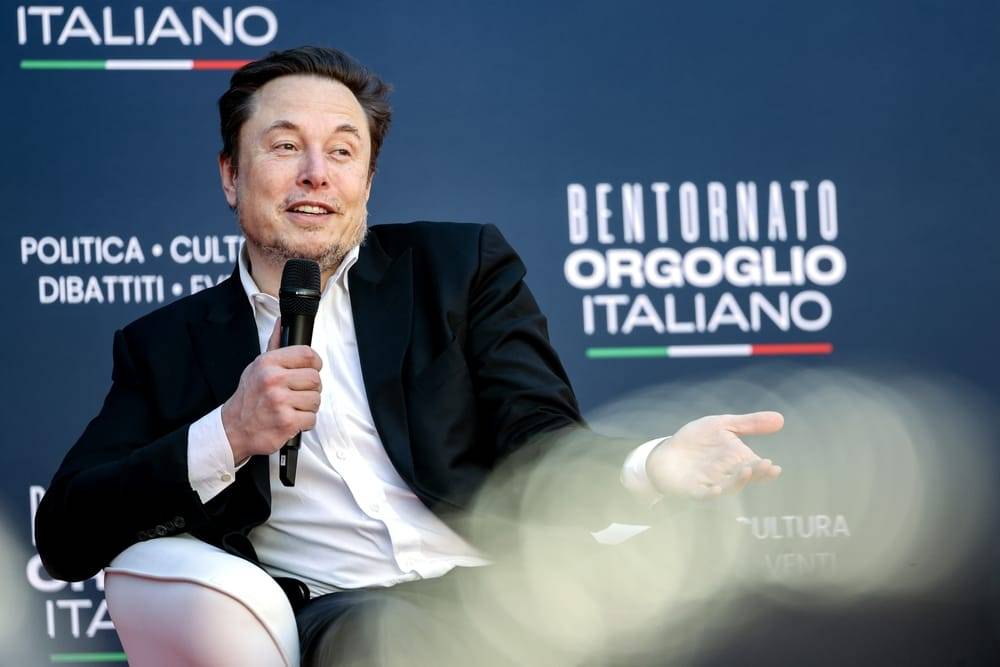
On the 23rd, Elon Musk made a suggestive remark about acquiring MSNBC, a U.S. cable news channel.
Trump Jr. shared a post saying MSNBC was up for sale and called it a “fun idea” for Trump, to which Elon Musk replied by asking how much it would cost.
This caught even more attention because it closely resembles how he once talked about buying X (formerly Twitter).
MSNBC has been struggling with weak performance lately.
According to Nielsen ratings, MSNBC’s average viewership has fallen about 38% since the 2020 presidential election. This is tied to the broader cord-cutting trend that’s hitting cable news across the board. Prime-time ratings have dropped by roughly 53% as well.
MSNBC is a news channel that has maintained a critical stance toward the Trump administration. Elon Musk, who is broadly seen as pro-Trump, has also criticized MSNBC in the past, saying it “peddles childish propaganda.” With MSNBC now underperforming, will Elon seize this as an opportunity to buy the network and shift its editorial slant?
MSNBC Is Unlikely to End Up in Elon’s Hands
To jump straight to the conclusion: the odds of Elon actually acquiring MSNBC are very slim.
#1. Not for sale, even if you wave cash around
"We have a plan to create a new company that will be owned by our shareholders through the spin-off of our cable networks. None of these assets are for sale."
- Comcast
Recently, Comcast CEO Brian Roberts announced plans for SpinCo and stated that “SpinCo will create new investment opportunities, backed by strong cash flow and a solid financial structure.”
SpinCo is a new company Comcast is setting up to unlock more value from its assets. By carving out several cable channels, it aims to better navigate the shift to streaming and the declining profitability of traditional cable networks.
MSNBC is one of the cable channels being spun off into SpinCo—along with CNBC, USA Network, E!, SYFY, Golf Channel, and others. Rather than selling, Comcast plans to bolster MSNBC and the other channels by investing further in them.
Regarding the Musk-related chatter, Comcast has made it clear that nothing being moved into SpinCo is up for sale and that it has no plans to divest.
The tweet Trump Jr. shared was a critique of legacy media, and rumors that Comcast would sell MSNBC predate the SpinCo announcement—they were just that, rumors.
#2. Personal grudge? It might just be a bit of trolling
MSNBC and NBCUniversal originally started out as part of Microsoft, and the “MS” in MSNBC symbolizes this.
Elon Musk does not like Bill Gates.
According to excerpts from Isaacson’s biography published by CNBC, in March 2022 Elon Musk and Bill Gates met at Tesla’s Gigafactory in Austin, Texas. Bill Gates was trying to propose philanthropic initiatives and various projects, but once the topic of shorting Tesla came up, the mood quickly soured.
When Musk learned that Bill Gates had shorted Tesla stock, he began to criticize Gates relentlessly.
Musk said that Gates “made a huge bet that Tesla would go bankrupt when the company was at one of its weakest points,” and called it hypocritical to “try to make $500 million off Tesla’s collapse while asking me to donate to what are mostly performative environmental causes.”
This was far from Musk’s first criticism.
In September 2020, for example, he said that “Bill Gates has no clue about the viability of electric trucks,” and he also criticized Gates for choosing a Porsche Taycan as his first electric vehicle. Musk’s jabs have been frequent enough that everyone knows about them.
His latest comments about MSNBC can also be read as both a signal of his pro-Trump leanings and a way of mocking MSNBC’s performance.
Microsoft sold all of its stake in MSNBC back in 2012, but it’s quite possible that Musk still sees MSNBC as tied to Microsoft.
#3. Not a strategically sound move to begin with
A large portion of Musk’s wealth is tied up in Tesla stock, and acquiring MSNBC could mean he would once again have to sell shares, as he did when he bought Twitter.
But would it really be worth it?
If Musk were to acquire MSNBC, he would likely remake it into a conservative-leaning outlet after the deal.
However, cable news channels rely on a revenue model built on viewer fandom and habit. If MSNBC’s remaining audience walks away, its earnings will inevitably take a hit, and rebuilding that business would be an extremely difficult challenge.
Even after a shift in editorial stance, major competitors like Fox News would still be there. Can we really say that traditional media is more important to Musk than his Tesla stake?
What does Musk’s “How much?” really mean?: Let’s focus on social media
As usual, it could simply have been a tweet Musk fired off in the heat of the moment. But looking into this issue reveals something more: social media is eating away at the traditional media market.
Musk’s tweet asking how much MSNBC costs may in fact stem from X’s growing clout.
On November 13, the British newspaper group The Guardian announced that it would no longer post on X (formerly Twitter), calling it a "toxic media platform."
Elon’s tweet about MSNBC came about a week later, on the 23rd.
The disappearance of a particular news channel from a social media platform is not exactly welcome news. Competition among social media platforms is fierce: Meta’s Threads continues to expand its user base, and Bluesky, the platform founded by Jack Dorsey, is also growing rapidly, adding 1 million new users in a week.
Following the controversy over Elon Musk potentially acquiring MSNBC, billionaire Mark Cuban was asked whether he had any intention of buying it. He replied, "I don’t think there’s any way to change the impact of linear TV news. So my answer is no." Instead, he said he is interested in promoting a social media platform called Bluesky.
Mark Cuban’s answer implies that he believes the structural problems of traditional TV news (linear TV news) cannot be solved, nor can its influence be fundamentally changed. The defining characteristics of legacy media—fixed broadcast schedules and a static viewer base—are highly passive, making it difficult to address the problems that stem from them.
This is an issue of the medium, not the content.
The viewing share of linear TV already fell below 50% last year, and its share of viewing time is steadily being pushed back as well.
Advertisers are also gradually shifting toward social media.
This year, TV accounts for 23.9% of US adults’ media consumption time, but advertisers are allocating only 17.3% of their budgets to TV.
To address cord-cutting, broadcasters charge retransmission fees and similar charges, selling content or entering into licensing agreements.
This shows that they recognize content still sells well, but the performance of the medium is deteriorating.
To summarize the key takeaways:
- Comcast aims to respond to the shift toward streaming services and the declining profitability of traditional media through Spinco.
- Mark Cuban argues that Bluesky will become competitive if real-time news and sports are added.
- Broadcasters are selling content to address the cord-cutting problem.
All of this points to a clear split between content and the medium.
Traditional broadcasters want to dominate the new distribution channels, while emerging social platforms want access to the content capabilities of legacy broadcasters.
It may be that new money will increasingly flow into social media. Will an all-out media war break out around the advertising market?
I’ll close by introducing some stocks related to social media.
- Meta (META) - Facebook, Instagram, WhatsApp, Threads
- Reddit (RDDT) - Reddit
- Snap (SNAP) - Snapchat
- Microsoft (MSFT) - LinkedIn, ByteDance (TikTok)
Newsletter
Be the first to get news about original content, newsletters, and special events.
Continue reading

Note By Ryunsu
The Intelligence Layer of Financial Infrastructure
Ryunsu Sung

Aware Original
Why Bitcoin Keeps Falling: The Downward Spiral of the Gamma Trap
Ryunsu Sung

Aware Original
The Overwhelming Autonomous Driving Leader Proven by Numbers: Waymo’s Full-Scale Takeoff
Ryunsu Sung

Aware Original
The Precarious State of ‘American Exceptionalism’ and a Shaken Dollar Hegemony
Ryunsu Sung