Nov 26, 2024
Even Fund Managers Are Stuck in Dollar General (DG) — I’ve Never Seen It This Undervalued
Sungwoo Bae
Save Time. Save Money. Every Day.
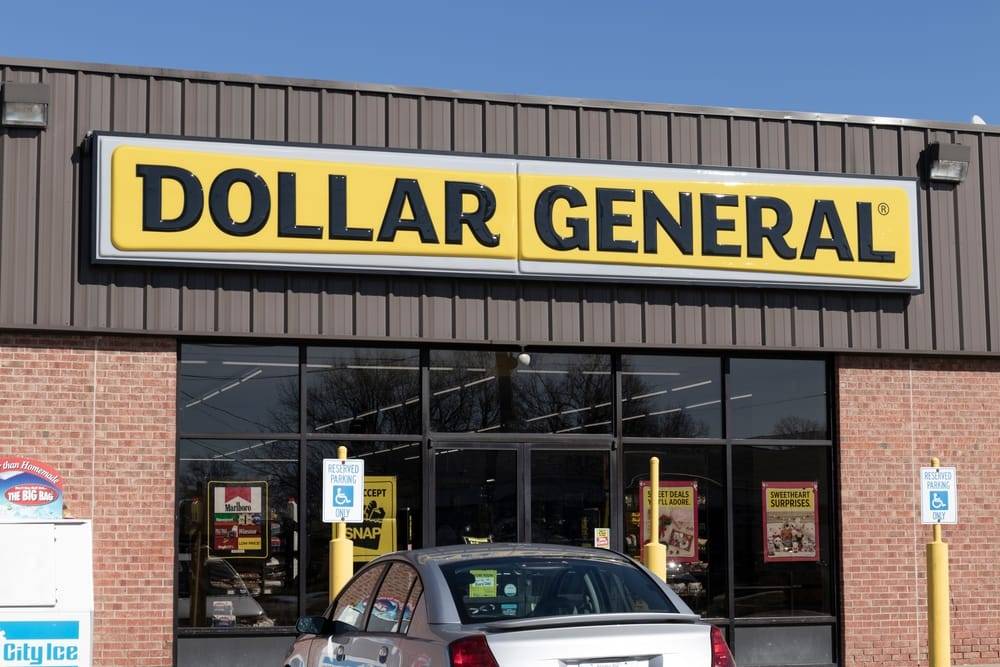
Dollar General (DG) is a discount variety store that operates about 20,000 locations across the United States and Mexico.
It sells a wide range of products at low prices, including clothing, cleaning supplies, home décor, health and beauty products, and groceries. The fact that many items are priced at $1 or less naturally brings to mind Daiso.
Building on that, this “American Daiso” targets low-income customers and operates stores in small towns, suburban areas, and even sparsely populated regions, capturing a niche market that large retailers tend to overlook.
There are competitors in this niche, such as Family Dollar and Dollar Tree, which are also dollar stores. But Dollar General clearly outperforms them in terms of store count and revenue, showing that it has a precise grasp of customer demand.
Even though it is the standout among dollar stores, its market share still pales in comparison with household names like Walmart, Costco, or Home Depot. And yet, there is a reason I’m highlighting it.
Because it is extremely undervalued.
Even Value-Oriented Fund Managers Got Burned: Dollar General
The share price, which was $260 in November 2022, now sits at $76. It’s a downright insane bargain sale.
Seth Klarman, Richard Pzena, Jefferies Group, Tom Gayner, Joel Greenblatt...
This unrelenting downtrend has left even fund managers sitting on average losses of around -30%.
Among them, Richard Pzena has drawn particular attention recently by significantly increasing his position, so we’ll focus on him in this piece.
As the founder of Pzena Investment, which manages roughly $60 billion in assets, he has a clear preference for companies that are deeply undervalued. At the same time, it also makes me wonder whether he bought Dollar General because he has a bearish outlook on the broader market.
At first glance, you might think that, as variety stores, dollar stores would see their sales decline when consumers’ purchasing power weakens. In reality, the opposite tends to happen.
During economic downturns, consumers gravitate toward lower-priced products, which translates into higher sales for dollar stores. After the 2008 financial crisis, Dollar General’s revenue in fact surged.
While Dollar General’s IPO date is listed as November 13, 2009, the company was originally listed in 1968. It was taken private in 2007 when it was acquired by the private equity firm KKR, but as sales soared in the wake of the financial crisis, the company successfully returned to the public markets in 2009. Its continued revenue growth since then has kept investors’ attention on the name.
Pzena is, in fact, bearish on the market:
"The current market environment is very depressing. It is almost identical to the internet bubble of 1998 and 1999. Back then, loss-making businesses were overvalued, and now people say it’s different because today’s companies generate massive profits. But that’s simply not true."
-Richard Pzena
Speaking at the Lonsec Symposium in May 2024, Richard Pzena made the above remarks, saying that while today’s tech companies are excellent businesses, he is skeptical about the valuations they are receiving.
The link between recessions and Dollar General? It may no longer hold
So if a recession does arrive, will Dollar General’s sales pick up again and restore its former glory?
Our view is that we should approach this conservatively.
#1. The “dollar” store label is outdated — it’s no longer that cheap
That’s because Dollar General’s “low prices” are no longer its exclusive advantage.
"The macroeconomic environment has been more challenging than expected, particularly for our core customer. However, despite near-term pressures, we remain confident that Dollar General can deliver strong growth over the next several years. These conditions affected our first-quarter results, and we expect them to weigh on our full-year sales and earnings per share (EPS) as well."
In its mid-year earnings report last year, Dollar General blamed the economy and specifically pointed to reduced customer spending as the cause of its weaker performance. If the macro backdrop were truly unfavorable, it should have been pulling ahead of competitors on a relative basis—but that hasn’t been the case.
#2. Margin pressure on top of everything else
Dollar General has managed to win the battle among other dollar stores, but it has failed to break into the next tier of the market. Stagnant growth ultimately becomes an existential threat. Raising prices, as we saw earlier, is one way to fight for survival, but there is another lever: margin management.
Dollar General is trying to shift its mix from consumables to non-consumables, as non-consumables carry higher gross margins.
However, Target—whose share price has fallen sharply on the back of a gloomy 3Q24 earnings print—made the following comment:
"They are hunting for deals, waiting for promotions, and comparing multiple retailers before deciding where to buy."
- Rick Gomez, Target
Even though Target saw an increase in store traffic and quarter-over-quarter growth of 11% and 6% in digital and beauty sales respectively, its results deteriorated due to weak sales in high-margin categories such as home and apparel. Home Depot, whose earnings held up thanks to demand for essential goods, also saw its margins compress.
Dollar General is trying to pivot toward non-consumables, but consumers are shifting their spending toward consumables instead—and even within consumables, Dollar General’s prices are not particularly attractive. In other words, the timing of Dollar General’s push into non-consumables is far from ideal.
Dollar General, once a retailer that targeted low-income households by selling goods cheaply, is no longer the Dollar General it used to be. It is not especially cheap, nor does it adequately meet the needs of low-income households that primarily spend on essentials.
The old saying that “Dollar General’s sales rise in a recession” may no longer hold true. Even if a downturn hits, it is uncertain whether the company can still grow.
Dollar General operates more stores in the United States than any other retailer, and 75% of the U.S. population lives within 8 km of a Dollar General store.
This strategy is possible because Dollar General stores are basic small-box formats averaging 700 m2. A typical grocery store is 4–5 times larger than a Dollar General, and a Walmart Supercenter averages a massive 16,500 m2.
In areas with population densities too low for Walmart to enter, Dollar General can be attractive because it can effectively replace the local neighborhood supermarket.
If it can simply restore its past profitability, it could earn $15 per share and once again trade at 20 times earnings. That would clearly be an attractive valuation.
So where exactly is the problem that is keeping Dollar General’s performance from improving? Could this be a value trap? After all, even an undervalued company only rewards investors when that undervaluation is eventually corrected.
Where do Dollar General’s problems come from?
#1. Overexpansion and underinvestment
In my view, the problems facing dollar stores trace back over time to the period of post‑success expansion that followed their initial boom.
After the financial crisis, Dollar General and Dollar Tree posted some of the highest growth rates in the S&P 500 and drew intense attention from Wall Street.
At the time, the tight correlation between store count and sales led to aggressive store expansion, and over the past decade the number of stores has increased by 50%. But as the economy improves, more customers shift from seeking cheap, low‑quality products to preferring higher‑quality goods even if they cost a bit more. Roughly 60% of Dollar General’s total sales came from households earning $35,000 or less per year, and now only the “true” core customers, who were obscured during the financial crisis, remain.
The customer base has shrunk, but the expanded store network remains, and this has inevitably led to operational issues. Slower growth has ultimately forced Dollar General to run its stores with insufficient staffing.
When staffing is tight, store cleanliness deteriorates and wait times grow longer, fueling customer dissatisfaction. In other words, the conditions are now in place for customers to switch to competitors.
In the past, Walmart lost low‑income consumers while dollar stores grew, but today the situation is different. Walmart has completed its preparations to welcome dollar‑store customers through digital transformation and e‑commerce investments. On top of that, new competitors such as German discount grocers Aldi and Lidl have begun to grow rapidly in the U.S. market.
Dollar General has invested relatively little in digitalization. Its mobile app offers functions such as issuing coupons and searching for products, but payment capabilities are limited, its advertising and promotions remain traditional, and its supply‑chain optimization lags peers. Overall, the company has taken a conservative approach to technology investment.
By contrast, Walmart, which boasts the highest market share, goes far beyond online payments, deploying an omnichannel strategy that spans in‑store pickup, same‑day delivery, and drive‑through pickup. It has acquired e‑commerce players such as Jet.com and Flipkart, offers personalized promotions, and automates its distribution centers—showing a starkly different posture from Dollar General.
It is reminiscent of IBM, which misread the direction of change and fell behind in the competitive race.
Dollar General may or may not fully recognize this, but during the earnings call the company said the following:
Through its partnership with DoorDash, the company has offered same-day delivery and run personalized ads for individual customers, but with its lackluster tech investment, it will take a very long time to regain the competitiveness it has lost.
With price competitiveness on its merchandise eroding, the remaining edge was its ability to reach low-density areas. But if Walmart simply takes orders online and delivers… it ends up being like Coupang being cheaper than the grocery store that’s a 10-minute walk from home.
#2. Operating margin vs. labor costs
Dollar General’s gross margin had stayed above 30% and only dipped slightly below that level this year, which is still solid given its push to sell more non-consumables and the shift in customer preference toward consumables.
Walmart is at 24.7%, Costco at 12.67%, Home Depot at 33.5%, and Target at 28.39%. Even excluding Costco, which serves a completely different membership-based demographic, Dollar General’s numbers are respectable.
The problem is its operating margin.
As of November 2024, Dollar General’s operating margin stands at 4.55%, similar to levels seen in the second half of 2009.
What’s driving this is shrinkage.
Shrinkage refers to a situation where actual inventory falls below book inventory, and is caused by factors such as theft, damage, and administrative errors. Given that its target customers are low-income households, it’s a problem that can become particularly severe.
Shrink remains a significant headwind, but we are pleased with the progress we are making and believe our actions, including changes to self-checkout, are having a positive impact.
- Kelly Dilts, Dollar General CFO
To address this, Dollar General has scaled back self-checkout and shifted to a model where associates provide support, and the company has said it is seeing positive trends in other metrics that are highly correlated with shrink.
But this inevitably leads to higher labor costs.
Even before this, Dollar General was already exposed to risks related to its workforce. Last year, it became the first employer to be placed on OSHA’s Severe Violator Enforcement Program list due to repeated workplace safety violations, and data from the nonprofit Gun Violence Archive shows that from 2014 to 2023, about 50 people were killed and 172 injured in gun incidents at Dollar General stores.
To protect its operating margin, the company needs workers; but if Dollar General increases headcount, additional costs related to employee safety and similar issues will follow it like a shadow. While other retailers may only be paying wages, Dollar General faces the risk of paying fines on top of that.
Whether Dollar General is undervalued or fairly valued is now something that requires careful thought.
If Dollar General’s digital transformation can just get on track, many of its problems will be resolved. The key questions are whether it can hold out until then, and how long that will take.
Newsletter
Be the first to get news about original content, newsletters, and special events.
Continue reading

Note By Ryunsu
The Intelligence Layer of Financial Infrastructure
Ryunsu Sung

Aware Original
Why Bitcoin Keeps Falling: The Downward Spiral of the Gamma Trap
Ryunsu Sung

Aware Original
The Overwhelming Autonomous Driving Leader Proven by Numbers: Waymo’s Full-Scale Takeoff
Ryunsu Sung

Aware Original
The Precarious State of ‘American Exceptionalism’ and a Shaken Dollar Hegemony
Ryunsu Sung