Jan 26, 2023
What Exactly Is the Debt Ceiling, and Does It Affect Stock Prices?
Ryunsu Sung
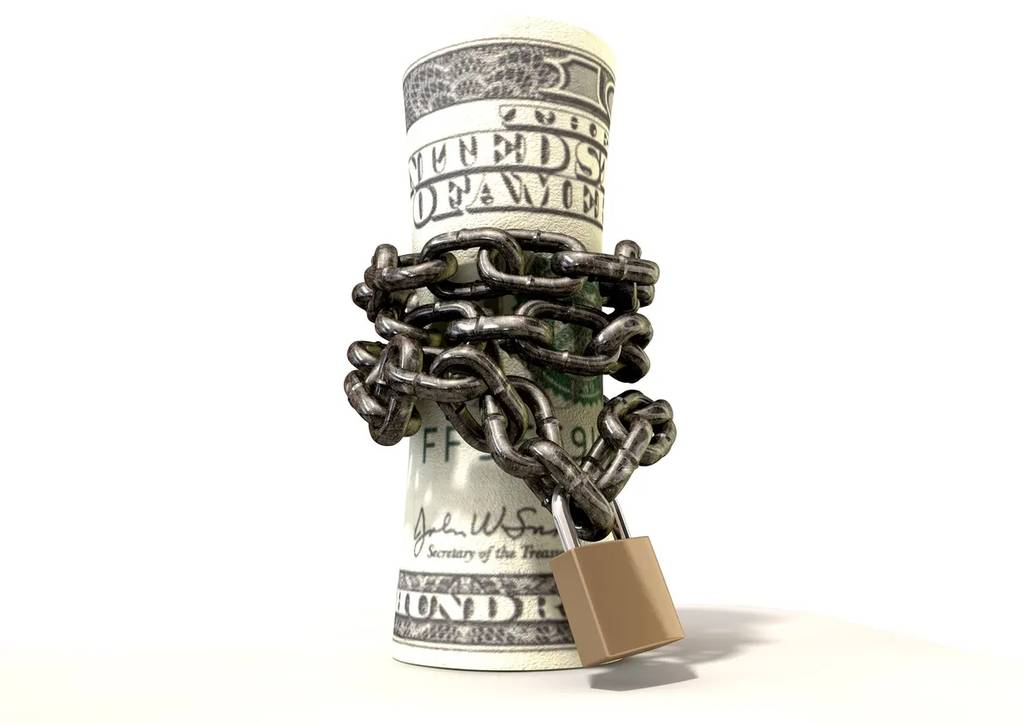
Unlike most other countries, the United States has an absolute cap on how much the federal government can borrow (the national debt). As a result, Congress has to periodically raise that cap, because most governments spend more than they collect in taxes each year.
This is hardly welcome news for lawmakers who are not fond of seeing the national debt grow, but it is something that must be done to avoid a sovereign default. Sometimes Congress quietly raises the debt ceiling (as it did under the Trump administration in 2019), and other times, as in 2011, it drags the country to the brink of default, using the debt ceiling as a tool or even a hostage to achieve its political goals.
This year is highly likely to resemble 2011. The House is controlled by Republicans, while the Senate and the White House are in Democratic hands.
Republicans in the House say they will not agree to raise the debt ceiling unless President Biden promises to rein in spending. The White House argues that raising the debt ceiling must be done unconditionally.
What happens if the debt ceiling is not raised?
On January 19, Treasury Secretary Janet Yellen announced that the United States had hit its $31.4 trillion debt ceiling. However, she said that with the cash still on hand and incoming tax revenues, the government would be able to keep paying its bills until June.
After that point, it would no longer be able to make payments on Treasury interest, federal employee salaries, Social Security and other benefits, and various other expenditures. In other words, the government would default.
The Treasury did once fail to make timely principal payments to some Treasury investors in 1979 due to a computer problem, but analysts say that episode did not create systemic problems across financial markets.
In 2011, Democrats and Republicans clashed over the budget and used the debt ceiling as leverage, pushing the country to the edge of default. That standoff led to a broad decline in the stock market and a downgrade of the U.S. credit rating.
Consumer confidence and small-business optimism also plunged during that period.
If a default were to delay pension or disability payments for the 69 million Social Security beneficiaries, or if government-backed health insurance programs like Medicare were unable to reimburse doctors, the U.S. economy could face a significant downturn.
According to Refinitiv, the U.S. Treasury’s cash balance is about $361 billion and has been steadily declining as the government approaches the debt ceiling.
Is it bad news for stocks?
According to a Goldman Sachs research note, during the 2011 episode when the debt ceiling risk was at its worst, the S&P 500 fell as much as 15 percent, and companies whose revenues are directly tied to federal spending dropped as much as 25 percent.
Looking at the credit default swap (CDS) premiums on U.S. Treasuries, the market already appears to be pricing in some risk of a government default.
A CDS is an insurance-like product that protects against the risk of a bond default. The higher the premium, the higher the perceived probability of default.
The debate in Congress over the debt ceiling is closer to a political fight in which parties jockey for advantage than a genuine willingness to trigger default. News coverage is likely to focus on the possibility of a U.S. default if Congress fails to raise the ceiling in time and on the many problems that could follow, but in reality the probability of an actual default is extremely low.
If concerns over the debt ceiling and a potential default lead to a broad market correction, that decline would be unrelated to fundamentals and could present an attractive buying opportunity.
Newsletter
Be the first to get news about original content, newsletters, and special events.
Continue reading

Note By Ryunsu
The Intelligence Layer of Financial Infrastructure
Ryunsu Sung

Aware Original
Why Bitcoin Keeps Falling: The Downward Spiral of the Gamma Trap
Ryunsu Sung

Aware Original
The Overwhelming Autonomous Driving Leader Proven by Numbers: Waymo’s Full-Scale Takeoff
Ryunsu Sung

Aware Original
The Precarious State of ‘American Exceptionalism’ and a Shaken Dollar Hegemony
Ryunsu Sung