Nov 03, 2022
The Hidden Powerhouse of Korean Fashion, Daemyung Chemical – First Steps Toward the World
Sungwoo Bae
Korea’s Bernard Arnault, Kwon O-il
LVMH under Bernard Arnault grew by acquiring companies across fashion, liquor, perfume, and many other sectors.
With Moët Hennessy, Louis Vuitton, Tiffany & Co., TAG Heuer and countless other companies and brands under its umbrella, he has come to be called the “emperor of the luxury empire.”
Korea has a similar kind of company. It is Daemyung Chemical, led by Chairman Kwon O-il.
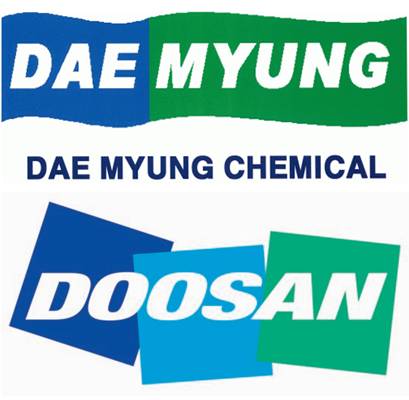
At first glance, the logo that vaguely recalls the old Doosan mark and the word “Chemical” in the company name make it seem far removed from fashion.
But in the mid-2000s, Chairman Kwon O-il acquired a venture capital firm called KIG,
changed its name to Daemyung Chemical, and used it as a vehicle to enter the fashion industry,
and today the group has a structure where logistics, manufacturing, and marketing are all interconnected.
It is, in every sense, a structure that fits the word “group.”
Daemyung Chemical has invested in or acquired around 40 fashion companies, and the brands under its umbrella number more than 200.
Adidas, Reebok, Puma, Emporio Armani, NYX, Kirsh, Kodak, Banana Fit, and many more…
At this point, you could argue the company should be renamed “Daemyung Fashion.”
If you follow the apparel industry, Daemyung Chemical is a name you might have kept an eye on, but the company itself is not yet listed.
That’s why we prepared this piece. Where is Daemyung Chemical headed next, and which companies stand to benefit from its moves?
Daemyung Chemical’s Latest Move: Acquiring an Airline
Daemyung Chemical’s subsidiary DAP recently acquired a 64.04% stake in low-cost carrier Aero K. This was about two months ago.
Following last year’s acquisition of parcel delivery company Logen Express by another Daemyung Chemical subsidiary, Cowell Fashion, this is the group’s second company related to “movement and transport.”
All three KOSDAQ-listed companies—Moda-InnoChips, Cowell Fashion, and DAP—are leveraging Daemyung Chemical’s backing to scale up through a series of acquisitions.
After DAP’s move into aviation and Cowell Fashion’s into parcel delivery,
Moda-InnoChips owns Moda Outlet as a subsidiary and operates outlet malls in various locations.
Every single one of these businesses is tied to apparel or apparel distribution.
The direction Daemyung Chemical is ultimately pursuing is, in the end, apparel.
Daemyung Chemical’s investment principle is to take stakes of more than 50% in promising designer brands, support them in areas such as finance, marketing, and distribution strategy, and help manage the brand while preserving as much of the designer’s independence as possible.
“The reclusive chairman who built a fashion kingdom of 200 brands,” Korea Economic Daily
Hong Jung-woo, CEO of fashion platform company HAGO L&F, which was brought under Daemyung Chemical in 2020, once explained Daemyung Chemical’s investment principles.
He said the group provides support in finance, marketing, and distribution strategy.
In other words, Daemyung Chemical’s acquisition of an airline can be interpreted as a move to support overseas distribution for its portfolio brands.
Why Choose Air, Not Sea?
Why on earth would they pass on ocean shipping, which is far cheaper, can handle long distances, and is ideal for bulk transport?
You could point to many reasons: the impact when congestion occurs, the lack of aligned interests needed to sign port facility lease contracts, the complexity of liability when transport accidents happen, and so on.
But there is one very clear reason: they had an opportunity to acquire an airline at a truly bargain price.
Aero K was in the midst of capital impairment.
Capital impairment is when accumulated losses exceed retained earnings, causing equity to fall below paid-in capital.
If it had been a listed company, in the worst case it could have faced delisting.
In this severe situation, where the company would have had to carry out a capital reduction—shrinking the number of shares to cover losses—Daemyung Chemical appeared like a comet. It was a near-death escape.
Aero K was operating only a single aircraft, relatively small in size,
so from Daemyung Chemical’s perspective, it was able to acquire the aviation infrastructure it needed in one go, at a low price, without worrying much about maintenance costs.
Backed by Daemyung Chemical’s support, Aero K plans to introduce a second aircraft next January and a third thereafter, and is currently hiring additional staff.
The airline has also applied to the Ministry of Land, Infrastructure and Transport for a scheduled route to Osaka, Japan, and has announced plans to expand its international network to Taiwan once it secures Japanese routes.
We have already finalized contracts for the second and third aircraft (A320, 180 seats), and are now coordinating the timing of their introduction into Korea.
“No issues with our first step into operations,” says Aero K CEO Kang Byung-ho, The Bell
Aero K’s first aircraft is an Airbus A320-200, with a maximum takeoff weight of 73.5 tons and a flight range of 3,200 km.
Given that the second and third aircraft, contracted before Daemyung Chemical’s investment, are also A320 series with 180 seats, they appear to be the same model.
Aero K is based at Cheongju International Airport in North Chungcheong Province,
and a 3,200 km range from Cheongju, in straight-line distance, can reach Bangkok and Ho Chi Minh City, but not Delhi or Singapore.
In short, it is an airline focused on short-haul routes.
Knowing this narrows down the likely routes for Daemyung Chemical’s fashion brands as they expand overseas.
With more than 200 brands to send abroad, two or three aircraft are nowhere near enough capacity, so you might wonder whether shipping lines or aircraft leasing companies will benefit,
or whether online sales platforms in the destination countries will be the main winners.
Amid these possibilities, one market comes to mind—a country that countless fashion brands are targeting intensively.
Japan.
Breaking into Japan: Aim for Pop-Up Stores
Even the now-ubiquitous fashion commerce company Musinsa chose Japan as its very first overseas destination.
There is clear demand in Japan for Korean fashion brands,
and Mardi Mercredi, one of the brands that entered Japan with Musinsa, reached 100 million yen—about 1 billion won—in sales in just six months.
To make a strong first entry into Japan, you simply cannot skip pop-up stores.
- February 2022: leggings brand Xexymix opens a pop-up store at Lazona Plaza in Yokohama.
- May 2022: French-inspired fashion brand Mardi Mercredi opens a pop-up store at Shibuya Hikarie department store in Tokyo.
- May 2022: fashion shopping app Brandi opens a pop-up store at Shibuya Marui Modi mall in Tokyo.
- June 2022: recycled-material bag brand Pleatsmama opens a pop-up store at Itochu SDGs Studio in Tokyo.
- October 2022: leggings brand Andar opens a pop-up store at Yurakucho Marui department store in Tokyo.
For fashion brands, pop-up stores are the first real window for making themselves known; for department stores, they are a lucrative source of revenue.
Department stores can charge brands that come in
a fixed rental fee based on a set daily rate, or a variable rental fee that takes a percentage of sales.
And it doesn’t end with the pop-up.
The factors a brand must consider when choosing a pop-up location—foot traffic and the area’s reputation—remain important even after the pop-up ends,
so if a pop-up performs well, it won’t be easy for the brand to take the risk of moving far away from that area.
In other words, the relationship between the brand and the department store is likely to continue.
As of September, department store sales in Japan have risen for seven consecutive months.
And this is happening even though Chinese tourists have yet to return in force.
Even in an era dominated by online shopping, demand for department stores clearly persists,
and being stocked in Japanese department stores—especially in a country with strong tourism demand—can serve as a way, however brief, to gain exposure to a broader global audience.
The question now is: which department store group?
Japan has a wide array of department store brands—Hankyu, Seibu, Sogo, Takashimaya, Mitsukoshi, and more.
But there’s no need to worry; we can narrow it down step by step.
If we apply the logic that the key factors in choosing a pop-up location—traffic and area reputation—remain important even beyond the pop-up itself, then the likely destination narrows to Tokyo.
And when you think of the most successful department store group in Tokyo, one name stands out.
Isetan Mitsukoshi Holdings
Headquartered in Tokyo, Isetan Mitsukoshi Holdings is a department store group formed in 2008 through the merger of Isetan and Mitsukoshi.
The group is large enough that its affiliates operate additional department store brands as separate subsidiaries, such as Marui and Iwataya.
As an aside, if you trace the origins of the main branch of Shinsegae Department Store in Korea, you eventually arrive at this group—a fact that helps convey its scale.
You can find every LVMH brand in department stores.
Chairman Kwon O-il wants to build Korea’s answer to LVMH.
His fashion brands will grow together with the department stores that carry them.
As those many brands grow larger, they may well expand into a broader range of countries,
but isn’t it likely that the first country they encounter on their path to global expansion will be Japan?
And again, in Japan there is clearly strong demand for Korean fashion.
Three-line summary:
1. Among Korea’s leading fashion brands, it is hard to find one that has not, in some way, passed through Daemyung Chemical’s hands.
2. Daemyung Chemical recently acquired an airline—its goal is expansion into Japan.
3. There is solid Japanese demand for Korean brands, and Tokyo is the most likely primary destination for those brands—Daemyung Chemical’s push into Japan could translate into incremental revenue for Isetan Mitsukoshi Holdings.
Newsletter
Be the first to get news about original content, newsletters, and special events.
Continue reading

Note By Ryunsu
The Intelligence Layer of Financial Infrastructure
Ryunsu Sung

Aware Original
Why Bitcoin Keeps Falling: The Downward Spiral of the Gamma Trap
Ryunsu Sung

Aware Original
The Overwhelming Autonomous Driving Leader Proven by Numbers: Waymo’s Full-Scale Takeoff
Ryunsu Sung

Aware Original
The Precarious State of ‘American Exceptionalism’ and a Shaken Dollar Hegemony
Ryunsu Sung