Jul 28, 2022
Another Dot-Com Bubble: How Weak Crypto Firms Collapse and a Stronger Market Emerges
Sungwoo Bae
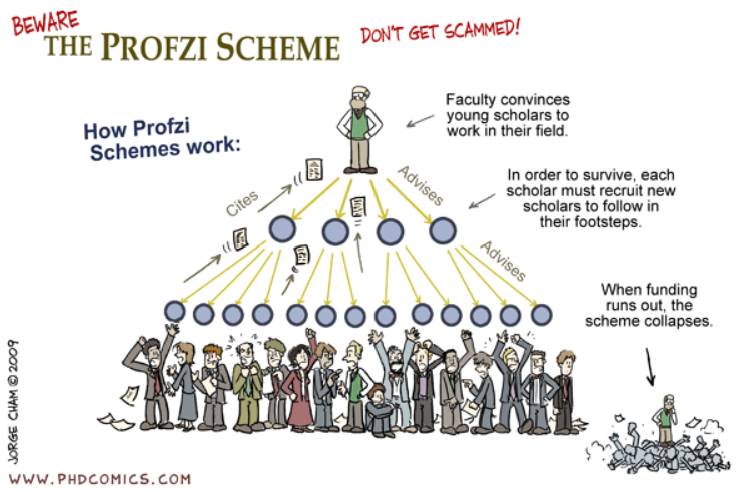
A slightly different bubble, driven by a shift in perception
“The internet is going to change the world.”
Goldbank was a company whose share price jumped 50-fold on the promise that it would pay you to watch ads on the internet.
Saerom Technology saw its stock price surge 150-fold on the back of free internet calls.
But they were loss-making businesses, and today only traces of them remain.
Crypto assets look strikingly similar to that era, with the main difference being the trajectory of the market’s size.
If you look at the stages of an asset-price bubble laid out by Professor Jean-Paul Rodrigue – often mistakenly referred to as the Hyman Minsky model –
you find that the 2018 market looked more similar to his framework than today’s crypto market does. That’s why 2021, when prices were approaching the 2018 peak, felt so shocking.
Prices blew right past levels that everyone had been calling a bubble.
Yes, there was a lot of liquidity sloshing around, and you can say a model is just a model. Even so, surpassing a level widely seen as a bubble peak in just three years is anything but easy.
Back in 2018, crypto was perceived as a new asset; today it is increasingly seen as a new market in its own right.
Previously, the dominant view was that Bitcoin was attractive because, like gold or commodities, you could make capital gains on it. More recently, we’ve seen a proliferation of new technologies, jargon, and platforms that are hard to understand.
Seen in this light, the two major bubble episodes start to make sense.
At first, money flowed in purely for capital gains – much like the tulip mania. Now, the driver is expectations for technological progress – more akin to post-dot-com IT.
What’s similar yet different this time is that, relative to the size of the market, the companies themselves are not growing particularly well.
After the dot-com bust, companies like Google and Amazon proved their capabilities and the IT sector grew accordingly,
whereas in crypto, the market is already huge but the companies have yet to demonstrate that they deserve that scale.
The takeaway is that we can no longer judge a bubble by price alone.
Just because Bitcoin’s price has fallen a lot doesn’t mean the bubble has fully burst. Likewise, even if the bubble bursts, Bitcoin’s price may not necessarily collapse in tandem.
Even though Bitcoin’s price has come down significantly, there is still a very real chance that its broader ecosystem could be shattered at least once.
Weak links in the crypto industry
We’re surrounded by many entities that look like real companies but really aren’t.
Some rely on mechanisms that can wipe out value overnight; others exist primarily to harvest and sell personal data. These are businesses that directly inflict losses on users.
There are also firms egging people on to buy virtual land in a digital world.
They claim that what exists in their databases is a new Earth, a new Seoul.
This is not so different from the old fad of buying “land on the moon” certificates or paying for a count or baron title from some obscure microstate.
Owning a virtual Gangnam in a virtual Earth might feel good. But once the goal shifts from fun to flipping for profit, prices become irrational, and inevitably people get hurt.
The gorilla-character NFT project MetaKongz recently made headlines by partnering not only with Shinsegae but also Hyundai Motor and GS Retail.
But MetaKongz is now rapidly losing customer trust amid allegations of indiscriminate issuance of its in-house token (MCK), the purchase of luxury company cars worth over 200 million won by management, and even hacks of community admin accounts.
Legacy conglomerates like Shinsegae are, for now, using NFTs strictly as a marketing tool.
They are essentially running experiments that piggyback on the hype around NFTs to add a twist to the value of existing gift certificates. They are not yet trying to imbue NFTs themselves with intrinsic value to build something fundamentally new.
“Let us make money too”: industry lobbying, government concern
In Japan, crypto firms are currently pressing the government to cut tax rates.
Japan now levies a 30% corporate tax on unrealized gains and other holding profits from crypto assets.
The industry argues that “unless tax relief is granted for holdings that are not for short-term trading, Japan’s crypto market will struggle to grow.”
The reason Japan suddenly comes up here is that Japan takes crypto very seriously.
While Koreans were busy arbitraging price gaps, crypto games were already gaining real traction in Japan. In the US, by contrast, crypto was still largely the domain of so-called nerds.
But when countries that are serious about crypto fail to create a hospitable environment at home, their talent and companies start to leave.
From a corporate perspective, you move to where the conditions are better. And the countries that offer those better conditions become crypto powerhouses as more serious players cluster there.
“Decentralised finance will be part of the future.”
“Decentralized finance will be part of the future.”
One such crypto-friendly jurisdiction is Singapore.
Since January 2020, Singapore has exempted crypto transactions from value-added tax and does not levy capital-gains tax on them.
The Monetary Authority of Singapore (MAS) openly supports blockchain development and cryptocurrencies,
making the country something close to paradise for businesses in the crypto-asset space.
As a result, more Japanese crypto firms are choosing to base their headquarters in Singapore, and Korean companies are following a similar path.
Even Singapore, as friendly to crypto as it is, has its concerns.
Those concerns are consumer protection, money laundering, and financial stability.
The United States is thinking along similar lines.
According to the Responsible Financial Innovation Act introduced in June,
assets whose value depends on the actions of the issuing company, but which, unlike bonds, do not give holders a direct monetary claim on the issuer, are defined as “ancillary assets.”
In other words, they would fall under the jurisdiction of the Commodity Futures Trading Commission (CFTC), while anything that qualifies as a security would be overseen by the Securities and Exchange Commission (SEC).
These two agencies share a core mandate: protecting consumers and investors.
They are not inherently hostile to crypto assets. Citing surveys that show 20% of American adults own cryptocurrencies, they have stressed that “we need to focus on consumer protection.”
This means that, at least initially, regulation is likely to focus less on taxing individual investors and more on regulating companies.
Those corporate rules will center on areas that can directly affect consumers – listings, financial soundness, market manipulation, reserves, and similar issues.
Countries will move to weed out weak players in the DeFi and broader crypto markets.
Many firms will collapse in the process.
In the end, it simply means that companies destined to fail will fail a bit earlier. But the shockwaves from their collapse will hit early adopters as well, so this is a time for extra caution around crypto services and products.
If you know consumers or investors exposed to these risks, it may be worth giving them a quiet heads-up.
As a side note, Korea currently
plans to start taxing income from crypto assets on January 1, 2025, applying a 20% separate tax on gains exceeding a basic allowance of 2.5 million won.
The government also plans to use the US regulatory report on digital assets, due in October, as a reference point for full-fledged legislation.
Given that the October legislative push is expected to focus more on regulating companies than on taxation, it does not appear likely that Korea will bring forward the start date for taxation or raise the tax rate.
Newsletter
Be the first to get news about original content, newsletters, and special events.
Continue reading

Note By Ryunsu
The Intelligence Layer of Financial Infrastructure
Ryunsu Sung

Aware Original
Why Bitcoin Keeps Falling: The Downward Spiral of the Gamma Trap
Ryunsu Sung

Aware Original
The Overwhelming Autonomous Driving Leader Proven by Numbers: Waymo’s Full-Scale Takeoff
Ryunsu Sung

Aware Original
The Precarious State of ‘American Exceptionalism’ and a Shaken Dollar Hegemony
Ryunsu Sung