Oct 11, 2024
China's Economy Is Faltering, Yet the IMF Remains Passive
Sungwoo Bae
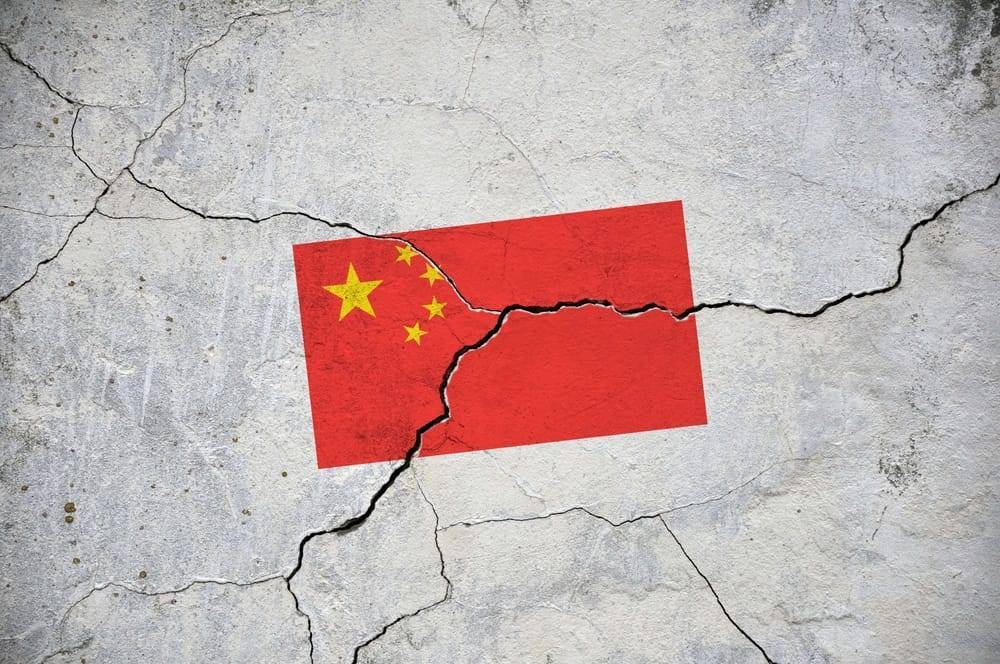
It feels like just yesterday that we covered the Evergrande issue regarding the Chinese economy, yet two years have already passed. Unlike the height of the pandemic, the immediate fear of a financial crisis seems to have distanced itself, replaced by a sense of internal relief. The significant rally in AI-related stocks, such as Nvidia, has certainly played a part in this sentiment.
However, the "Chinese economic crisis theory" is being mentioned again recently. It seemed quiet after the Evergrande Group incident, so what event has erupted this time?
Not an Event but an Aftermath: What Is the State of China's Economy?
It is not a specific event. For a nation—especially one of such unimaginably vast scale—to collapse, a single event is insufficient. Structural factors must be involved. Let us examine how things have unfolded since the pandemic and the real estate crisis.
#1. China Lost Real Estate: Attempting Regulation, Losing Growth Momentum
Real estate is a massive growth engine accounting for one-third of China's economy.
"This made no sense. No sense at all,"
-Antonio Fatas, Professor at INSEAD, Singapore
At the time, developers in China sold pre-sale rights before construction to buy land, took out loans, and then began building. Those loans were not entirely used for construction; some were used to purchase other plots of land.
In other words, they sold pre-sale rights before the buildings even went up. Did the people who bought these rights pay in full with cash? That, too, was done through loans. They bought a home, but there is no home, yet they still have to pay the loan interest...
This is the situation for the buyers. Meanwhile, as builders repeated the cycle of buying land and taking out loans, their debt ballooned uncontrollably.
"Real estate is not for speculation"
When public discontent accumulates and protests begin, China's ruling system is bound to shake. Accordingly, to regulate real estate companies driving up housing prices during the pandemic, Chinese financial authorities decided not to extend loans to companies where: 1) the liability-to-asset ratio (excluding advance receipts) exceeds 70%, 2) the net gearing ratio exceeds 100%, or 3) short-term debt exceeds cash reserves.
Following this decision, real estate companies in China began repaying debts with cash assets. The regulation stipulated that new loans would not be granted if debt was excessive, and for real estate developers, loans are essential for sustainable growth.
#2. The Burden Pushed onto Local Governments
Real estate developers like the Evergrande Group have been a primary source of funding for local governments. When these developers stop purchasing land, local governments see their revenue streams dry up.
These companies need capital to purchase land, but those funds are being diverted to debt repayment. Consequently, local governments find themselves in a predicament equal to the burden shouldered by real estate developers. This is because local governments in China have long pursued large-scale infrastructure projects reliant on debt.
With local governments needing to repay debts while simultaneously funding public services and welfare, the situation has become a significant headache. Even attempts to alleviate the situation through municipal bond issuance are thwarted by credit issues in the bond market. Some local governments are now assessed to be effectively in a state of bankruptcy.
#3. Why the Stalled Recovery? China’s Economic Cough Is Ongoing
The central government is attempting to assist local governments by supporting debt restructuring or providing funds. However, this is not a fundamental solution, and the central government’s own position is far from comfortable. Does anyone recall the lockdowns in China during the COVID-19 pandemic?
These lockdown measures, which seemed interminable, finally came to an end in late 2022 following public protests. Amid expectations that Chinese demand would surge, then-Premier Li Keqiang announced a real GDP growth target of approximately 5% in March 2023—a time when observers outside China anticipated even higher growth.
Indeed, China’s economy appeared to be improving. As pent-up demand was unleashed, the economy showed a strong recovery, and analyses suggested the real estate market had bottomed out.
However, entering the second quarter of 2023, economic data did not follow this trajectory. The youth unemployment rate (ages 16–24) released in June 2023 hit a record high of 21.3%. Fu Linghui, a spokesperson for China’s National Bureau of Statistics, subsequently announced at a press conference that they had “decided to suspend the release of youth unemployment figures,” explaining that labor statistics needed to be optimized.
Labor statistics... optimization?
Simply put, they intended to tweak variables to soften the figures. In fact, the statistics bureau presented new statistical criteria in December 2023. Yet, despite these revisions, the youth unemployment rate for August, released on the 20th of last month, stood at 18.8%—the highest figure this year. The bureau spent over a quarter crafting new criteria, yet the numbers simply refuse to come down. Moreover, even this standard is dubious, as China classifies anyone working one hour or more per week as employed.
The Cause of China’s Delayed Economic Recovery: Vanished Trust
Why are there no jobs? Because companies aren't hiring. Why aren't they hiring? Because they lack the funds to hire. Why do they lack funds? Because they aren't making money. Why is that?
It is because durable goods consumption and private sector investment rates have regressed to past levels, and Chinese households have begun shifting towards saving rather than spending.
I believe the fundamental cause is trust. It makes sense when you consider that the government might intervene and ruin everything just as you are trying to spend your own money. China has an implicit rule: "If you don't touch politics, we won't touch the economy."
"Great innovators do not fear supervision, but they fear outdated supervision."
- Jack Ma, Founder of Alibaba
In 2020, Jack Ma suddenly disappeared after making bitter remarks against the Chinese government. At the time, foreign investors were shocked and expressed concern over the Chinese government's actions. However, Ma's remarks could be judged as having sufficient political impact, and China merely followed its implicit rules.
However, two years later, Xi Jinping crossed the line. The cause was the lockdown of even Shanghai during the pandemic.
When Shanghai was locked down in April 2022, the Consumer Confidence Index plummeted. The Consumer Confidence Index quantifies how optimistic consumers feel about the overall economic situation and their personal financial situation; a reading below 100 indicates a pessimistic view.
"Control your soul’s desire for freedom."
"Do not open your windows or sing."
The sense of control felt within China transcends our imagination. When Jack Ma was taken, he surely must have thought, "The government can intervene this severely." However, after the lockdown, the entire nation came to think the same way. The lockdown is understandable to an extent. It might be better than everyone dying, and there was a strong desire to externally demonstrate the nation's robustness. However, the control was too severe.
The government not only lost the growth engine of real estate development but also imprinted in the minds of the entire nation that it could intervene limitlessly in individual lives and ruin economic power. Xi Jinping clearly started his rule by proclaiming the "Chinese Dream" and promising to "achieve the great rejuvenation of China by 2049." Based on this, he became the first Chinese president to serve three consecutive terms.
However, his actions since taking power were enough to betray that trust. The Consumer Confidence Index shows no signs of recovery, and businesses and consumers remain anxious.
They said it was tough... but China is lending money right now
"The IMF does not publicly comment on the role of state-owned banks in managing China's exchange rate or on why changes in the People’s Bank of China's balance sheet don't line up with reserve transactions in China's balance of payments data,"
- Brent Neiman, Assistant Secretary of the U.S. Treasury
Last week, Neiman criticized the situation, stating that "the IMF needs to be a ruthless truth-teller regarding China," arguing for the need to push harder on China's economic policies.
This does not mean pointing out that China is failing to grow properly, but rather thoroughly scrutinizing China's recent moves. This is because, separate from its own slow domestic growth, China is currently providing emergency loans to various countries facing financial difficulties. These "emergency loans" from China are conducted through swaps with other nations and carry higher interest rates than the IMF.
As more countries deepen their economic ties with China, the situation for these related nations could become difficult if China's economy worsens. Neiman seems to be concerned about China's transparency and the resulting economic costs. If the IMF doesn't step up, who will?
Meanwhile, the anxiety within China is translating into action. Consumers are moving their savings overseas and emigrating.
If you have ever thought, even once, “There seem to be significantly more Chinese people than before” while on the street, near your office, in cafes, or on public transportation recently, this may very well be one of the reasons why.
Newsletter
Be the first to get news about original content, newsletters, and special events.
Continue reading

Note By Ryunsu
The Intelligence Layer of Financial Infrastructure
Ryunsu Sung

Aware Original
Why Bitcoin Keeps Falling: The Downward Spiral of the Gamma Trap
Ryunsu Sung

Aware Original
The Overwhelming Autonomous Driving Leader Proven by Numbers: Waymo’s Full-Scale Takeoff
Ryunsu Sung

Aware Original
The Precarious State of ‘American Exceptionalism’ and a Shaken Dollar Hegemony
Ryunsu Sung