Jan 17, 2023
Please Help Me Lose Some Weight: Why the FDA Is So Strict About Obesity Drugs
Sungwoo Bae
From a company’s perspective, if you were asked which industry is the most profitable, which one would come to mind?
Technologies with solid fundamentals and standout growth potential, finance that sits closest to the flow of money, energy with massive volatility...
There is an industry whose average net profit margin is twice, now even three times, higher than the market average. That industry is pharmaceuticals.
First, we need to talk about some of the stereotypes people have about pharmaceuticals.
When we think of drug companies, we often picture them pouring everything into developing a blockbuster new drug, with the success or failure of clinical trials determining their entire fate.
The outcome of clinical trials is certainly important, but this stereotype is not entirely accurate.
Pharmaceutical companies have consistently allocated budgets to research and development, and they still do. As a result, the number of projects in the pipeline has been increasing.
The steady growth in the number of projects shows that profitability in this market is not just about hoping for a one-off blockbuster, but can be the result of strategic investment.
Even the slowdown in project growth in 2020 likely would have continued were it not for the uncertainty and reduced activity caused by the 2019 coronavirus pandemic.
The volatility of returns when investing in pharmaceutical companies is also lower than that of the broader market.
If corporate profitability is strong and volatility is low, why did these stereotypes form in the first place?
It is because only a subset of companies conduct clinical trials—that is, R&D spending—in a truly strategic way.
The numbers show that pharmaceutical margins have been exceptionally strong since the 1950s.
However, you can also interpret this aggregated data as a snowball built up by companies that have survived countless clinical trials.
New companies are founded, new projects are launched, they succeed or fail according to probability, and only those that survive after countless repetitions are able to leave data behind.
The companies that survive are, quite literally, sitting on a pile of cash. The fact that you have to burn through two-thirds of all capital just to end up with returns similar to other industries gives you a sense of the scale involved.
In other words, once a company reaches a certain size, it does not worry too much even if it burns a fair amount of cash on R&D.
By contrast, for companies that are just starting to roll this snowball, it is an extremely challenging first step.
They have no cash flow yet, the R&D period is long, and the costs feel astronomical. They are effectively betting everything.
Yet from an investor’s perspective, these are exactly the kinds of companies you want to back. The upside margin in the event of success is enormous, and once they scale up, the risk drops significantly.
Categorically, it is not wise to simply look for companies about to enter clinical trials and invest in them while hoping for trial success.
From 2010 to 2021, the average probability of success in clinical development was 56% for Phase 1, 38% for Phase 2, 67% for Phase 3, and 89% for regulatory approval,
which means that the probability of success from the very beginning to the very end is only 13.1%.
You might think that since 100% divided by 13.1% is roughly 8, you could just spread your money across eight companies attempting clinical trials,
but in reality, the fact that not all of these new drugs will be transformative enough to change the world is what caps your returns.
Only about 9–11% of new drugs are slightly better than existing treatments, and just 2–3% offer a true breakthrough against a disease.
The rest, in reality, are projects that fail to deliver any meaningful improvement.
That is why, from an investor’s standpoint, the real advantage lies in how you allocate capital.
You can craft a strategy similar to that of large pharmaceutical companies that continuously inject capital into R&D, without being overly constrained by the absolute size of your investment.
R&D requires an enormous amount of capital, and to offset the risks associated with R&D, you need an even larger cash flow.
But investors do not need these conditions. As long as they allocate their assets appropriately, they can sufficiently control risk.
The key is the severity of the problem and substitutability
This naturally raises the following question.
Let’s say we define stable large-cap pharma companies by their cash flows or market capitalization.
Then which companies should we allocate the rest of our capital to so that it resembles the R&D infusion strategy of big pharma?
After all, the number of NAS (New Active Substance) approvals alone is approaching 100 per year.
Naturally, it is crucial to identify candidates with a high probability of clinical success.
To do that, we need to understand why clinical trials are approved.
When we hear that a drug has been approved by the FDA, we tend to think of an outstanding, highly effective medicine.
In reality, however, FDA approval does not necessarily mean the drug is highly effective. The FDA often approves drugs because the underlying condition is severe or because there are no good alternatives available.
For example, you can see this in how drugs for infants and children are often approved relatively quickly.
Or take antiviral drugs such as flu vaccines: they may not be particularly impressive, but they are approved because there is no clearly better option.
Now that we know this, we need to look for markets where the problem is severe and there are essentially no better alternatives.
The problem is serious, but there is still debate over substitutability
“Diet-related chronic diseases, such as cardiovascular disease and Type 2 diabetes, are the leading causes of death and disability in the U.S.,”
"Diet-related diseases such as cardiovascular disease and Type 2 diabetes are the main causes of death and illness in the United States,"
- Robert Califf, FDA Commissioner
When we think about the most serious problems in the United States, which accounts for nearly half of the global pharmaceutical market, obesity comes to mind.
Obesity acts as the root cause of countless diseases—diabetes, heart disease, liver disease, gallstones, respiratory illnesses—and the number of Americans suffering from obesity is rising sharply by the day.
No one can really deny that it is a serious problem.
Now that we understand how serious the problem is, we need to figure out whether there are better ways to address it.
Is there no other way to tackle obesity?
Unfortunately, the most widespread belief at the moment is that there are plenty of other ways to solve obesity.
As you already know, it comes down to eating healthy food and exercising hard.
For that reason, obesity is also a market that has not grown in line with its potential.
Among U.S. researchers who study obesity, there is a broad consensus that obesity is a complex combination of genetic, social, and environmental factors that can be addressed to some extent through public policy.
Many health insurers therefore do not cover medications related to dieting.
The FDA, too, appears more inclined to address obesity through diet than through drugs.
On October 28, 2022, the FDA revised the criteria for foods that can carry a "healthy" label—the limits on saturated fat, sodium, sugar, and so on—to better reflect the current eating habits of Americans.
“In addition to today’s action, we continue to advance a number of FDA initiatives and explore new ways to coordinate, leverage and amplify important work going on across the nutrition ecosystem to help improve people’s diets and make a profound impact on the health of current and future generations.”
"Following today’s action, we will continue to advance FDA initiatives and seek new ways to coordinate, leverage, and amplify the important work underway across the nutrition ecosystem, so that we can help improve people’s diets and have a profound impact on the health of current and future generations."
- Susan Mayne, Director of the FDA Center for Food Safety and Applied Nutrition
The initiatives Director Susan Mayne says she will advance, and the new approaches she says she will seek, must be about drugs that can actually improve obesity.
Because she surely recognizes that health labels are at best a second-best option.
For awareness to translate into action, and for obesity to be recognized as a disease and related drugs to be acknowledged as irreplaceable, it must spread as a congenital problem.
A serious and congenital obesity problem, in this context, must be the prevalence of stunting and overweight in young children.
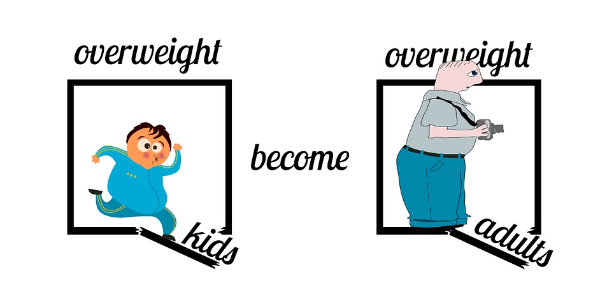
First, the prevalence of obesity among five-year-olds is becoming more serious in proportion to the prevalence among adults. (Figure)
And according to a paper published in Nature, there is an argument that obesity can be biologically congenital.
According to genome-wide association studies (GWAS), which identify traits associated with specific targets, the genes of people with obesity
are related to the hypothalamus and pituitary gland, which regulate appetite; the hippocampus and limbic system, which are involved in learning, cognition, and emotion; and the substantia nigra, which is involved in addiction and reward,
while showing much weaker enrichment in immune cells such as lymphocytes and B cells, and in adipose tissue.
The paper notes that although these GWAS loci (genetic loci) were mostly first identified in adults,
most of these loci are also associated with obesity in children and adolescents, and that the genetic underpinnings are relatively consistent.
We can now see, to some extent, that the prevalence of stunting and overweight in young children is both a serious and a congenital problem.
If this prevalence does not improve despite social and environmental interventions (such as FDA labels),
The problem is getting worse, the likelihood of FDA approval for drugs is rising, and we can reasonably expect the market’s growth rate to accelerate.
On this point, even if an infant grows into an adolescent and becomes able to make their own decisions, it is highly likely that the underlying obesity problem they were born with will still remain.
Just as we prohibit discrimination based on gender or race, the sociopolitical push to accept people with obesity can actually hinder improvements in the environments of those living with the condition.
And paradoxically, while society is increasingly accepting of people with obesity, there is still strong negative sentiment toward surgeries that help with weight loss.
According to the Journal of the American Medical Association (JAMA), among 948 survey respondents,
49.4% said, “People who undergo surgery probably did it for cosmetic reasons,”
39.1% said, “People who undergo surgery probably did it to make dieting easier,” and
72.8% responded that “insurance should only cover surgery performed for health-related reasons.”
In other words, even though the side effects of surgery have decreased, public perception is still a barrier to addressing obesity through surgical procedures.
Looking only at market dynamics, there is clearly a need for pharmaceuticals to treat obesity.
In 1997, the appetite suppressant sibutramine was introduced,
and at one point captured nearly half the market. But in 2010 its approval was withdrawn due to side effects such as myocardial infarction and stroke.
Belviq, another appetite suppressant approved in 2016, was also pulled from the market in February 2020 after it was found to carry a higher cancer risk than placebo.
Later that same year, in December, Saxenda was approved, followed by Wegovy in 2021.
Pharmaceutical companies’ efforts to solve obesity continue to this day.
The National Institutes of Health note that people should use medication alongside a reduced-calorie diet.
The U.S. National Institutes of Health point out that people should use medication in combination with a low-calorie diet.
- Obesity: New drug turns energy-storing fat into energy-burning fat, MedicalNewsToday
Will obesity drugs be recognized for their irreplaceable role in treatment and become suitable candidates for inclusion in our portfolios?
Three-line summary:
1. In pharmaceuticals, it is relatively advantageous to split investments between large-cap companies and those on the verge of clinical trials.
2. When selecting companies about to enter clinical trials, you need to assess how serious the target market’s problem is and how irreplaceable the proposed solution is.
3. Obesity drugs are likely to be recognized as irreplaceable only if developmental disorders and overweight prevalence among young children become critically severe.
Newsletter
Be the first to get news about original content, newsletters, and special events.
Continue reading

Note By Ryunsu
The Intelligence Layer of Financial Infrastructure
Ryunsu Sung

Aware Original
Why Bitcoin Keeps Falling: The Downward Spiral of the Gamma Trap
Ryunsu Sung

Aware Original
The Overwhelming Autonomous Driving Leader Proven by Numbers: Waymo’s Full-Scale Takeoff
Ryunsu Sung

Aware Original
The Precarious State of ‘American Exceptionalism’ and a Shaken Dollar Hegemony
Ryunsu Sung