Oct 25, 2024
Summary of Bank of America Fund Manager Survey (FMS): A Sell Signal Hiding Behind the Optimism
Sungwoo Bae
Trump Media jumped 10% in a single day, and Tesla went even further, soaring 22%. Lately, there seems to be at least one eye‑catching stock every day.
There is a sector that has been quietly delivering solid performance, even if it has been overshadowed.
Financials.
Large‑cap U.S. financial names such as BlackRock, Goldman Sachs, JPMorgan, and Morgan Stanley have all set new record highs, and even those financial stocks that have not yet broken to new highs are continuing to trend upward.
The rise and fall of financial stocks almost never attracts as much attention as tech. That is because they are widely seen as being driven more by macro factors than by stock‑specific headlines.
It’s obvious, isn’t it? Rates and economic data are strong, so what else would it be?
Even when you listen to the people closest to money in this world, the tone is upbeat. That’s because they expect the Federal Reserve to cut rates, China to keep stimulating its economy, and the U.S. to pull off a soft landing. But it is precisely the shock hiding behind this optimism that we need to be wary of.
What 195 fund managers think: When the tide comes in, grab an oar
According to Bank of America’s Fund Manager Survey (FMS), which polled 195 fund managers overseeing more than $500 billion in assets, the results can be summarized as follows.
1) Market sentiment is extremely positive
2) The core reason: we’ve dodged a recession
3) As growth comes back, they plan to dump cash and buy stocks
4) If China keeps stimulating, emerging markets will benefit
1. Sentiment is up, so they’re buying first and asking questions later
The FMS Sentiment Index is based on cash levels, equity allocation, and growth expectations, and provides an overall gauge of how positive fund managers are on the market. The index rose from 3.8 to 5.6, marking the largest monthly increase since June 2020, during the post‑COVID rebound.
2. Why? Because what looked like a crisis turned out not to be one
Global growth expectations climbed from -47% to -10%, a 37‑percentage‑point jump. That is the fifth‑largest monthly increase since 1994.
Looking back at the periods when the monthly increase exceeded +2 standard deviations: 2001, when markets rebounded right after the dot‑com bust; 2008, when President George W. Bush pledged to respond to the financial crisis after Lehman Brothers collapsed; and 2019, when rates were cut to support growth after the U.S.–China trade war...
In other words, large jumps have typically come when stimulus followed major shocks.
There hasn’t been a major shock that actually materialized, but there was one that many feared would: a deep recession. Concerns about the economic damage that could have resulted from policy missteps while trying to tame inflation have, by and large, eased.
3. Buying With Every Last Dollar
Now that the worries sparked by the previous rate hikes have faded, investors are seeing only the positives. That is because the only thing left on the horizon seems to be rate cuts. As recently as August, fund managers viewed a recession as the most serious risk. Now, recession fears have more than halved, dropping to third place behind geopolitical risk (33%) and re-accelerating inflation (26%).
Accordingly, the cash allocation fell from 4.2% to 3.9%, hitting its lowest level since February 2021. And the reduced cash holdings flowed almost entirely into equities. Equity allocations jumped 31%, marking the largest increase since June 2020, while bond allocations fell 15%, the steepest decline on record.
4. China’s Stimulus: Who Stands to Benefit?
Assuming China will continue to roll out stimulus in response to its faltering economy, fund managers were asked where they would direct investments. The areas expected to see the biggest upside were emerging-market equities and commodities, while they were skeptical on bonds and Japanese equities. The BofA team added that they are advising clients to treat the sell-off in Chinese equities as a buying opportunity.
The Rally May Be Slower Than Expected, But It’s Only a Matter of Time
The push to lower cash and bond allocations and to treat weakness in Chinese markets as a buying opportunity is, on the one hand, a snapshot of bullish sentiment, but on the other, also a source of concern.
Low cash levels are sometimes used as an overbought indicator. According to BofA, this signal has appeared 11 times in the past. Statistically, over the following month, global equities as measured by the MSCI All-Country World Index fell an average of 2.5%, and declined 0.8% over the subsequent three months.
So does that mean we should dump all our stocks and sit on cash instead?
No, it does not.
Dubravko Lakos-Bujas, JP Morgan
Even when indicators flash a sell signal, markets do not necessarily fall right away. Financial markets tend to maintain momentum for a while. The intrinsic value of the stocks we hold does not suddenly change because of external risks either.
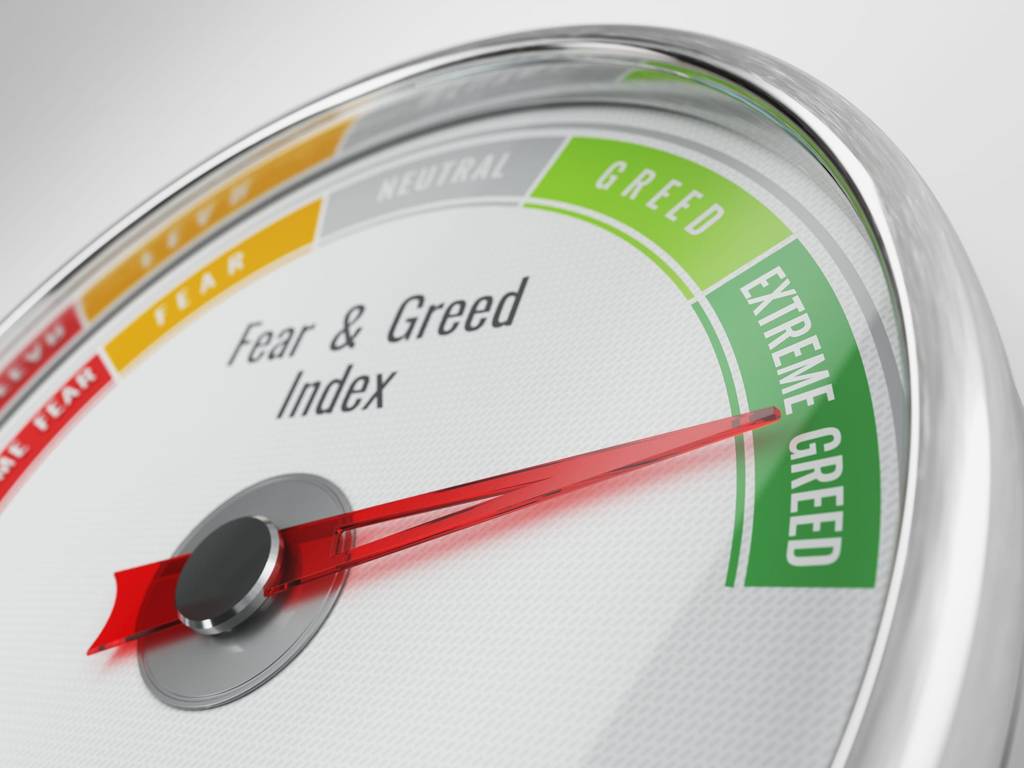
Furthermore, on BofA’s Bull & Bear Indicator, the threshold for “extreme greed” is 8, and we are currently at 7.1. Even by this metric, there is still some room left.
Of course, we cannot simply ignore the historical pattern of subsequent declines. That said, if it were up to me, I would treat this statistic as a reference point for why the market might struggle to rise later on, and for now I would continue to increase my equity exposure.
Newsletter
Be the first to get news about original content, newsletters, and special events.
Continue reading

Note By Ryunsu
The Intelligence Layer of Financial Infrastructure
Ryunsu Sung

Aware Original
Why Bitcoin Keeps Falling: The Downward Spiral of the Gamma Trap
Ryunsu Sung

Aware Original
The Overwhelming Autonomous Driving Leader Proven by Numbers: Waymo’s Full-Scale Takeoff
Ryunsu Sung

Aware Original
The Precarious State of ‘American Exceptionalism’ and a Shaken Dollar Hegemony
Ryunsu Sung